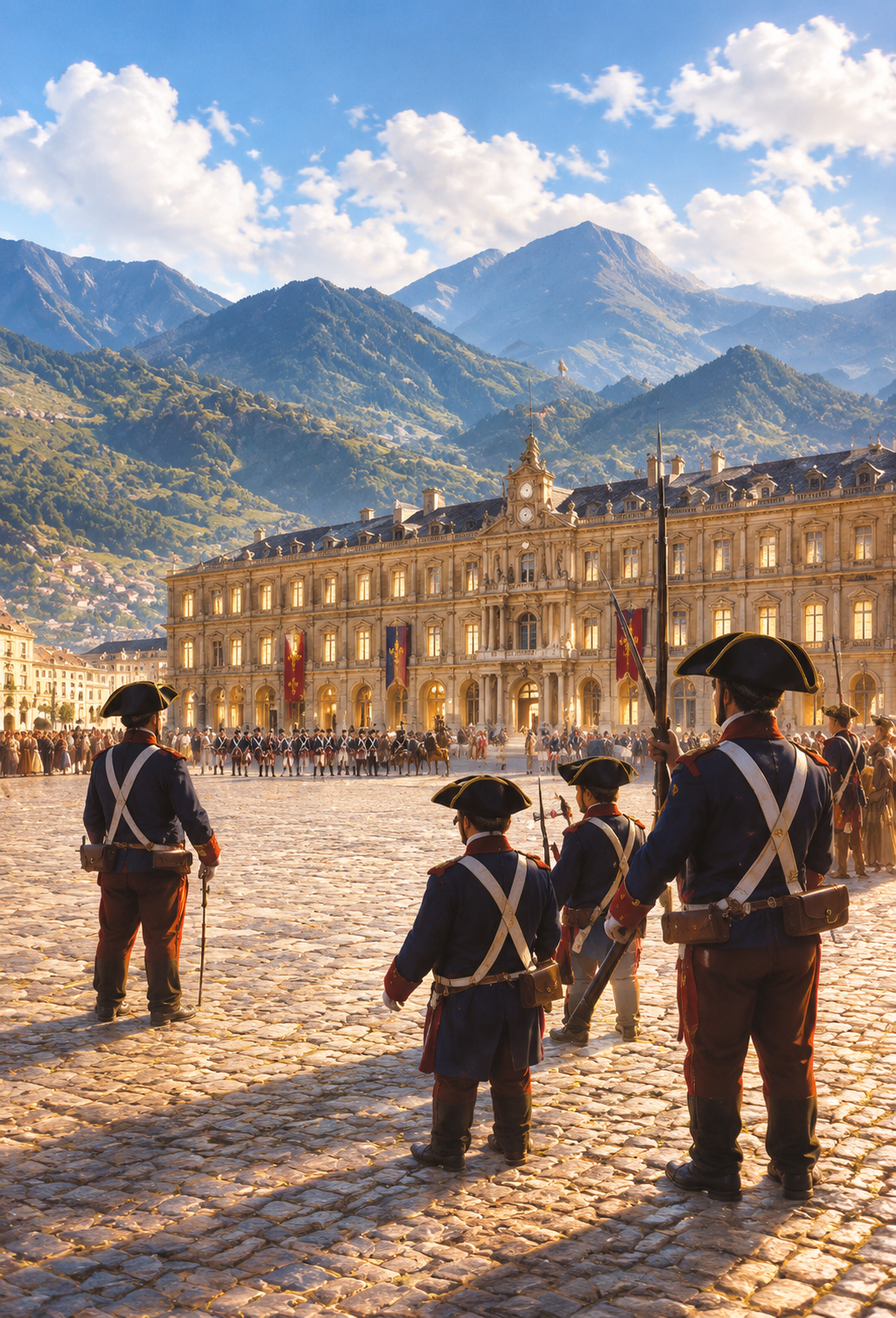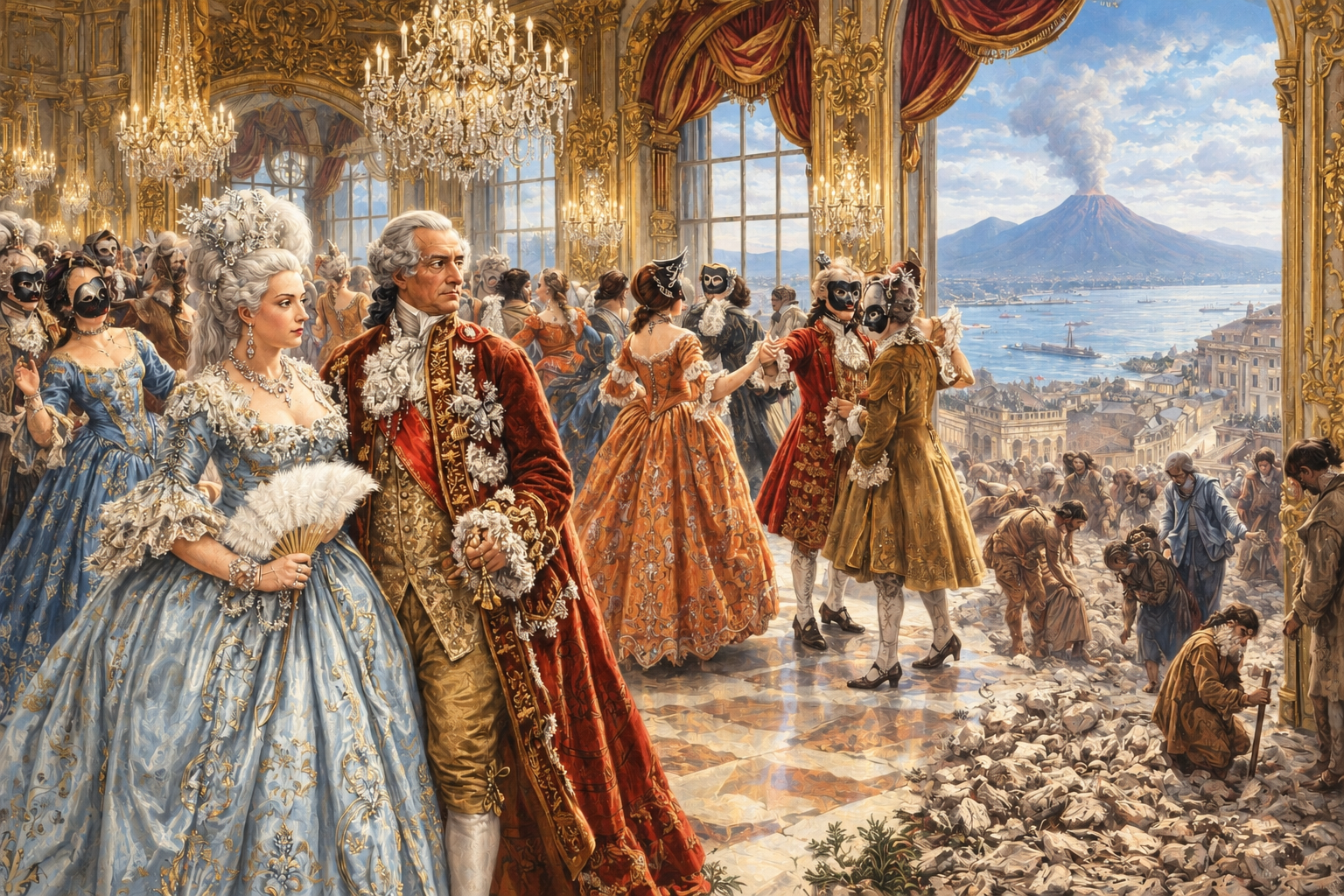


At the conclusion of the War of Spanish Succession in 1713, Sicily passed briefly to the House of Savoy, then to the Austrian Habsburgs, before finally ending up in 1735 as part of the Bourbon dynasty, which would rule the combined Kingdom of Naples and Sicily — eventually known as the Kingdom of the Two Sicilies — for the next 125 years. Under the Bourbons, Sicily continued to suffer virtually all the same major problems as those experienced in the prior four centuries of Spanish rule: an exploitive feudal land ownership system, widespread poverty, rampant government corruption, and a disconnected government ruling from Naples rather than Palermo.
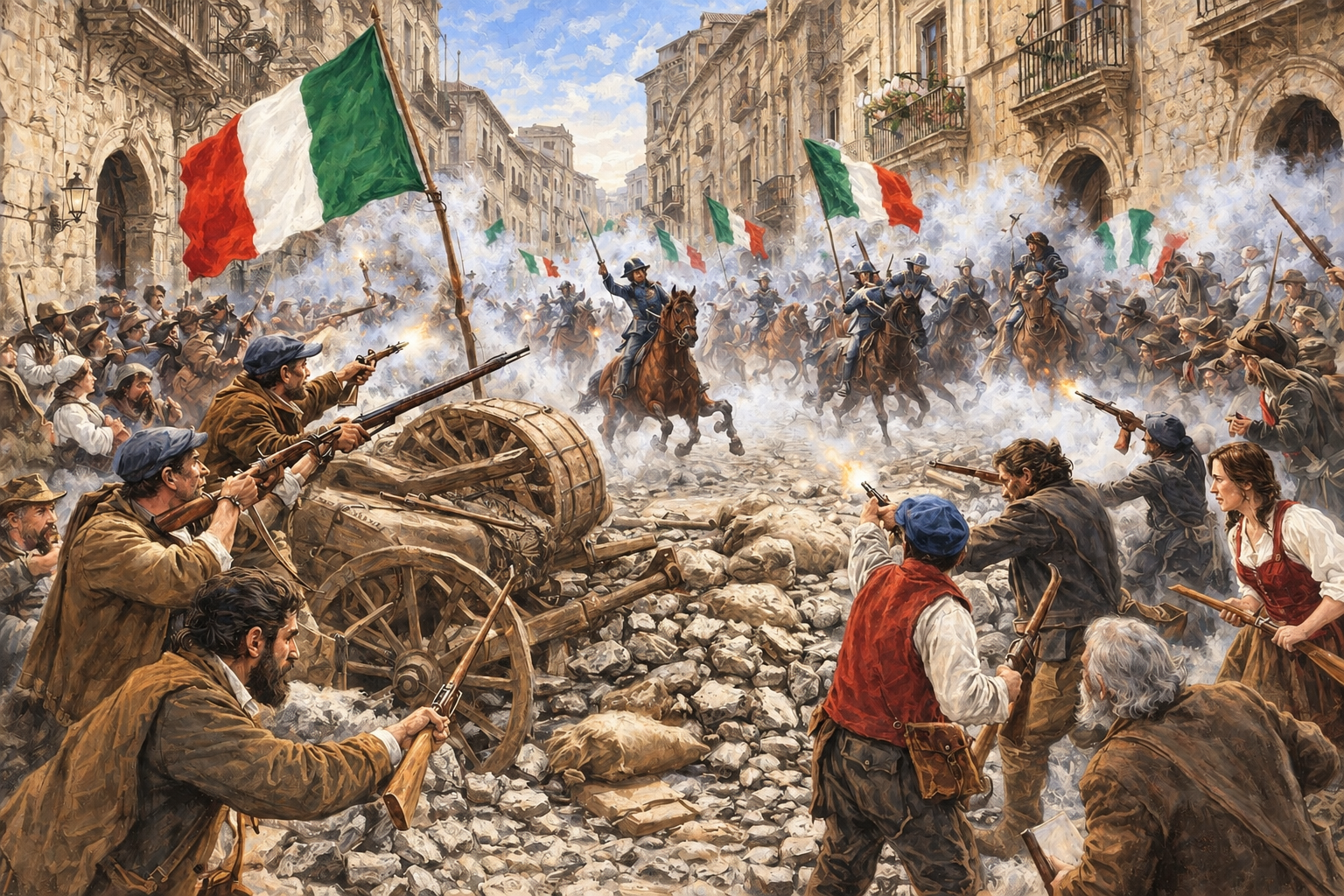
But Sicily in the Bourbon era also began to stir. The French Revolution sent shockwaves across Europe. Napoleon’s brief presence in the Mediterranean awakened new political ideas. Following years of British military occupation and influence in Sicily, the Bourbon King was forced to adopt a constitution in 1812, which limited the power of the monarchy. The Sicilian constitution was later repealed by the king several years later in 1816, following the end of the Napoleonic War and the evacuation of the British troops from the island.. In the 19th century, Sicily saw the rise of revolutionary and nationalistic sentiments, which desired independence from Bourbon rule in Naples. The first serious uprising occurred in Palermo in 1820, but was quickly put down. The second, far more significant revolution, occurred in 1848 — when Sicilians declared independence from the Bourbons and briefly established an independent Sicilian state, which lasted almost a year, before the Bourbon military invaded Sicily and crushed the revolt in 1849.
Although temporarily suppressed, this revolutionary spirit within Sicily could not be eradicated. Eleven years later the charismatic revolutionary leader, Giuseppe Garibaldi, landed on Sicilian shores with one thousand volunteers and set in motion events that would end the Bourbon kingdom forever and lead to the unification of the new Kingdom of Italy.