

Illustrated History of Sicily

A visual journey through the land, cuisine, people, language, and living traditions of Sicily — the crossroads of civilizations.

Illustrated History of Sicily

A visual journey through the land, cuisine, people, language, and living traditions of Sicily — the crossroads of civilizations.

Unification & Modern Era

1860–Present

Garibaldi landed at Marsala. Millions emigrated. Falcone and Borsellino gave their lives. Sicily rises.

overview

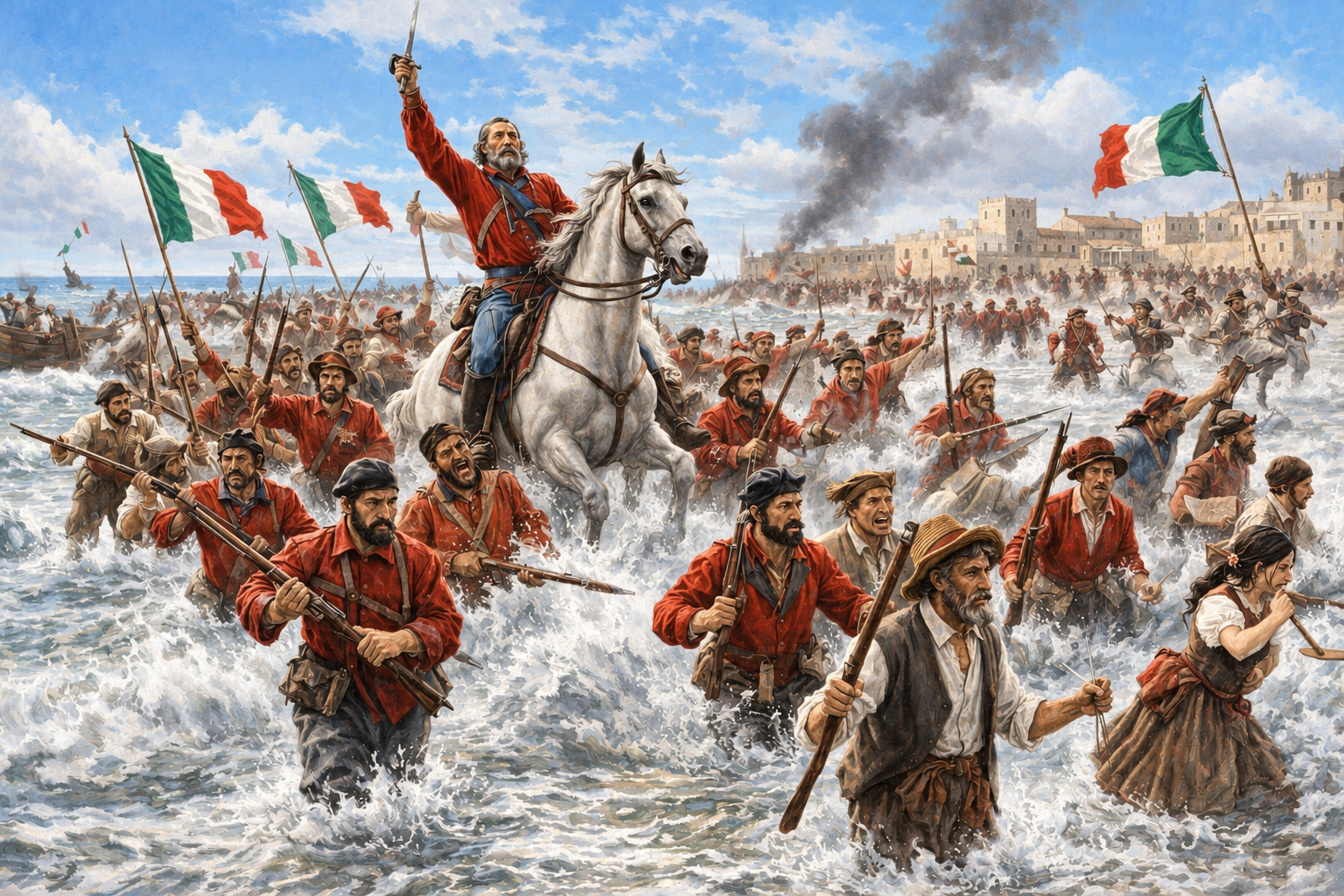
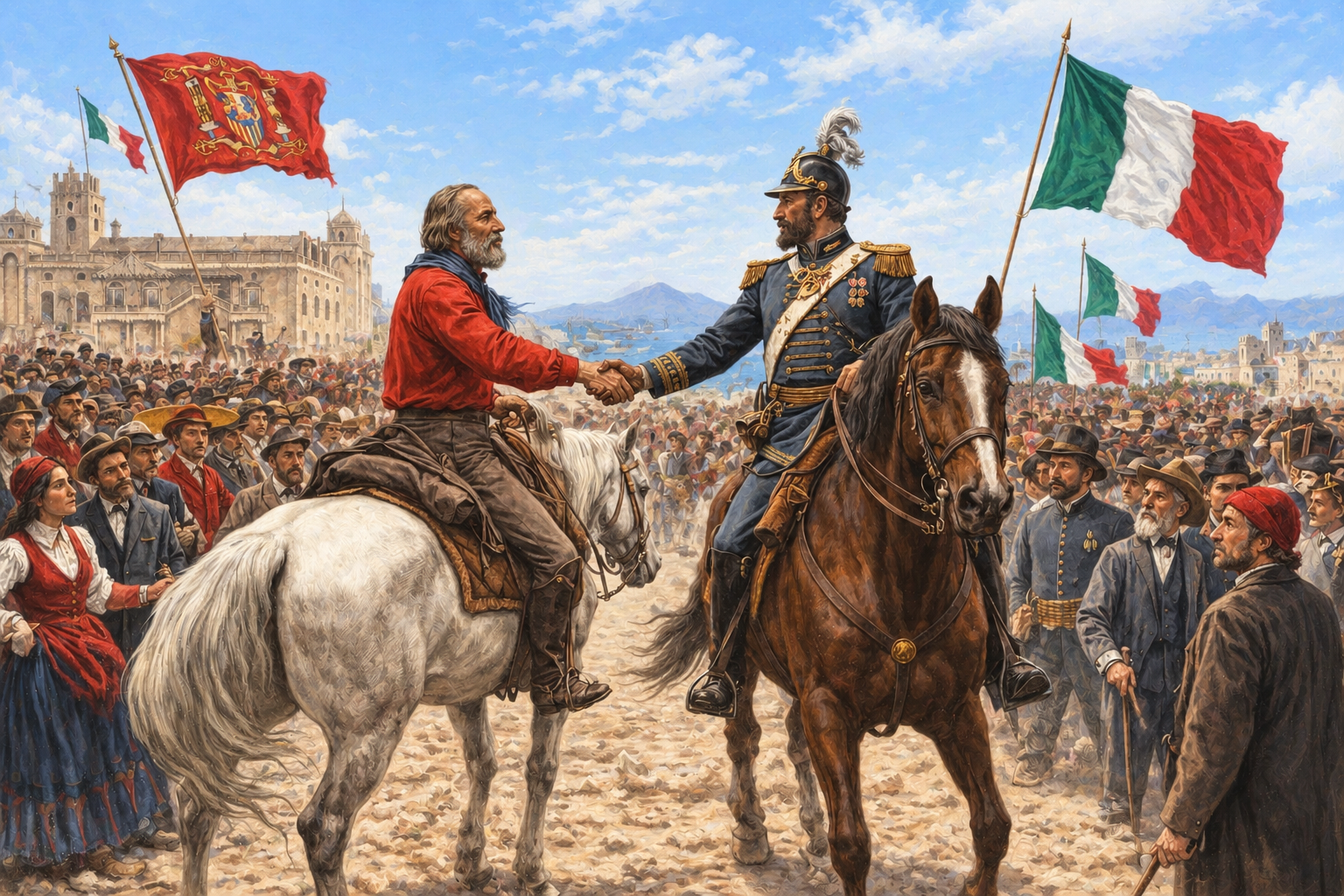
On May 11, 1860, a 53-year-old revolutionary named Giuseppe Garibaldi landed at the Sicilian port of Marsala with approximately one thousand volunteer soldiers. His seemingly impossible mission was to foment a Sicilian rebellion against the Bourbon monarchy with his ultimate goal of supporting the unification of Italy.  Within weeks of his landing in Sicily, Garibaldi’s forces had taken Palermo. Within six months, Garibaldi’s revolution had brought down the  Kingdom of the Two Sicilies, and all of Sicily and Southern Italy were incorporated into the new Kingdom of Italy

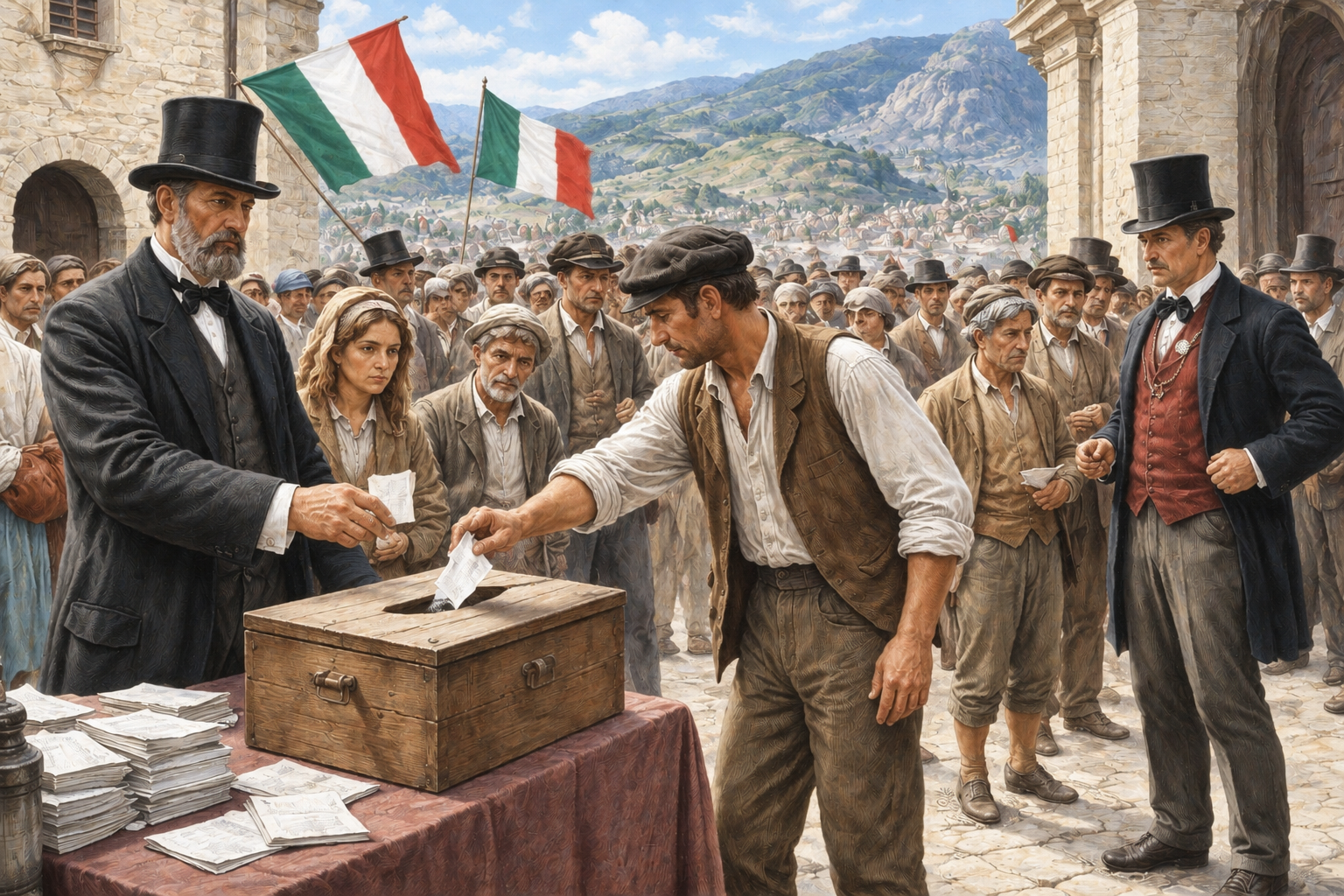
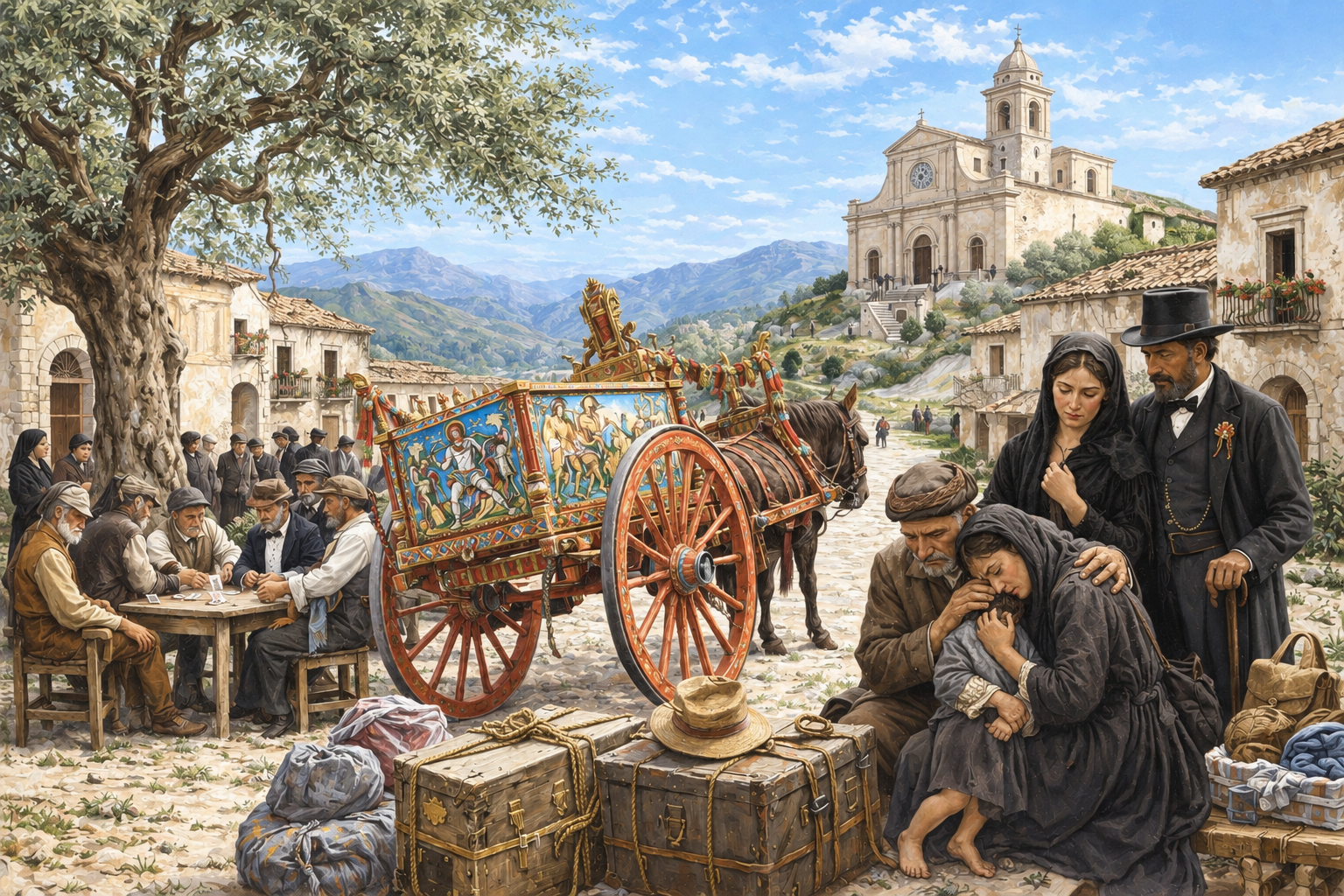
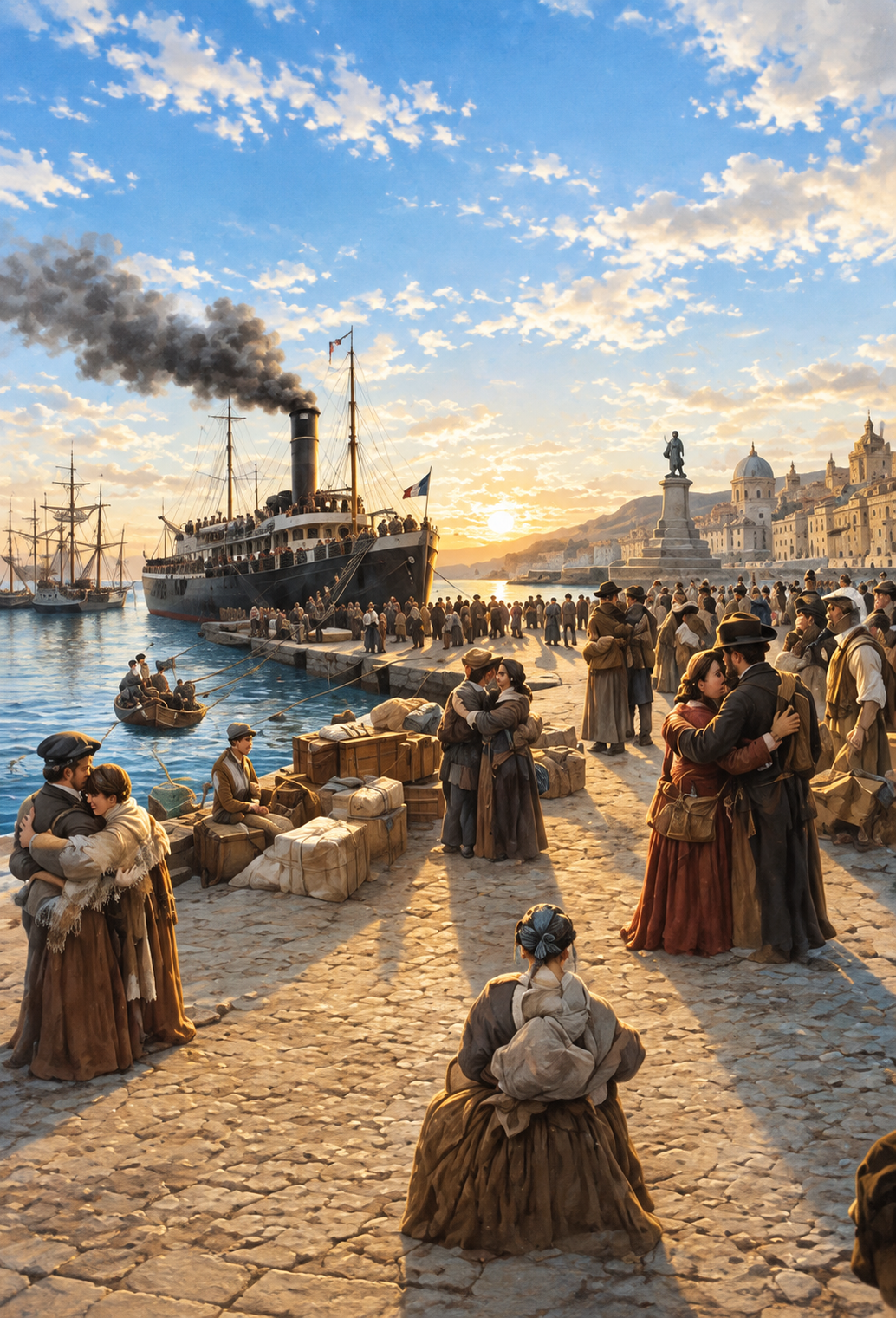
Thus, in 1860 Sicily became a part of the new unified Italian government, whose capital was initially in Turin, and later transferred to Rome. Sicily had voted overwhelmingly to join the new Kingdom of Italy, but was immediately disillusioned as the new Italian government violated all the promised reforms made by Garibaldi to the Sicilian people.  The Italian government was dominated by the interests of the wealthier, industrialized Northern Italian regions, who considered their Sicilian and Southern Italian citizens to be uneducated, uncouth peasants to be exploited  as a source of taxes, conscripts, and agricultural labor. Within two decades of unification, Sicilians began leaving the island in unprecedented numbers in search of work. Between 1880 and 1920, approximately 1.5 million Sicilians emigrated as part of the Great Italian Migration, the majority headed to the United States, which was experiencing a major labor shortage due to rapid industrialization and the growth of American cities.

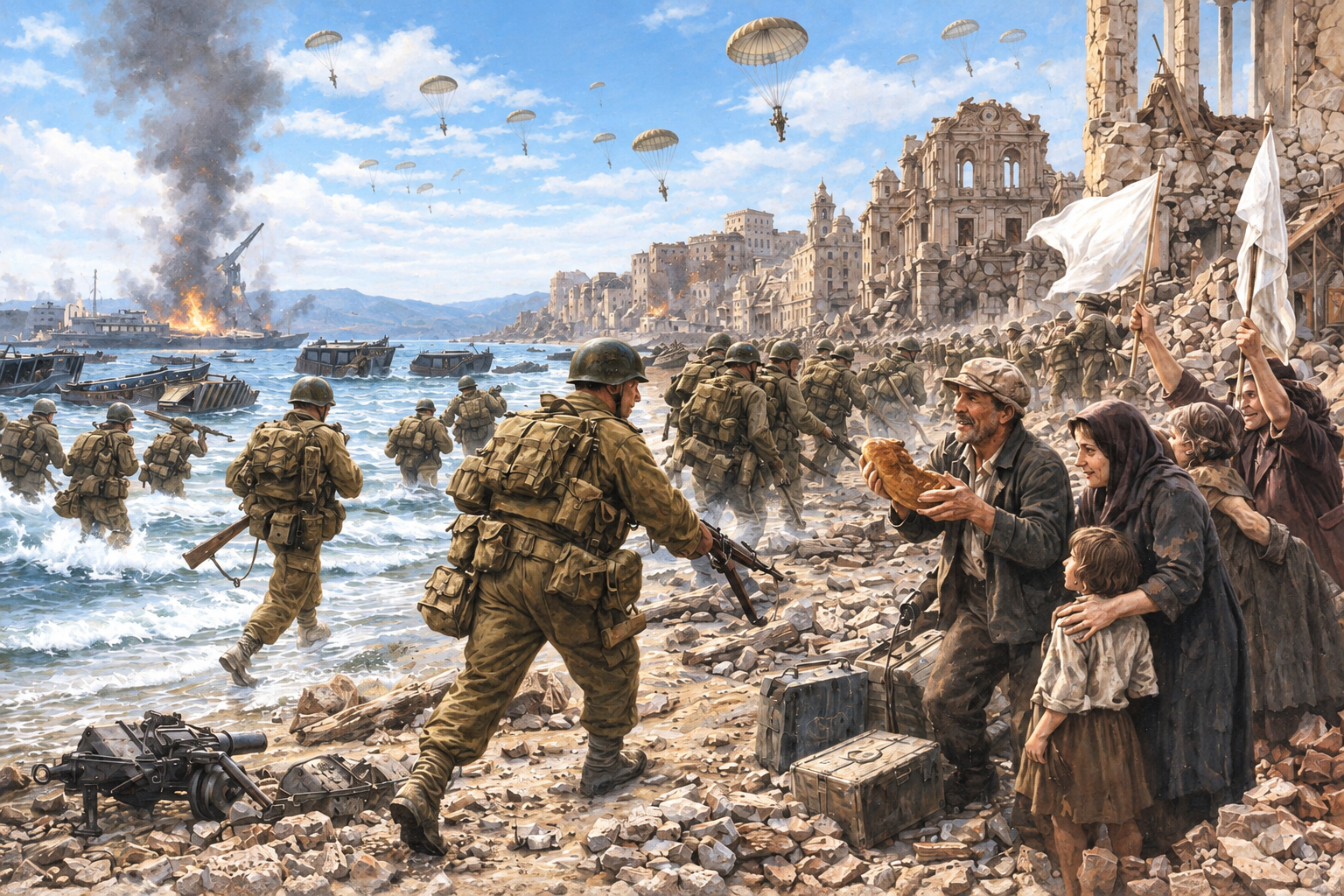
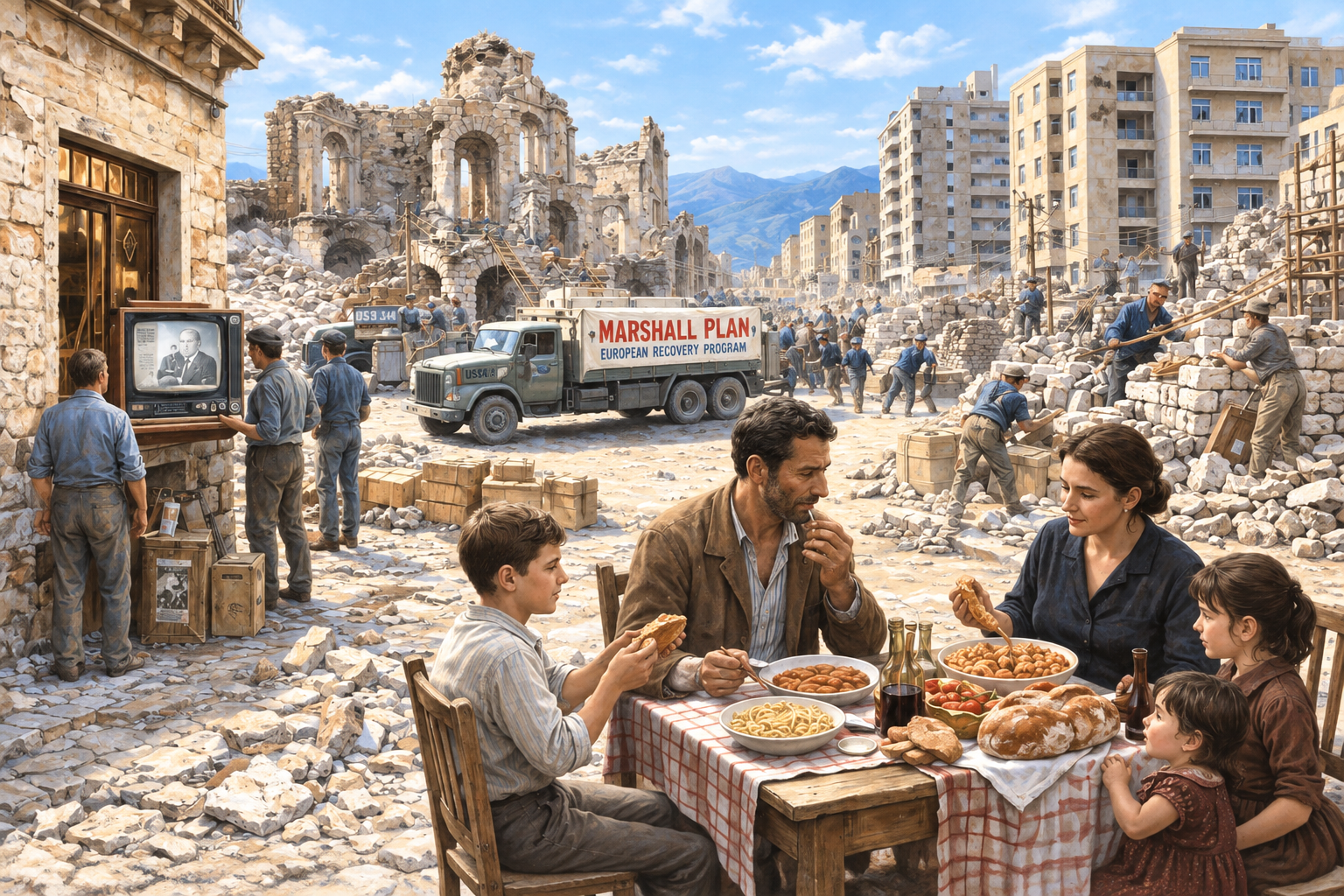
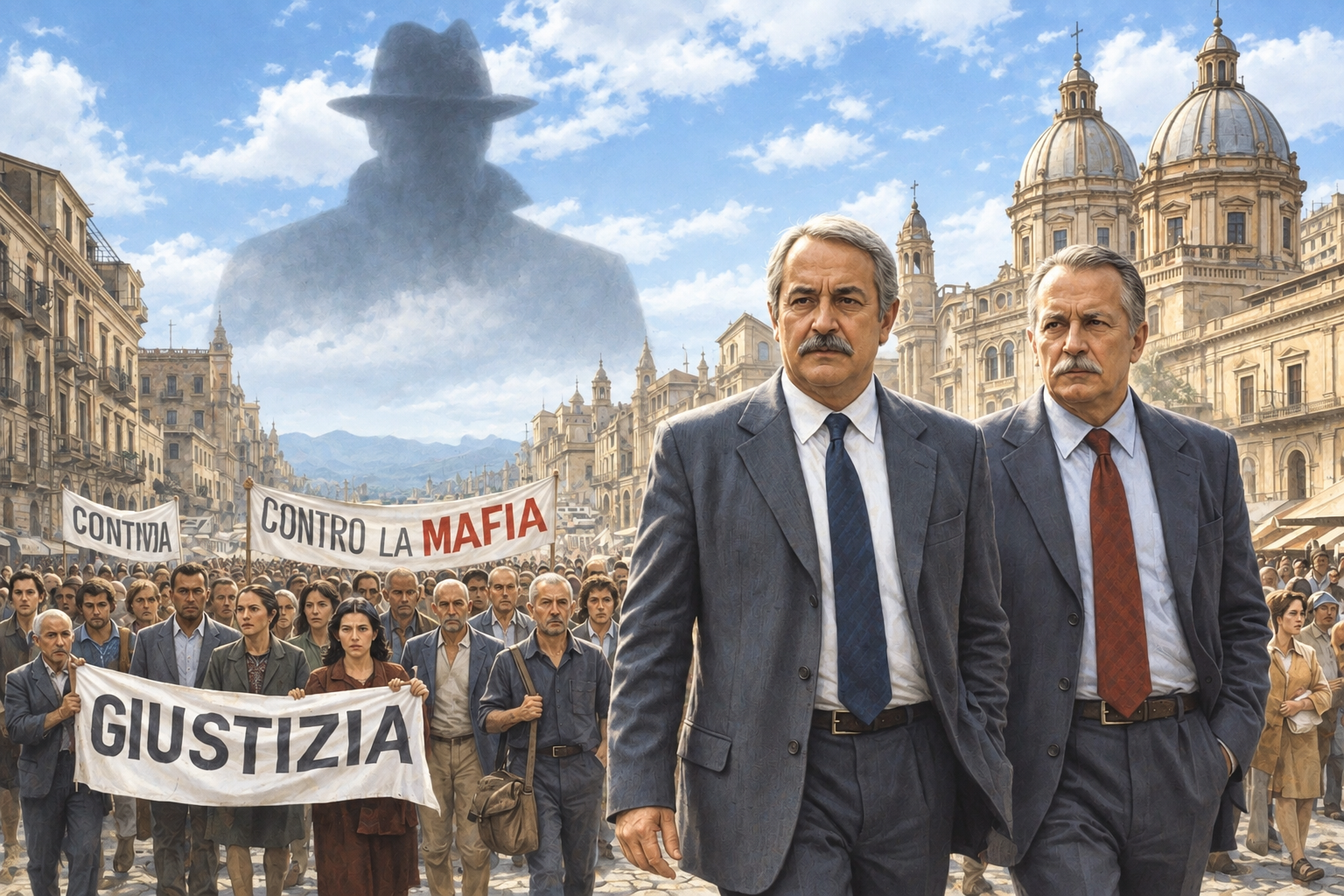
The 20th century brought Sicily fascism, then World War II, then the Allied invasion of 1943 (Operation Husky, at that point the largest amphibious operation in history). Post-war Sicily struggled against entrenched poverty and the growing power of the Mafia, which reached the zenith of its power in the 1980s and early 1990s. The power of the Sicilian Mafia was ultimately broken by Italian law enforcement following the 1992  assassinations of two anti-Mafia magistrates Giovanni Falcone and Paolo Borsellino in spectacular bomb attacks. These murders ignited a popular public backlash that broke the Mafia’s grip on Sicilian society. In the 21st century Sicilians have reclaimed control of the island from the Mafia, whose power has been substantially diminished.
On May 11, 1860, a 53-year-old revolutionary named Giuseppe Garibaldi

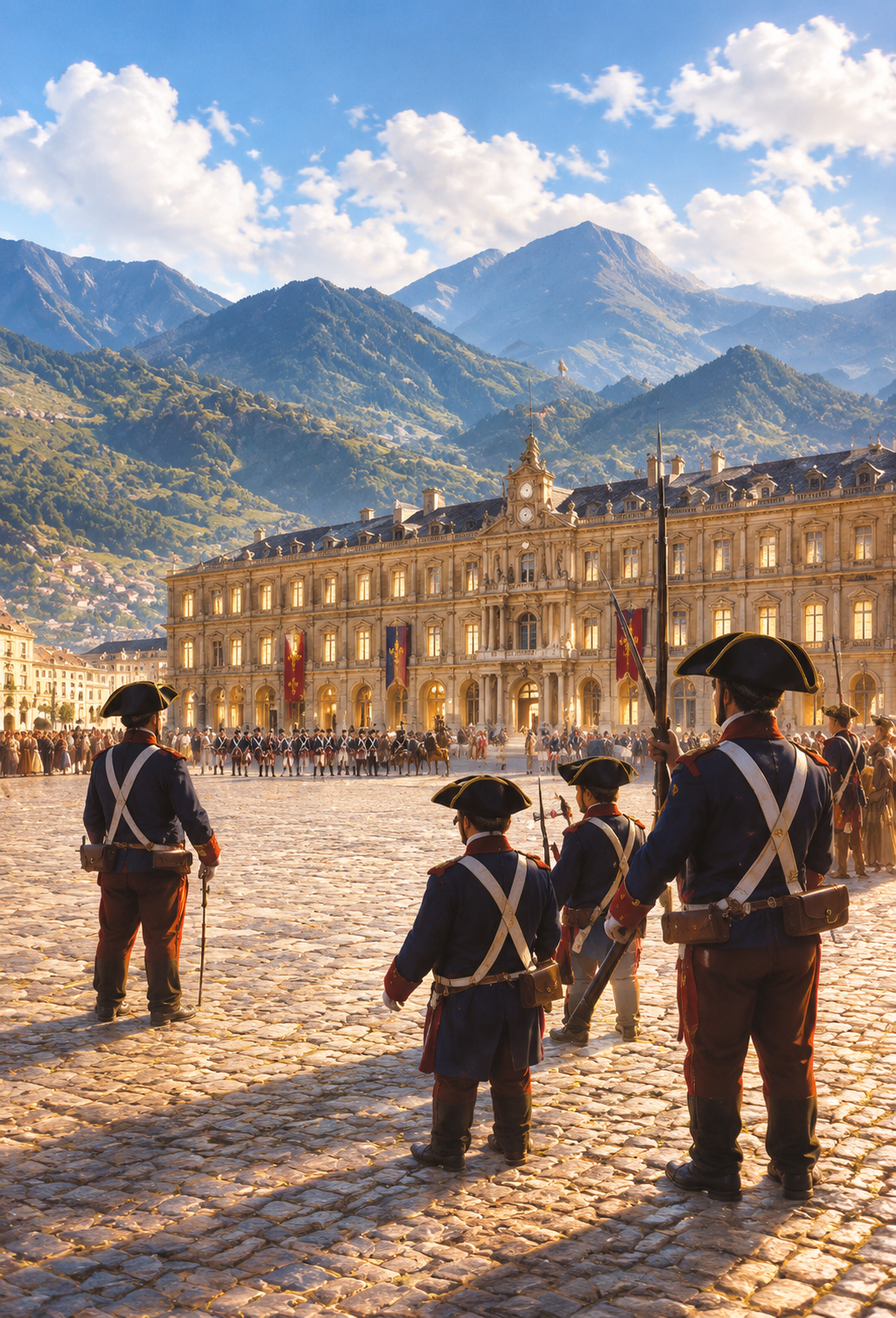
At the conclusion of the War of Spanish Succession in

After the Revolt of the Sicilian Vespers drove the French

When the last Norman king died in 1189 without a

The Norman conquest of Sicily was one of the most

KEY CHAPTERS IN THE BOOK

Revolution & Invasion of Sicily

Revolution & Invasion of Sicily

On May 11, 1860, Giuseppe Garibaldi landed at the port of Marsala in western Sicily with approximately one thousand volunteer soldiers — the famous Expedition of the Thousand (I Mille). Their impossible mission was nothing less than the liberation of Sicily from Bourbon rule and the beginning of a new revolution for Italian unification. This […]

Read More
Fall of the Bourbons & Risorgimento

Fall of the Bourbons & Risorgimento

The fall of the Bourbons in 1860 completed one of the longest chapters of Sicilian history. More than five  centuries of combined Spanish and Bourbon rule ended with the collapse of the Kingdom of the Two Sicilies and the absorption of Sicily into the new Kingdom of Italy. This chapter details the invasion by Garibaldi’s […]

Read More
Union with Kingdom of Italy

Union with Kingdom of Italy

Far from romanticizing this early period of Italian unification, the chapter  examines the harsh realities that followed for the Sicilian people. The new Kingdom of Italy was dominated by the banking and business interests within the industrialized northern regions, particularly within Milan, Turin, Florence, Pisa, and Genoa. The first actions of the new Italian government […]

Read More
Sicilian Life at Turn of 20th Century

Sicilian Life at Turn of 20th Century

This chapter describes the  daily life for the great masses of ordinary Sicilians at the turn of the 20th century, including the desperate living conditions and  their hopes and dreams for their families.  The chapter that explains why approximately 1.3 million Sicilians, roughly 20% of the population, emigrated from the island, vast majority to the […]

Read More
Sicily in Early 20th Century

Sicily in Early 20th Century

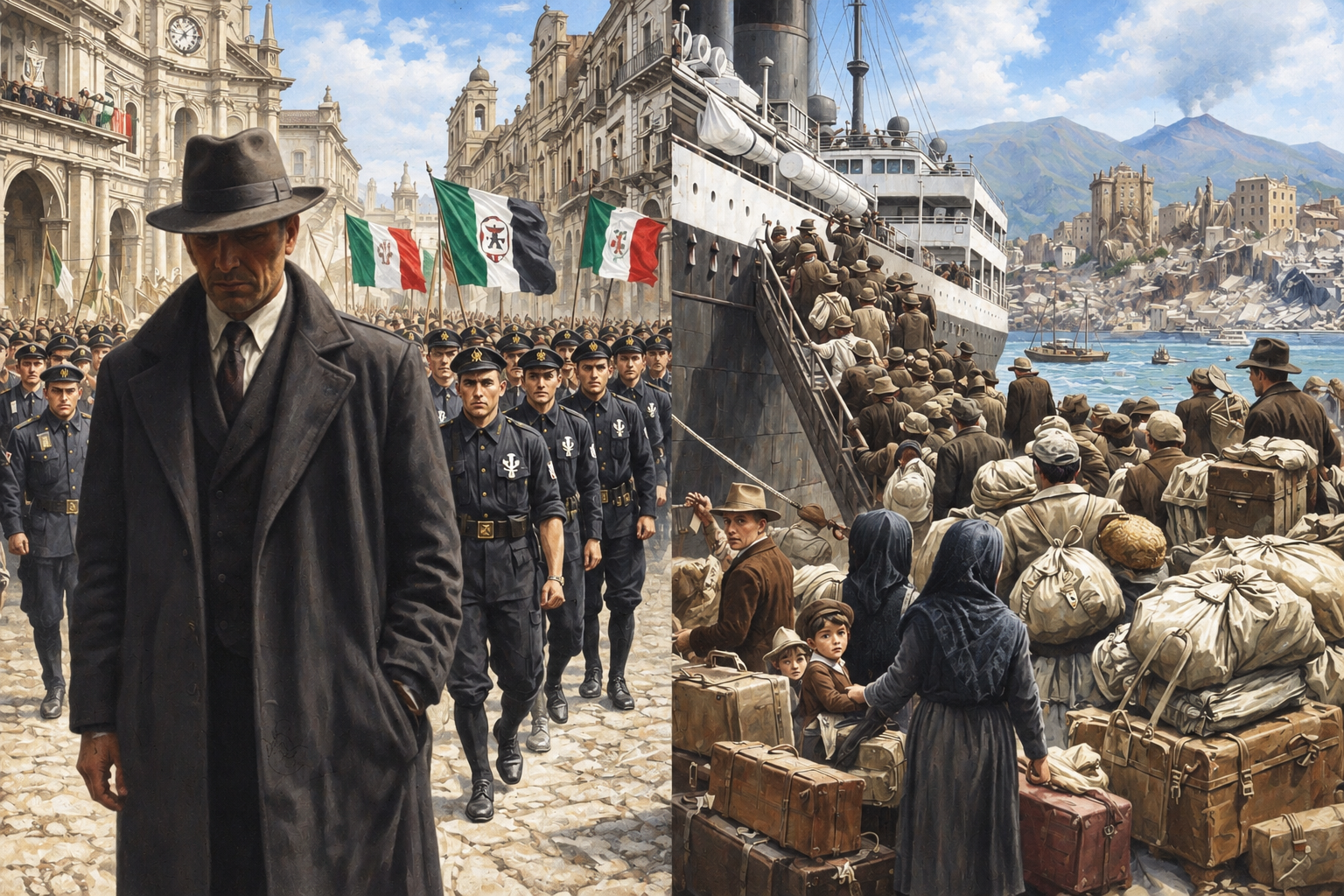
This chapter covers the period from roughly 1890 to 1940 — the era of mass Italian migration, a devastating Sicilian earthquake, Italy’s entry into the First World War, the decline of constitutional rule, and the rise of Fascism in Italy. All of these world-shaping events impacted Sicily and its people in its own particular way. […]

Read More
Sicily During World War II

Sicily During World War II

On July10, 1943, the Allied forces launched Operation Husky, the invasion of Sicily. It was the largest amphibious assault in military history up to that point, involving approximately 160,000 Allied troops, 3,000 ships, and more than 4,000 aircraft. American forces under General George Patton landed on the southern coast. British and Canadian forces under General […]

Read More
Post War Sicily

Post War Sicily

Post-war Sicily faced enormous challenges: rebuilding shattered cities, multiple humanitarian crises from the lack of food, housing and healthcare, recovering from a decade of economic disruption, navigating the political uncertainty of the immediate post-Fascist years, and dealing with a resurgent Mafia that had re-established itself following the chaos of the war. This chapter covers the […]

Read More
Rise of the Sicilian People

Rise of the Sicilian People

By the late 1970s the despair of the Sicilian people had reached new lows. The Mafia’s vast wealth and their threats of terrible violence were used to dominate the Sicilian government and maintain an unbreakable stranglehold on the economy. Senior government leaders in Rome had for decades turned a blind eye to Mafia corruption in […]

Read More
Epilogue — Sicilian Life Today

Epilogue — Sicilian Life Today

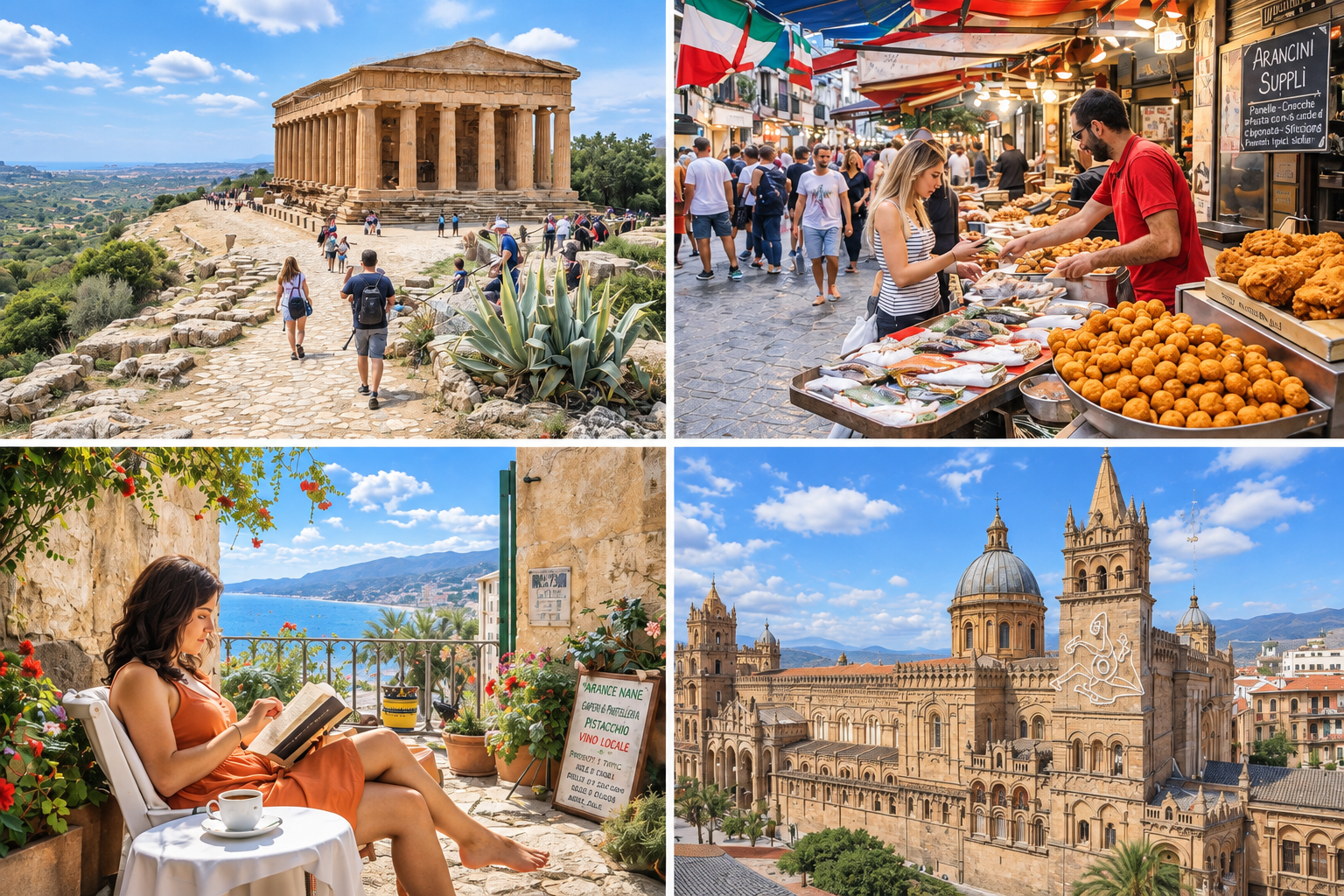
The final chapter of Sicilian Odyssey is an epilogue on modern day Sicily, particularly the city of Palermo, following the defeat of the Sicilian Mafia by Italian law enforcement in the early 21st century. It also summarizes the serious ongoing economic challenges faced by the Sicilian people. Despite significant improvements to living conditions in Sicily […]

Read More
1860
1890
1920
1950
2000

THE CONTINUING STORY

After enduring centuries of oppression, the people of Sicily today have found relative peace and happiness, as an autonomous region within the Republic of Italy. Despite the considerable advancements to Sicilian life in recent decades, Sicily and Southern Italy remain saddled by massive socioeconomic disparities with the far wealthier northern Italian regions, an ongoing legacy of more than 165 years of Mafia corruption and discriminatory government investment policies. This massive wealth disparity between the northern and southern regions extends across virtually every measurement of Italian life, including greater economic productivity, higher employment and income levels, better quality infrastructure, more efficient public services, and access to superior healthcare. As a greater number of young Sicilians are becoming educated, the island is losing its best and brightest of its youth to the advantages of higher wages, greater economic opportunity, and better living standards in the north.