

When the Western Roman Empire collapsed in 476 AD, Sicily did not collapse with it. The island was briefly ruled by barbarian kingdoms, first by the Vandals and then by the Ostrogoths. However, in 535 AD the Byzantine general Belisarius, acting on the orders of Emperor Justinian, reconquered Sicily for the Eastern Roman Empire in a matter of months. For the next 292 years, Sicily was a province of the Byzantine Empire, ruled distantly from Constantinople, with Greek as its language of government and Orthodox Christianity as its dominant faith.
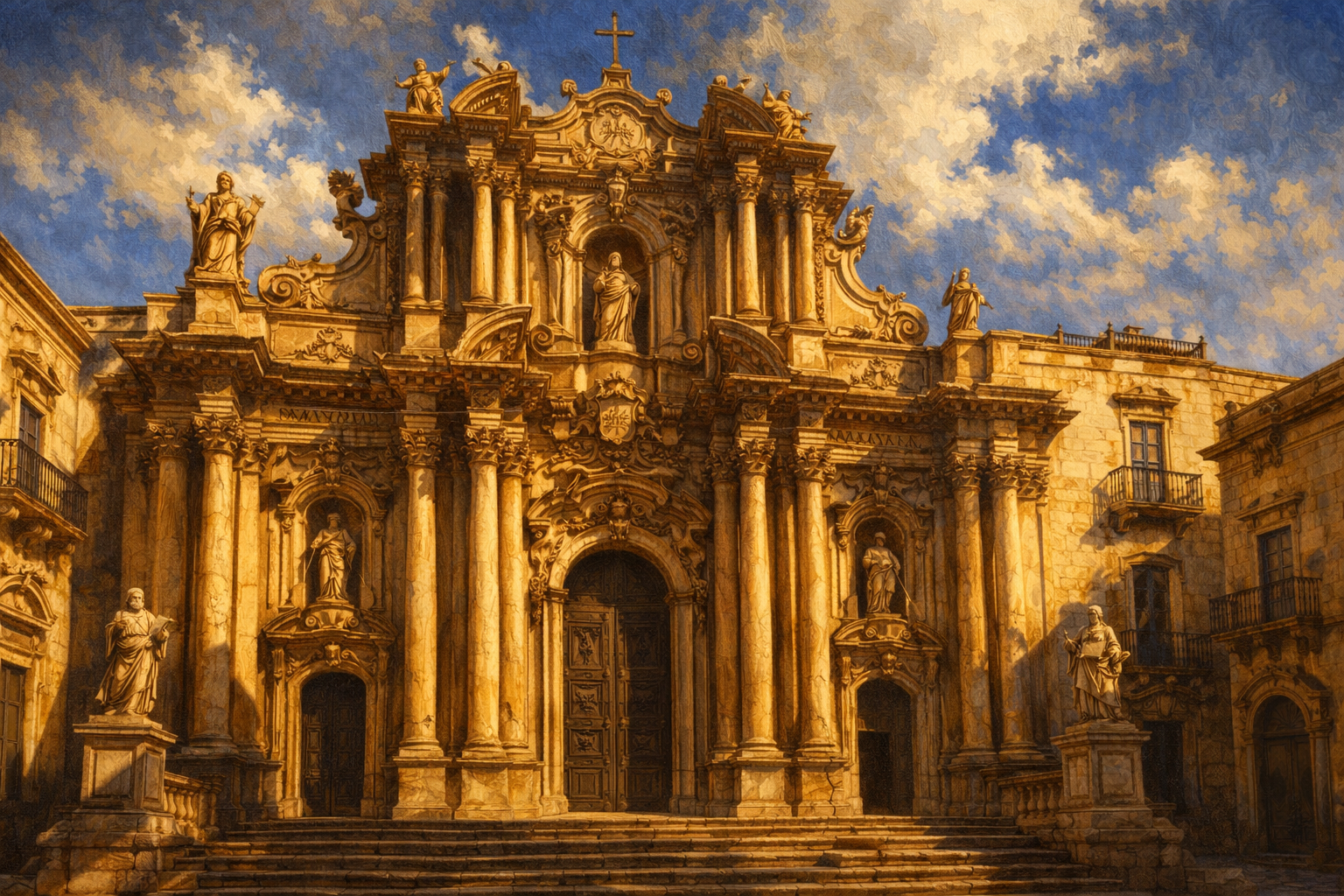
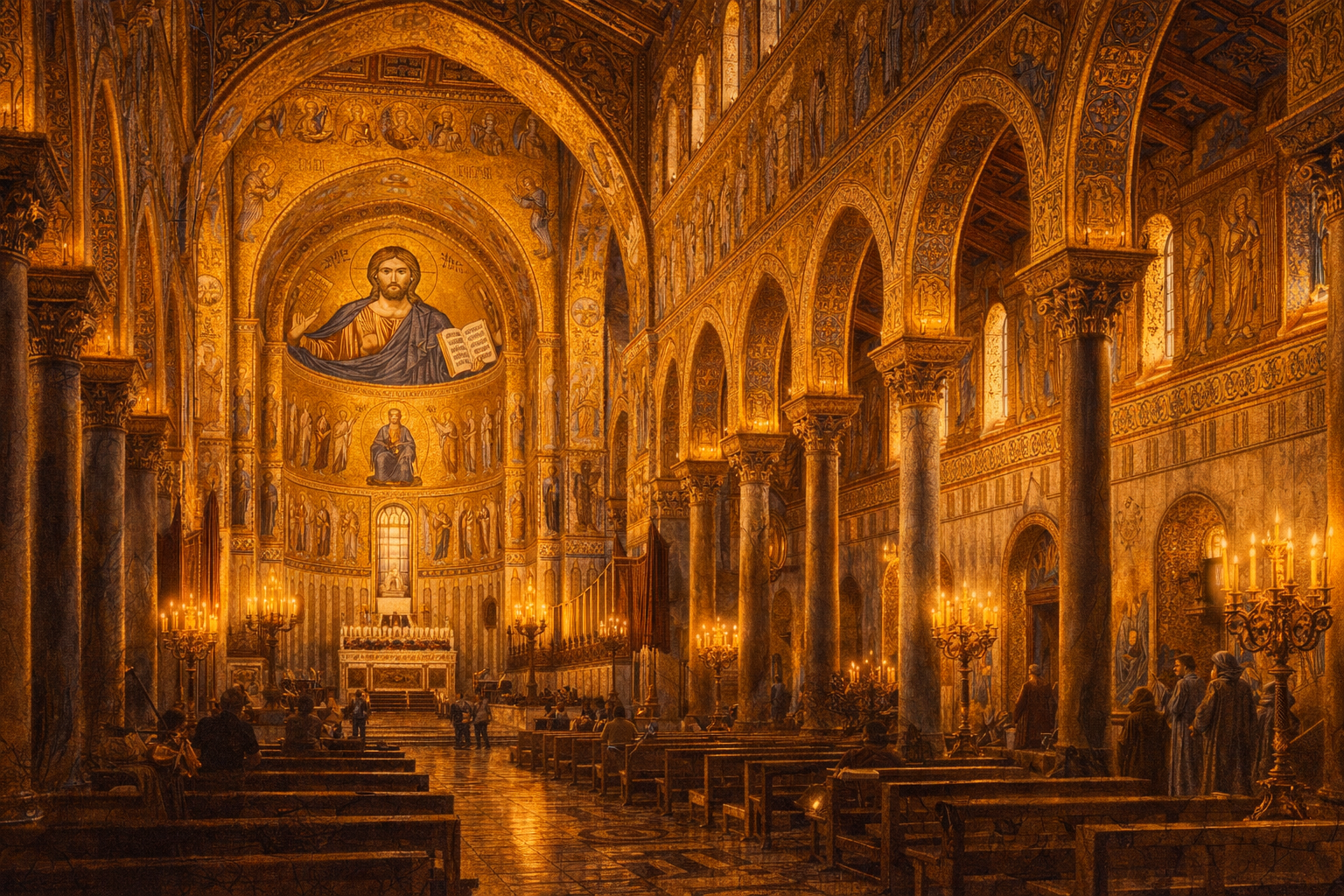
The Byzantine centuries in Sicily are often called the “forgotten centuries” because so little is written about them compared to the glamour of Greek temples or the Norman golden age. But this was a formative period in Sicilian identity. Orthodox monasteries proliferated across the island. Byzantine art and architecture shaped Sicilian cities. Greek was spoken on the island for so long that it continued to be used in rural Sicily even centuries after Norman rulers replaced the Arab and Byzantine ones.
But Byzantine rule was also an era of increasing neglect. Constantinople was preoccupied by constant wars against foreign enemies, such as the Persians, Arabs, and Slavic nations, as well as by internal political and religious conflicts (including the divisive iconoclast controversy that outlawed the veneration of Christian images). During most of Byzantine rule, Sicily was a distant, heavily taxed province, important only as a source of grain and revenue. When Arab armies began raiding the island’s coasts in the early 9th century, Byzantine defenses were insufficient to turn back the invaders. The stage was set for the island’s next great transformation.