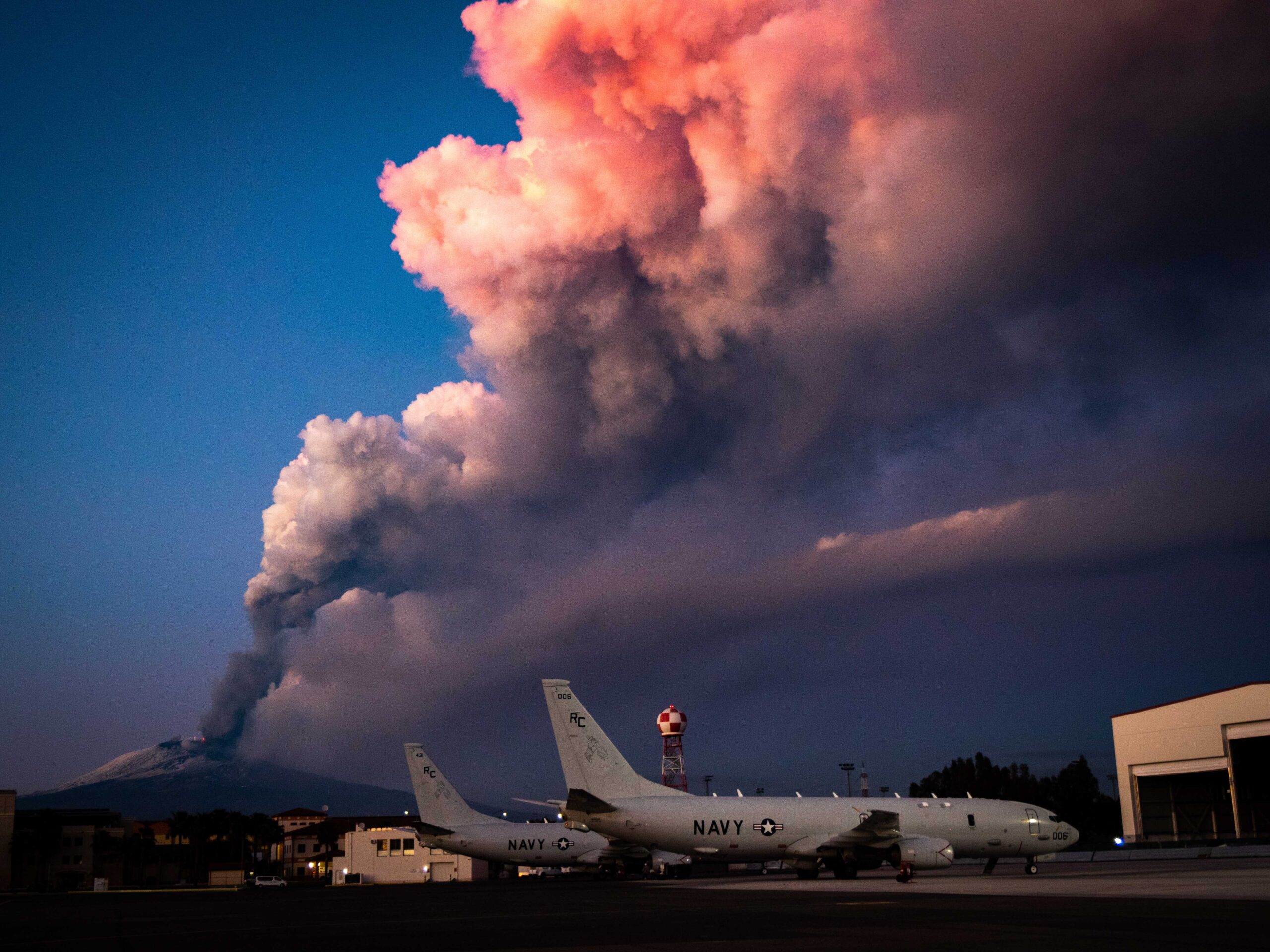
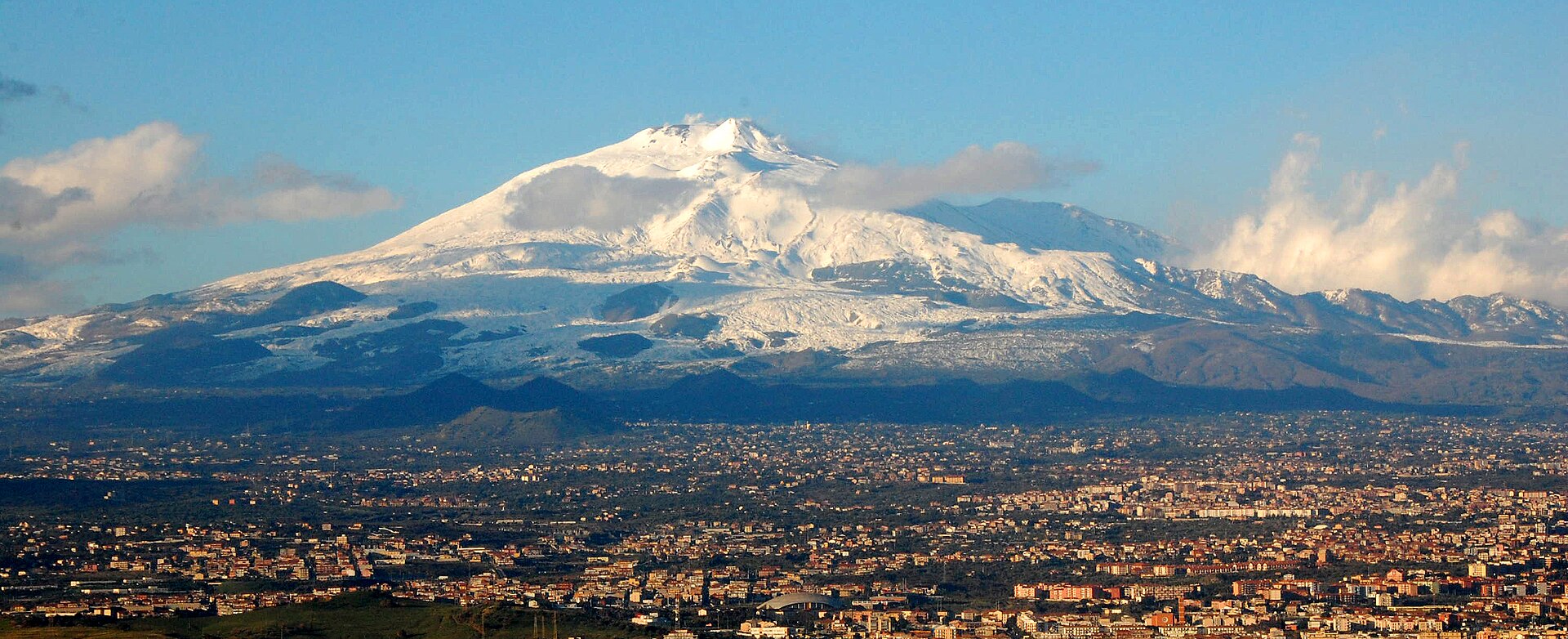
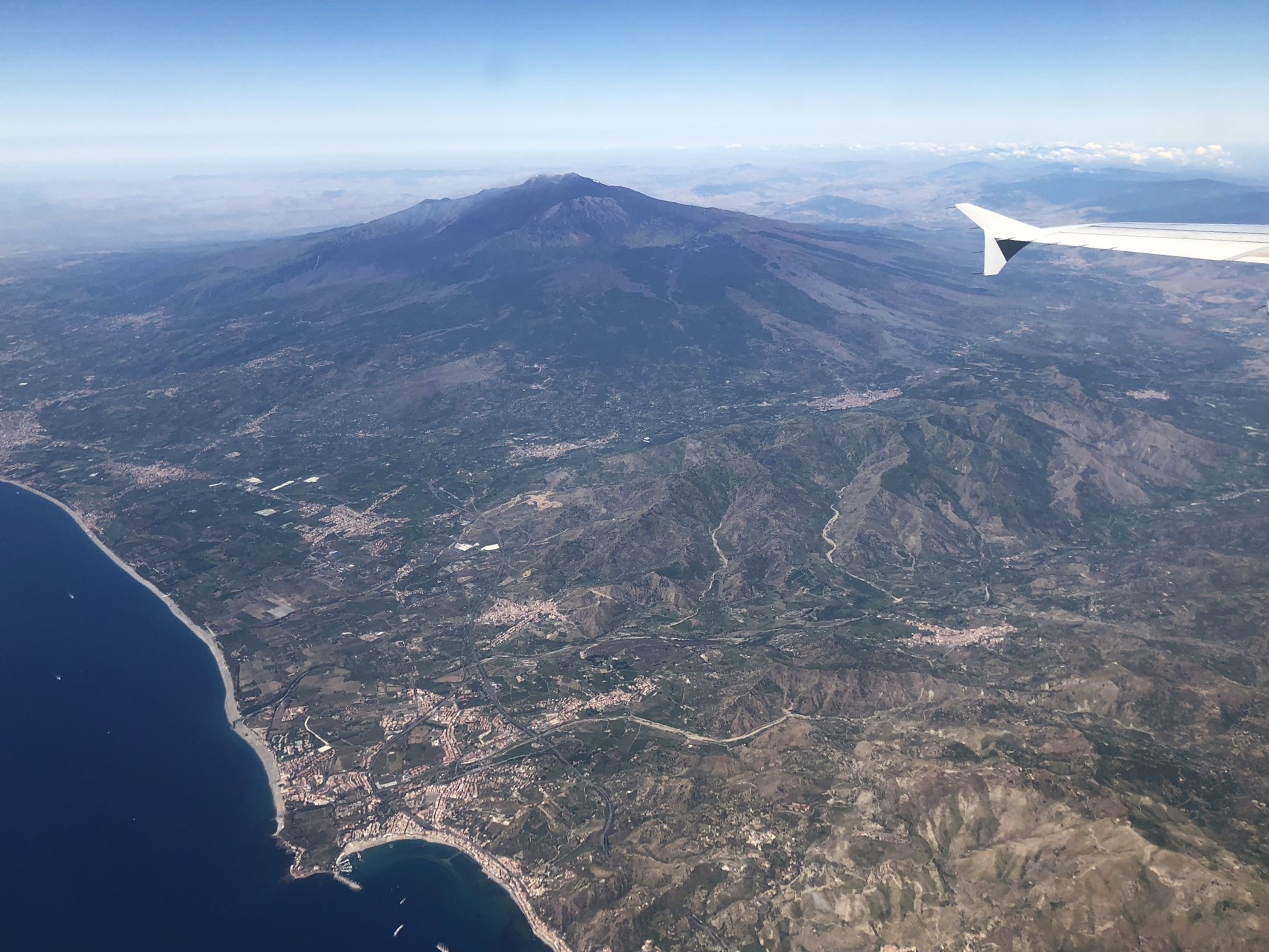
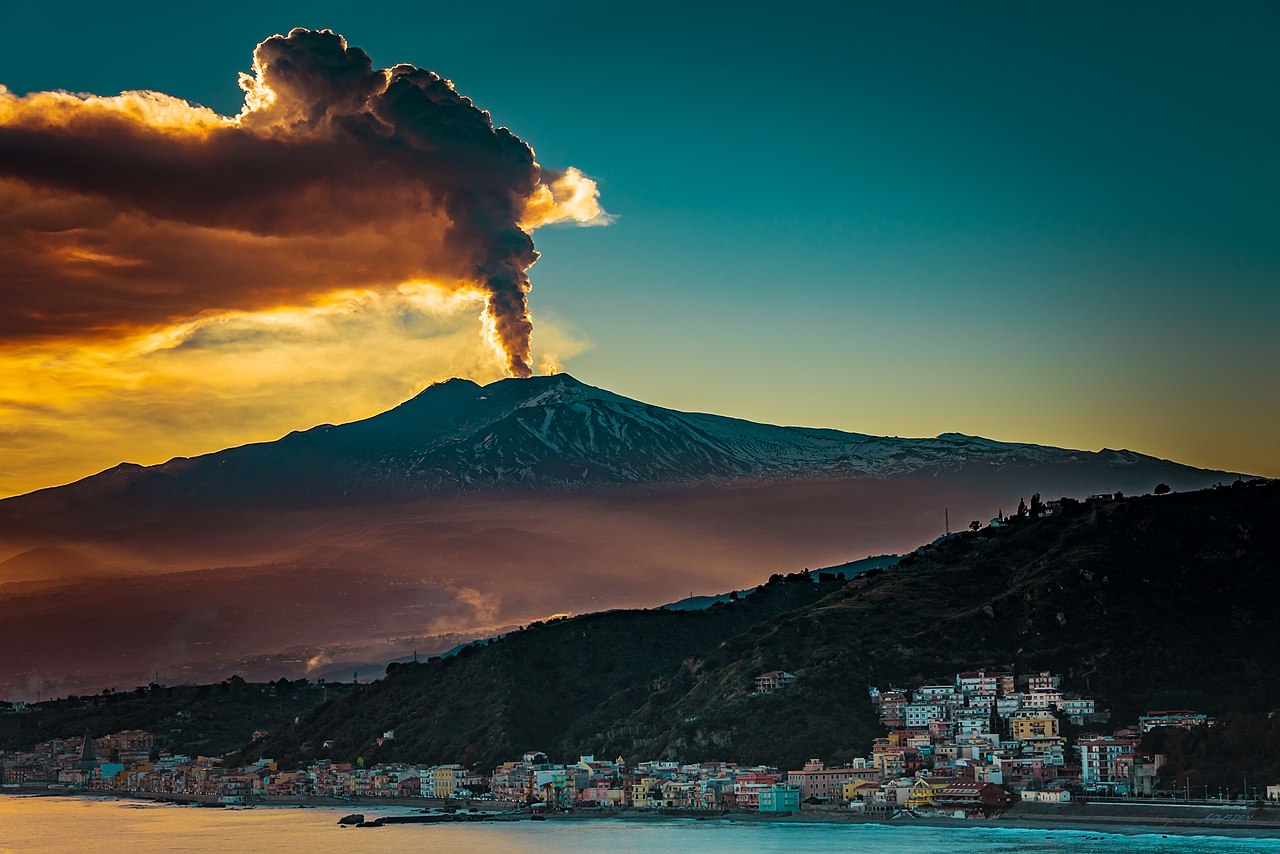
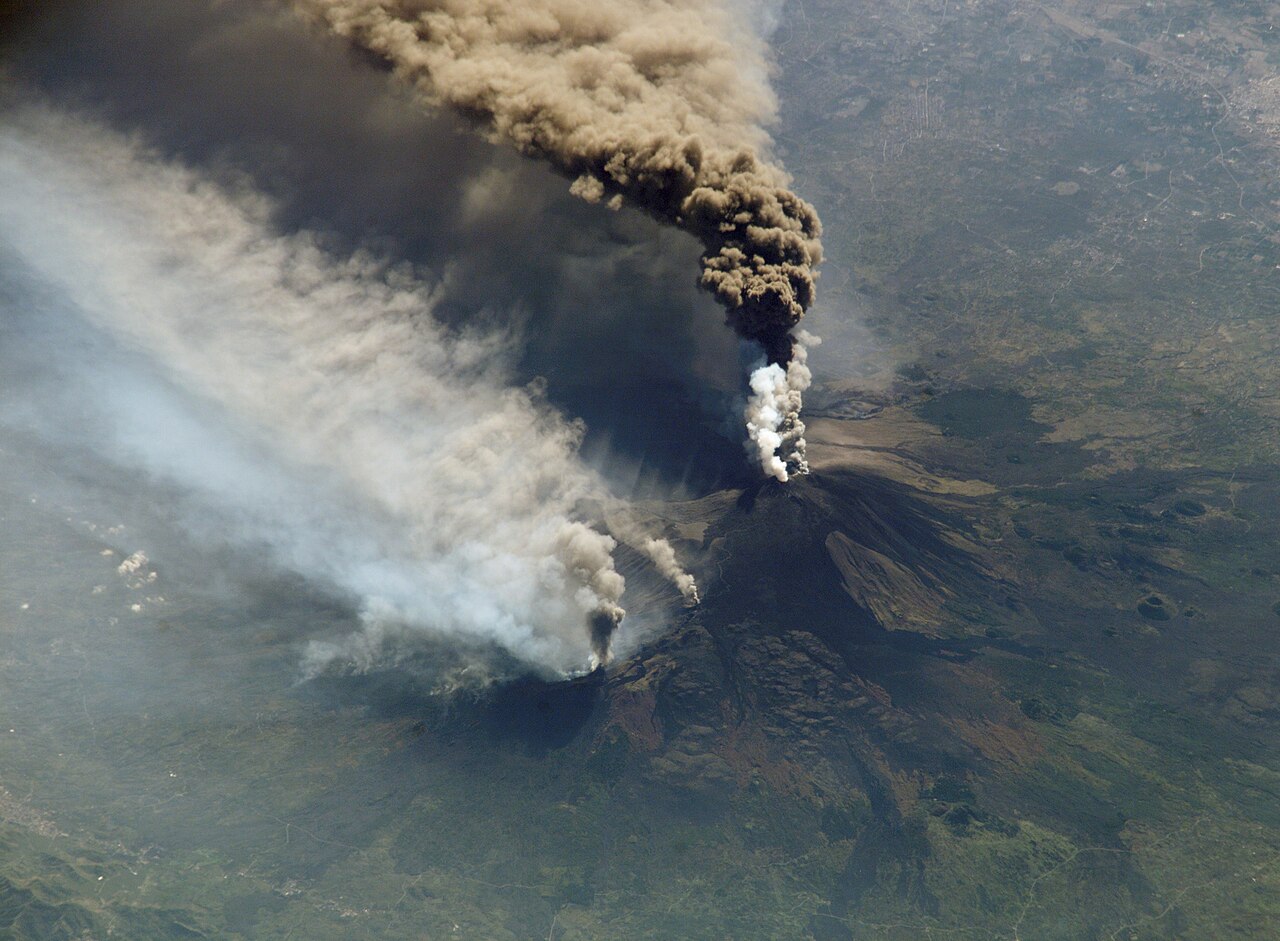
At nearly 11,000 ft (3,350 meters) above sea level, Mount Etna is the highest active volcano in Europe and a special natural treasure of Sicily. Located near the eastern city of Catania, Mount Etna covers an area of roughly 600 square miles (1,600 square km) with a base circumference of about 93 miles. This iconic volcano is one of the world’s most active, with a documented history spanning 2,700 years, known for its nearly constant activity, ranging from explosive summit eruptions to routine lava flows. A major, dramatic eruption occurred as recently as June 2025, which shut down air traffic into the Catania Airport for several days.
Its varied landscape contains a myriad of geological features including a sizable summit crater with a deep caldera, numerous cinder cones, underground lava tubes, and massive lava fields. The mountain consists of three distinct ecological zones: fertile lower slopes with vineyards and villages, forested middle slopes, and a barren, sandy, or snowy upper region.
Mt. Etna is a major tourist attraction of Sicily and has been a UNESCO World Heritage Site since 2013. It represents an important cultural, scientific, and geological feature of Sicily, which played an important role in the history of the island. The volcano is the source of many of the most famous stories of ancient Greek mythology, and has remained a symbol of the fiery soul of the island and its people.