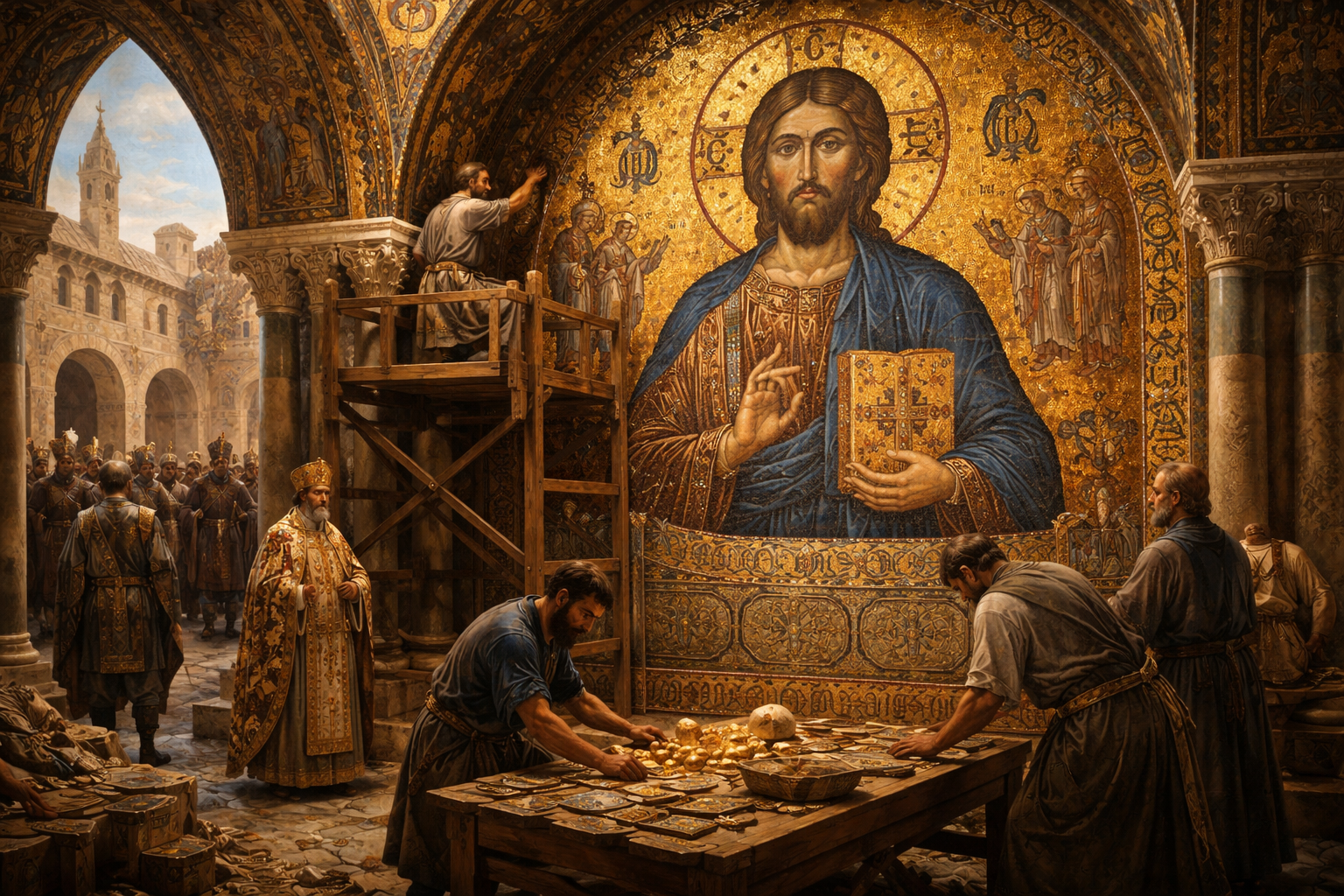


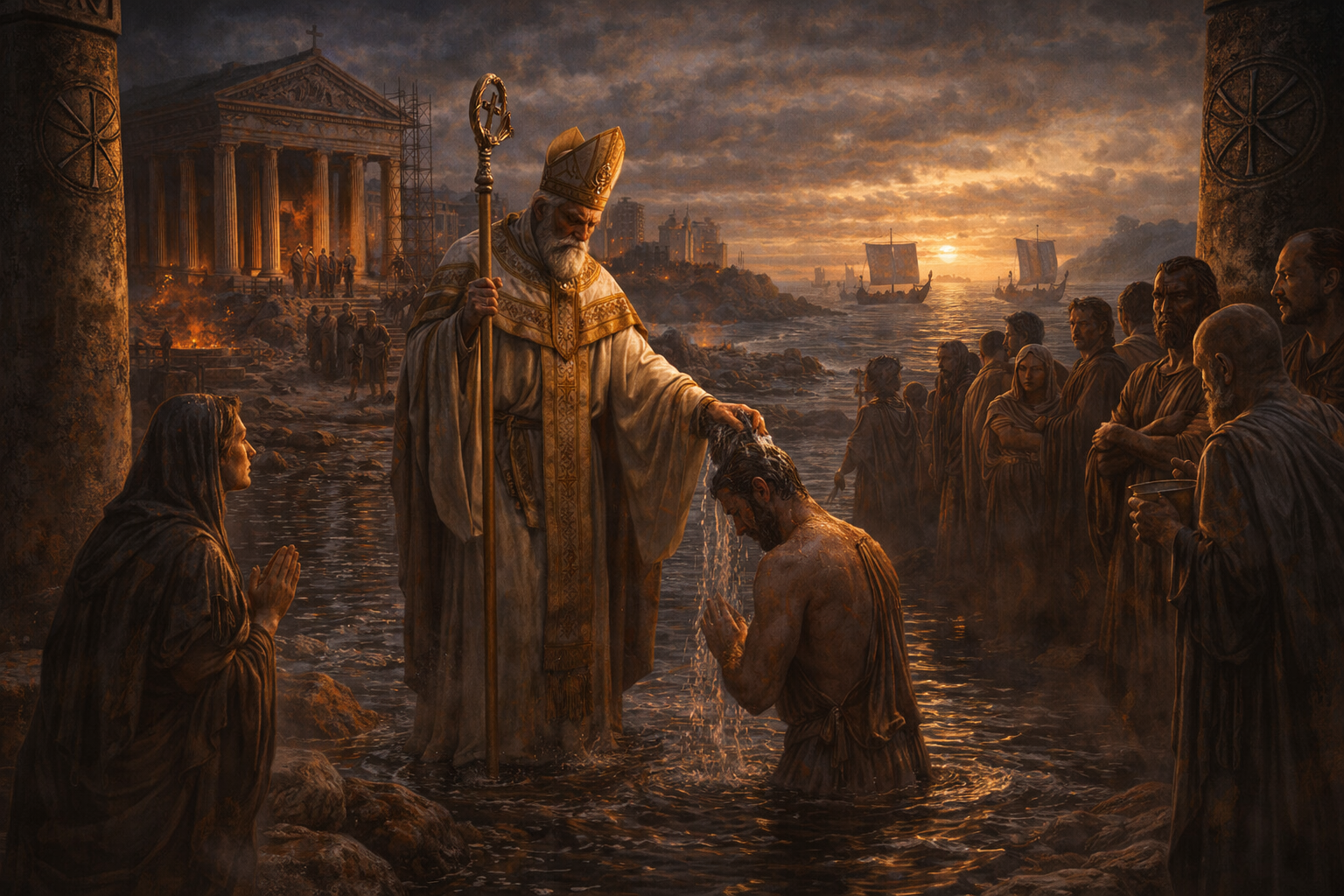
Christianity came early to Sicily. Tradition holds that Saint Paul himself visited the island at Syracuse during his journey to Rome, as recorded in the Book of Acts. By the early centuries AD, Sicily had become one of the most thoroughly Christianized regions of the Roman Empire, with large Christian communities in Syracuse, Catania, and Palermo. The early Christian catacombs of Syracuse are among the largest and most extensive in the ancient Mediterranean world, rivaling those of Rome itself.
This chapter covers the rise of Christianity during the late Roman Empire, the persecutions and eventual triumph of the faith, the conversion of Emperor Constantine in the early 4th century, and the establishment of Christianity as the official religion of the Roman Empire. It examines the stories of the three early Christian martyrs of Sicily, Saint Agatha of Catania, Saint Lucia of Siracusa, and Bishop Marciano of Siracusa.
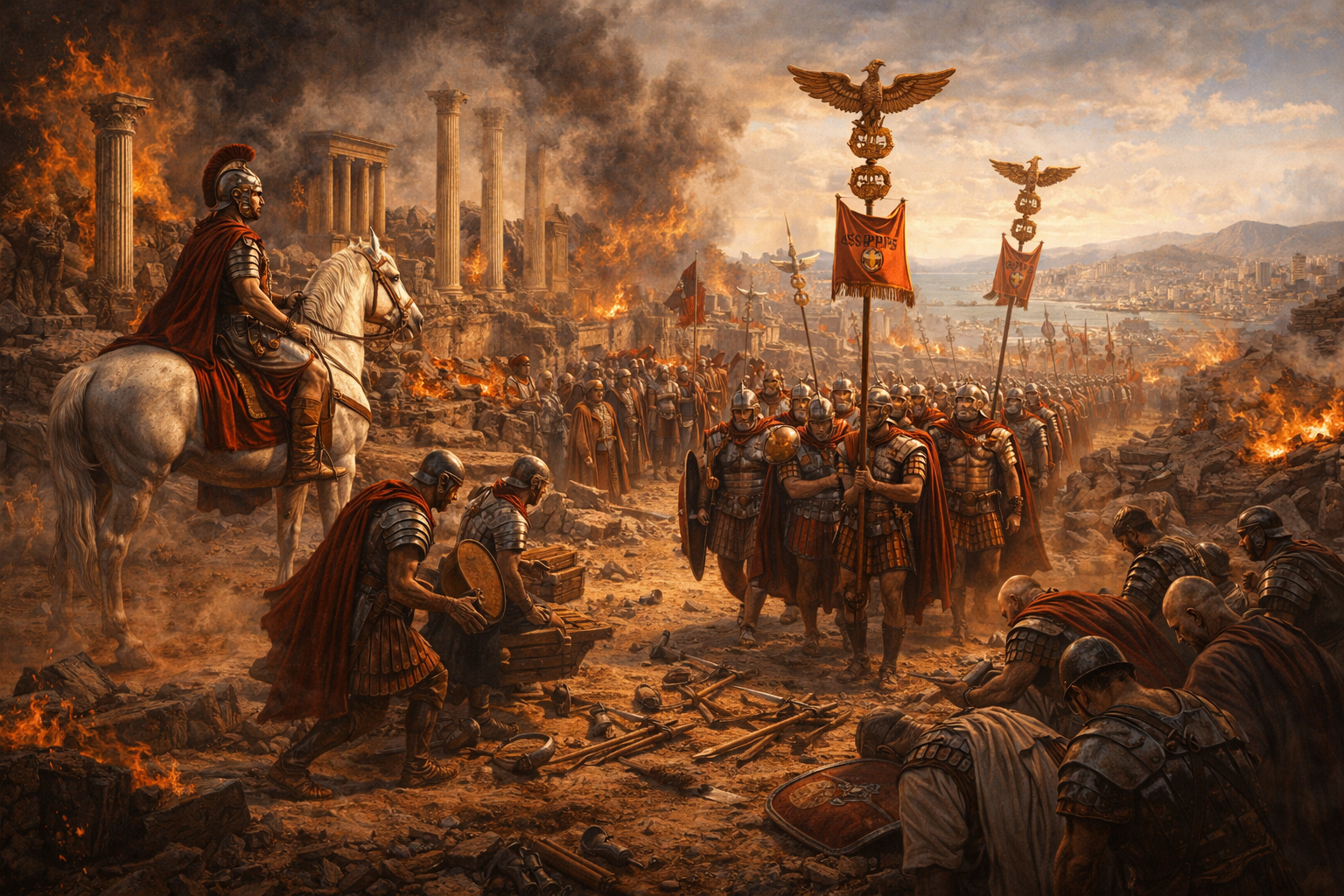
The chapter also traces the long decline of the Western Roman Empire in the 4th and 5th centuries. Sicily, like the rest of the western provinces, suffered from repeated barbarian raids, economic decline, and political instability. The island was briefly occupied by Vandals in the 5th century before passing into the hands of the Ostrogoths after the formal fall of the Western Empire in 476 AD. Sicily was to be reclaimed by the Roman Empire once more, when Byzantine armies arrived in 535 AD to reconquer the island for the Eastern Roman Empire of Constantinople.