Illustrated History of Sicily

A visual journey through the land, cuisine, people, language, and living traditions of Sicily — the crossroads of civilizations.

Illustrated History of Sicily

A visual journey through the land, cuisine, people, language, and living traditions of Sicily — the crossroads of civilizations.

Arab-Norman Palermo, Cefalù & Monreale

---Inscribed 2015

Why It Matters

The physical embodiment of Sicily’s Norman golden age — Arab craftsmanship, Byzantine mosaics, and Latin liturgy unified in some of the most beautiful buildings in Christendom.

Introduction

Located along the northern coast of Sicily, Arab-Norman structures in Palermo and surrounding areas includes a series of nine civil and religious structures dating from the era of the Norman kingdom of Sicily. All were built between 1130 and 1194 during the reign of the Norman kings Roger II, William I, and William II, and reflect the remarkable cultural fusion of that era. Collectively, these monument display the social-cultural union of Latin, Greek, and Islamic influences present on the island during that period, a testament to the unique peaceful coexistence of peoples of different ethnic origins and all the principal religious faiths of the western world (Islam, Judaism, Greek Orthodox and Latin Christianity). The following structures were declared UNESCO World Heritage Sites in 2015.

THE MONUMENTS

Royal Norman Palance and the Palatine Chapel

[unesco_gallery_images]
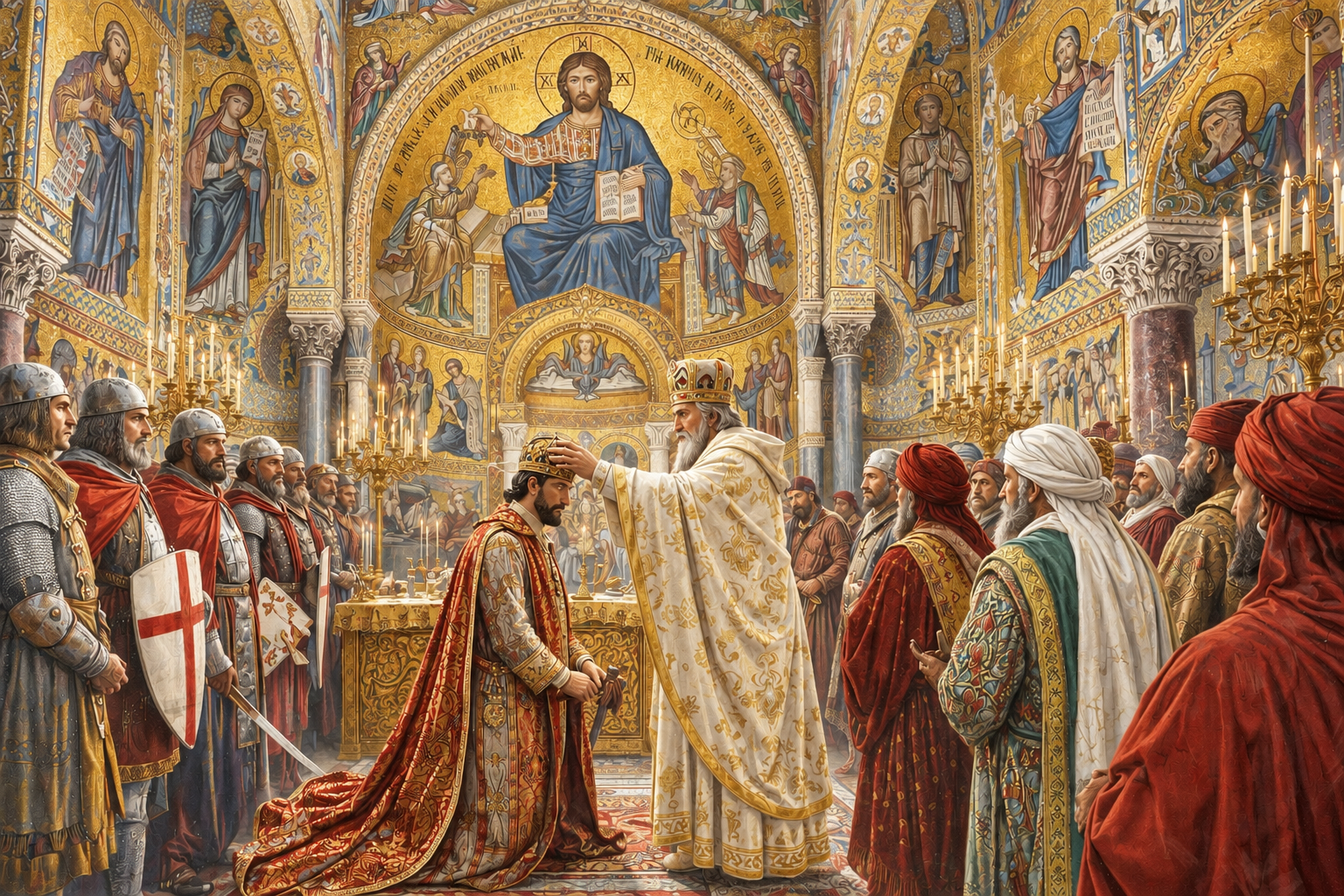
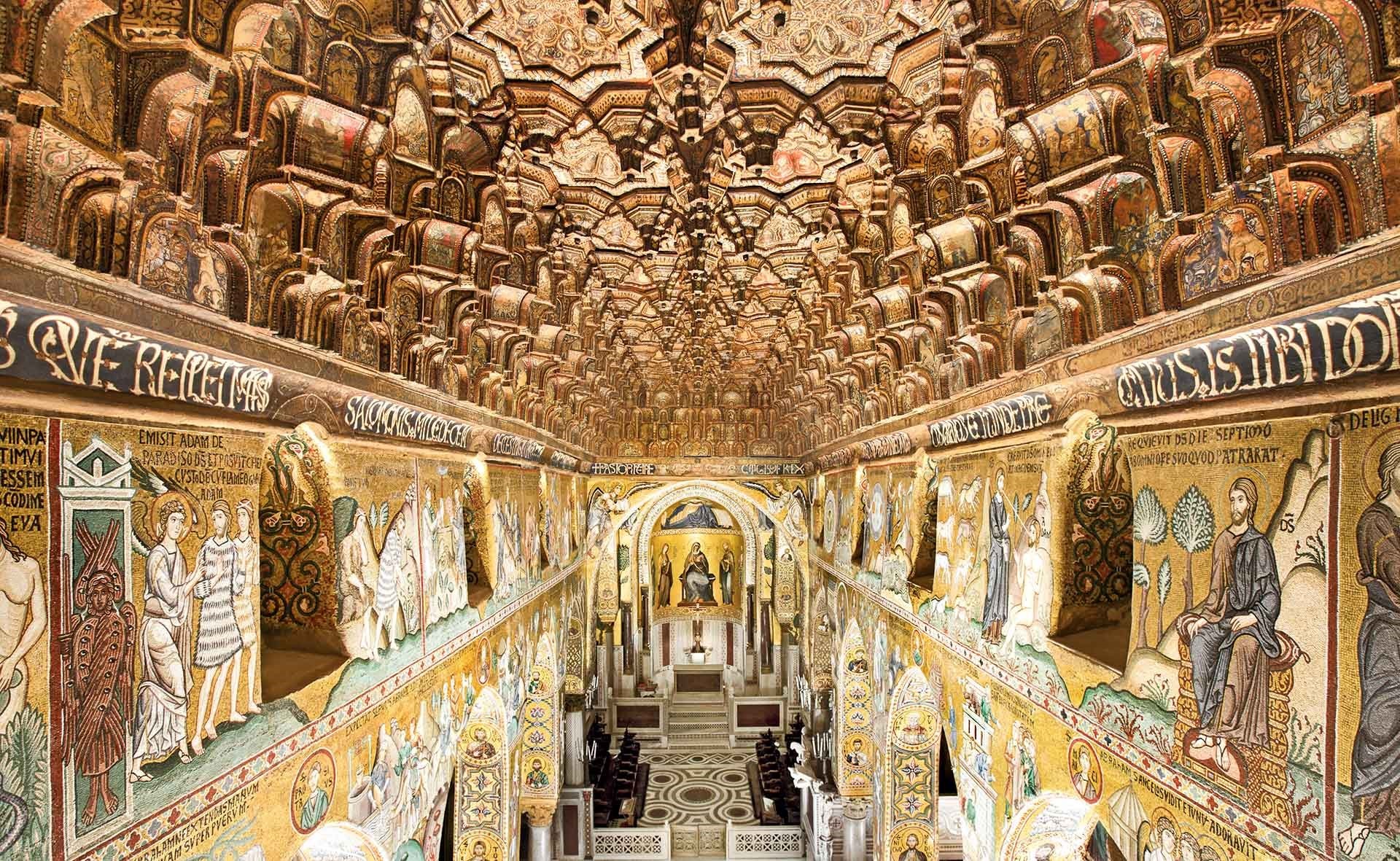
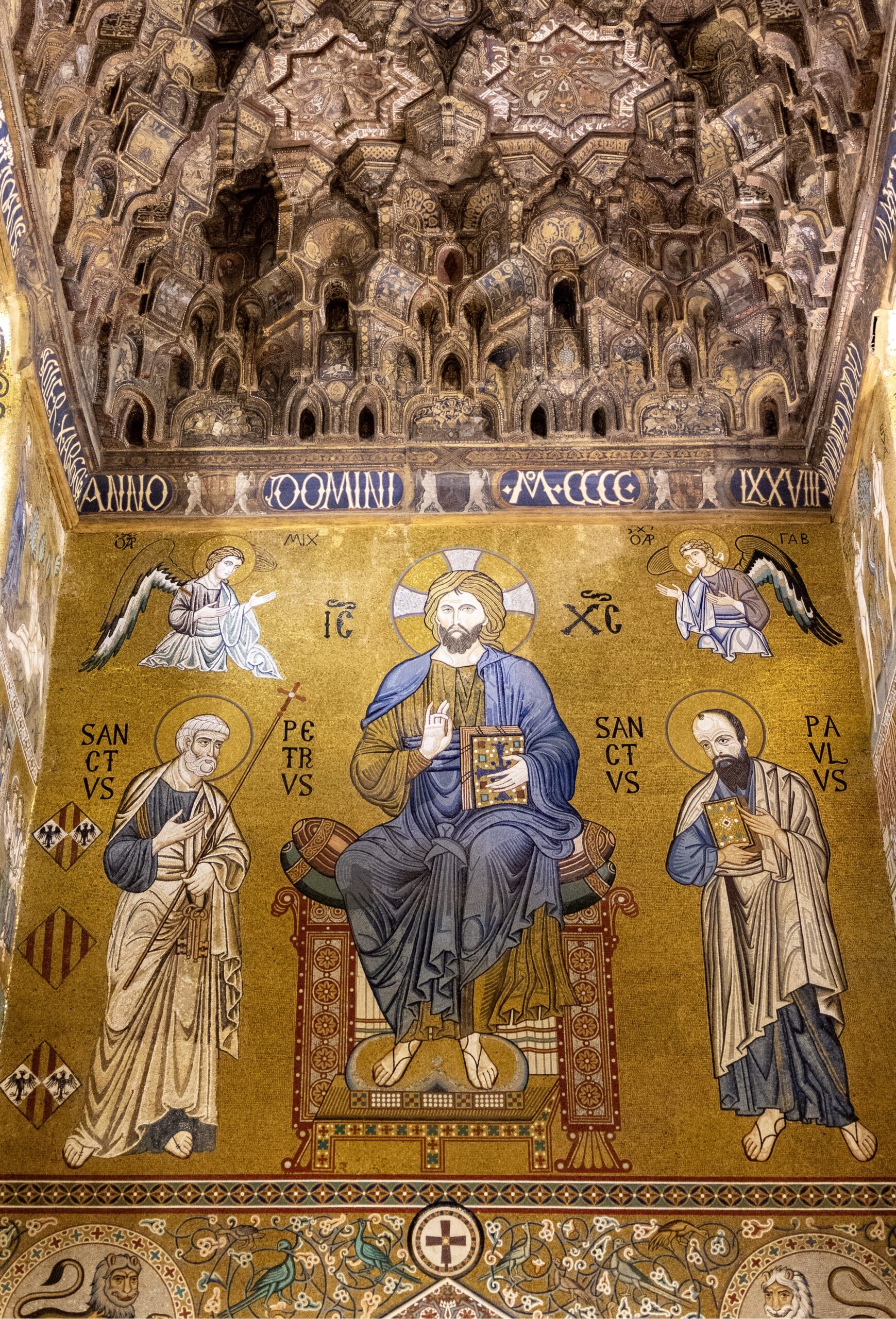
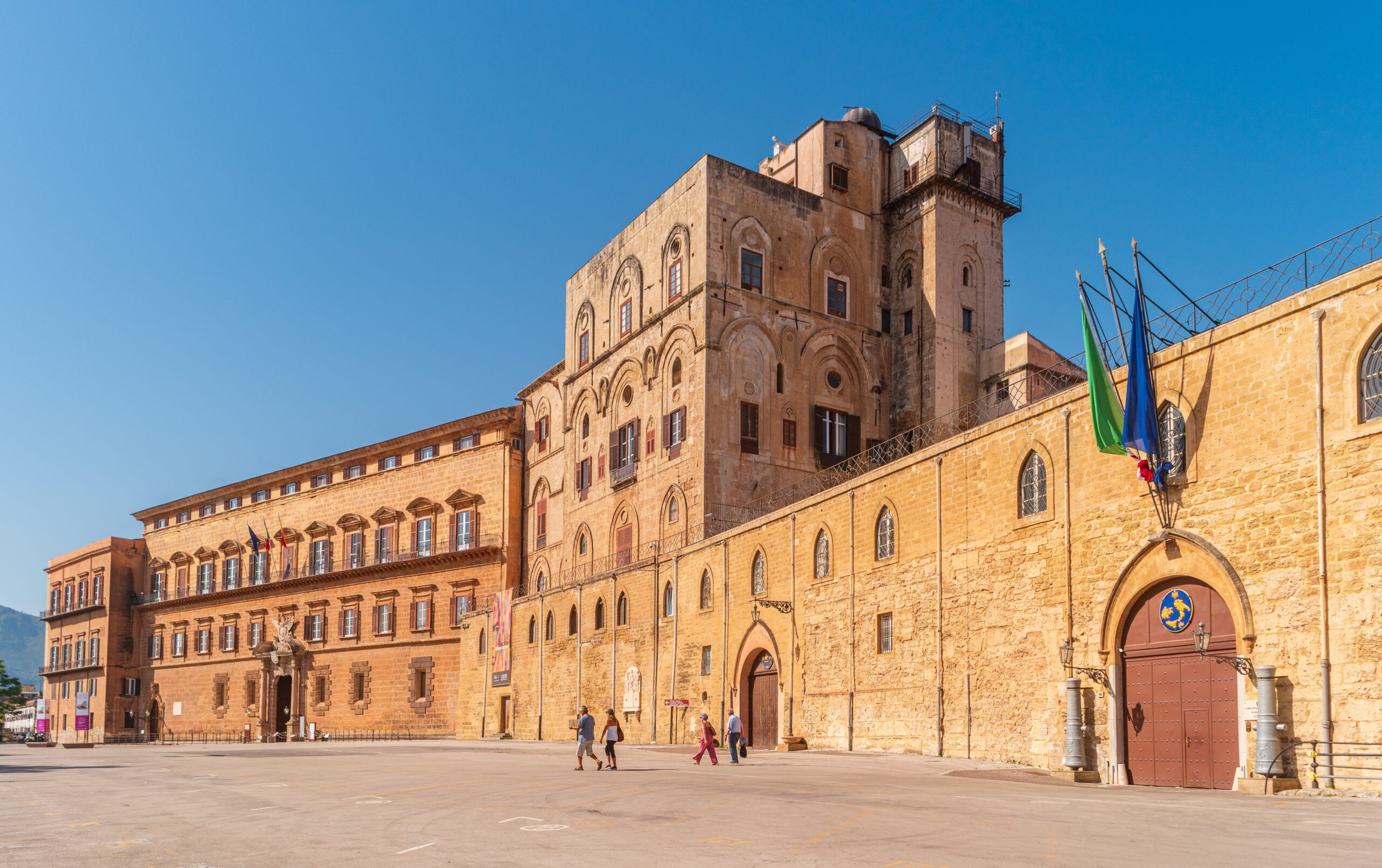
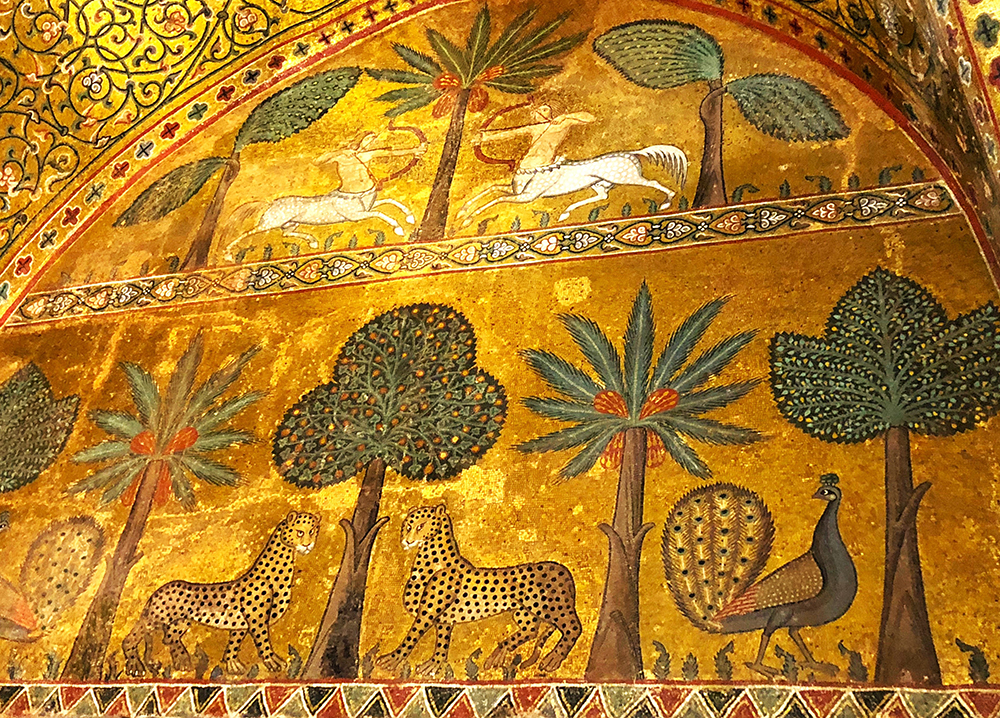
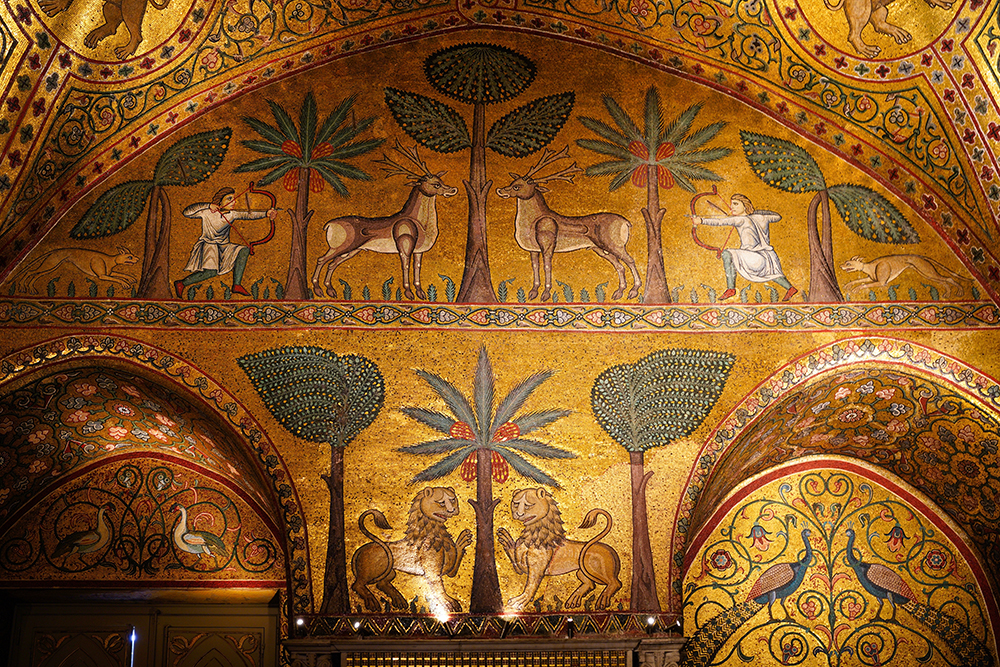
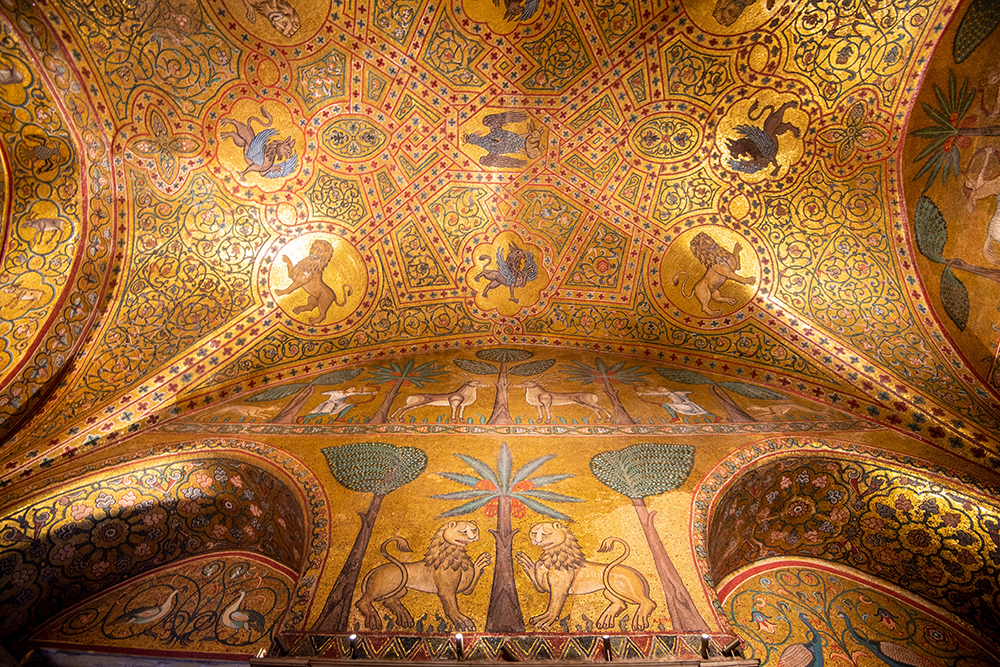
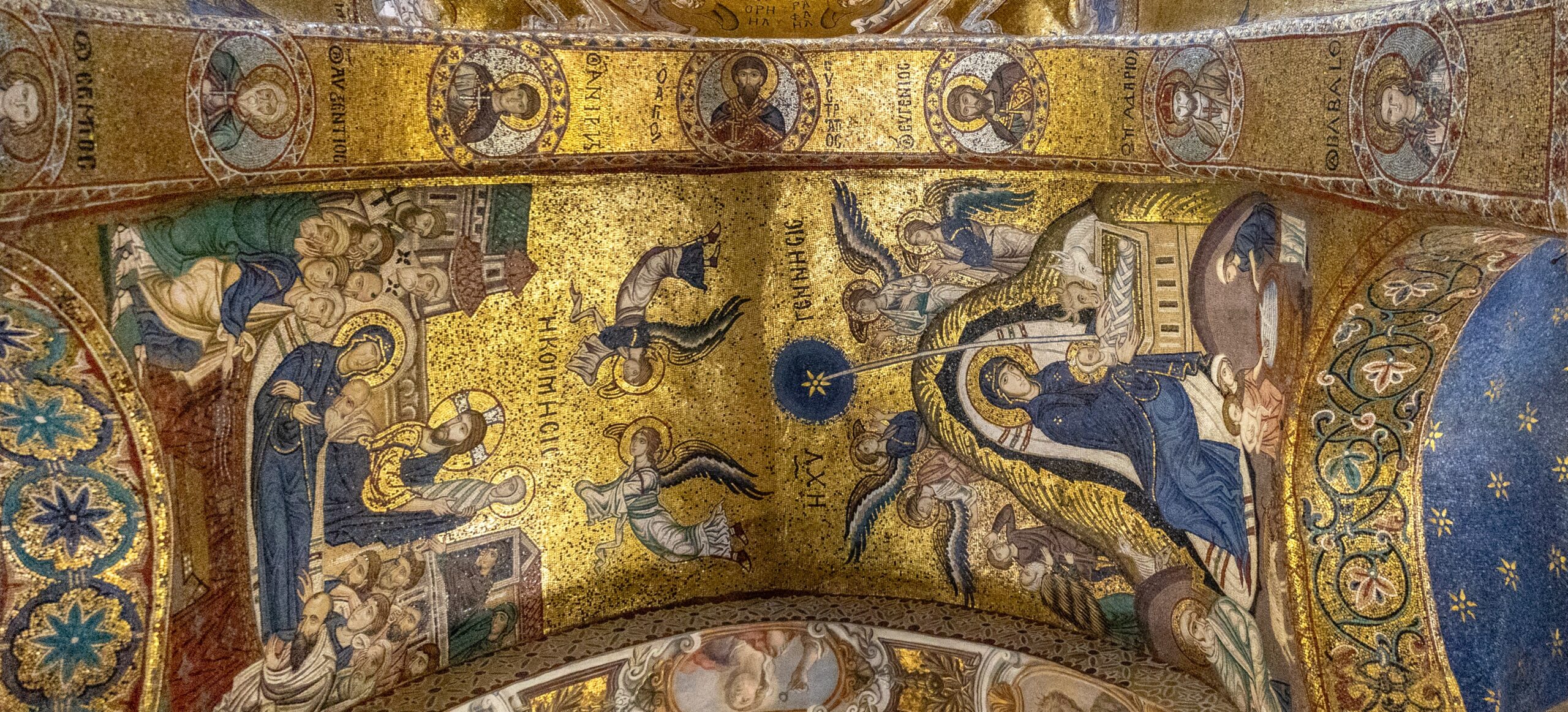
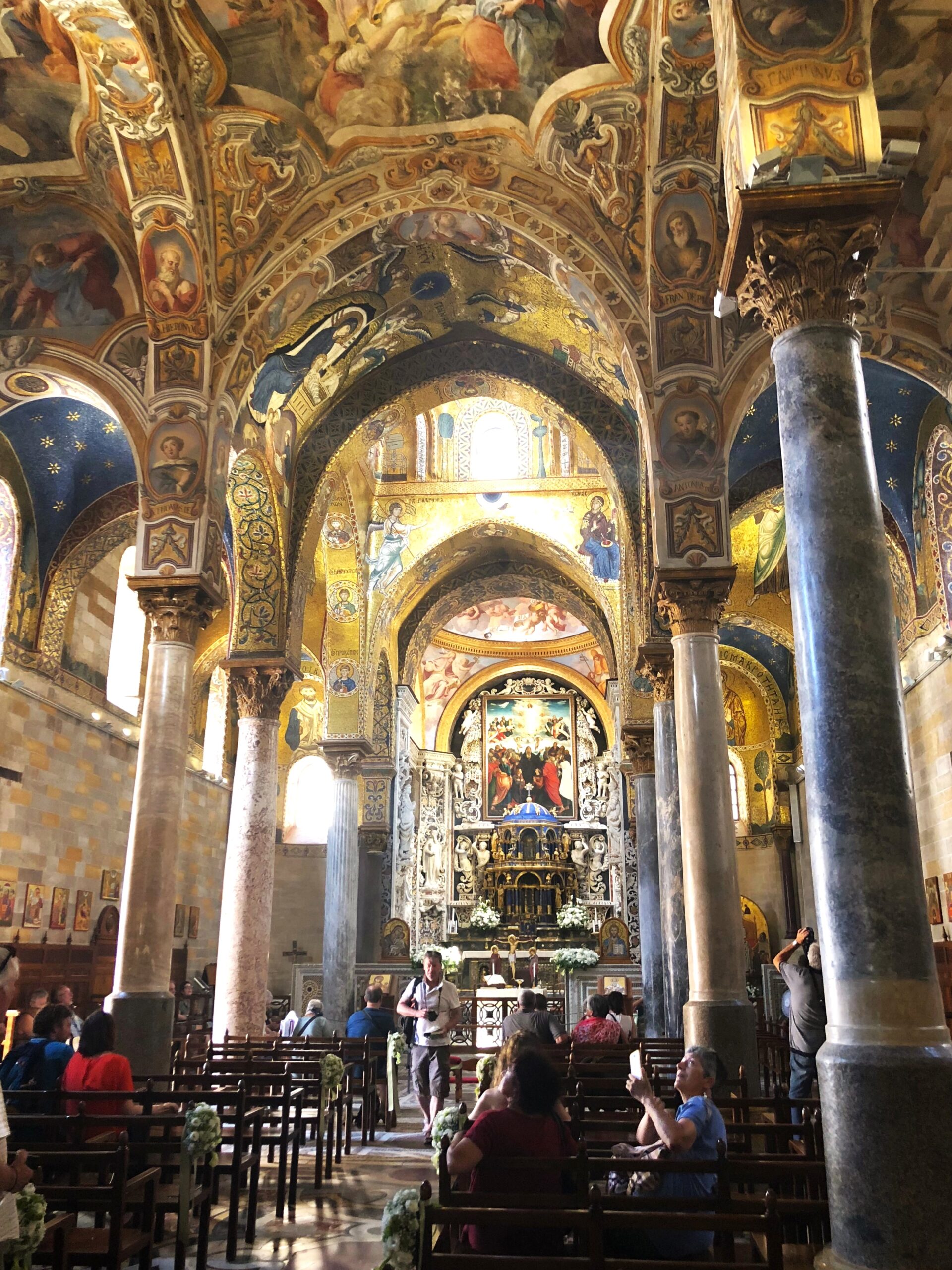
Located inside the Norman Palace of Palermo, the Palatine Chapel may be the most exquisite religious monument in all of Sicily. The Palatine Chapel was commissioned by the Norman King Roger II in 1129 and completed around 1140. As the personal royal chapel to the king, its splendor reflects Roger’s exalted view of the Sicilian monarchy, as being derived directly from God. Its walls are covered in brilliant Byzantine-style gold mosaics depicting biblical scenes. Its sculpted wooden Islamic muqarnas ceiling is a masterpiece of intricate geometric carvings, painted with scenes of everyday life, including messages inscribed with fine Arabic calligraphy. Its colorful cosmati mosaic flooring is an Arab-inspired masterwork of geometric designs. Many believe the bedazzling chapel to be one of the most beautiful, visually stunning and artistically splendid religious monuments in all Christendom.

Zisa Palace

[unesco_gallery_images]
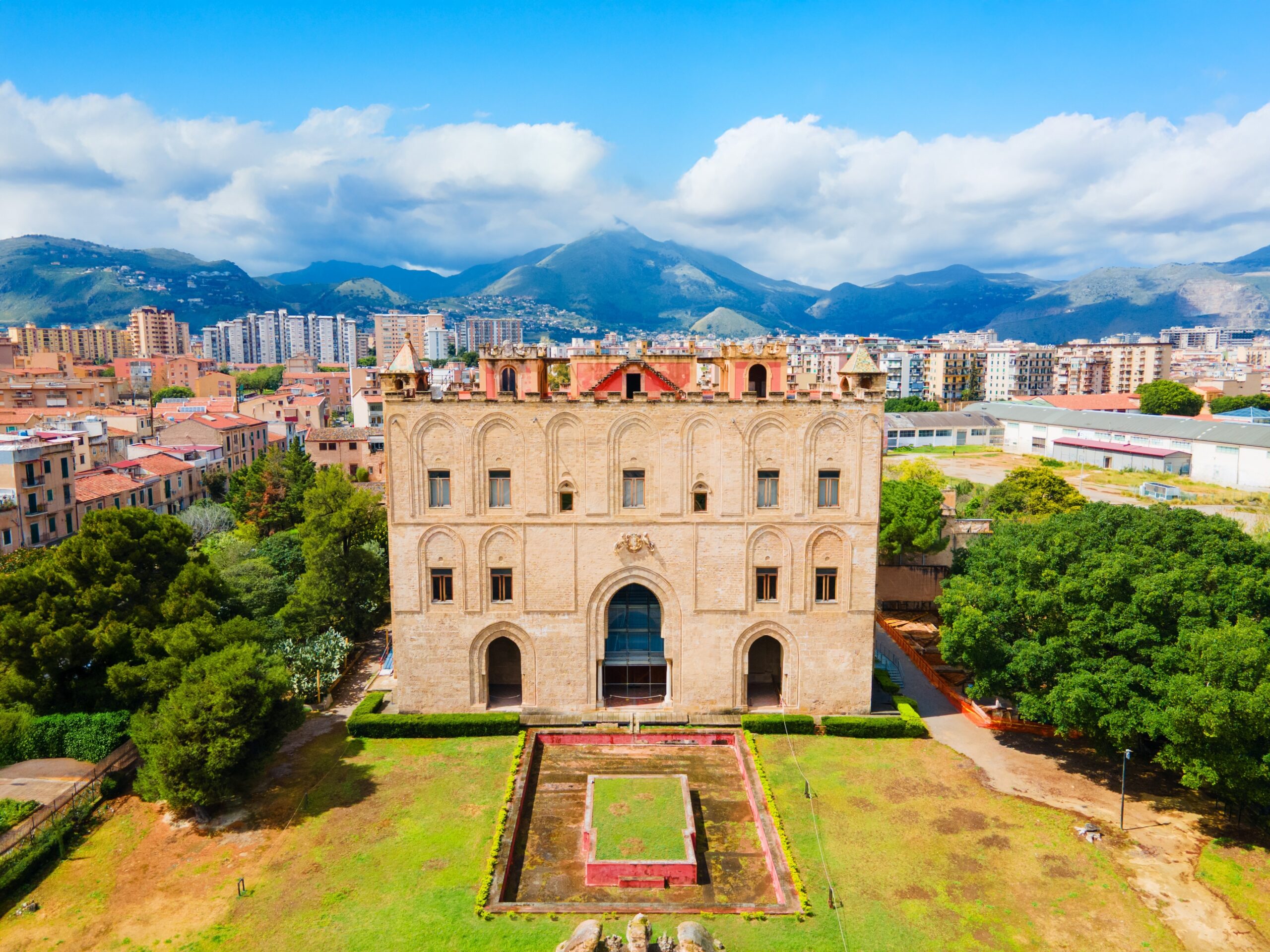
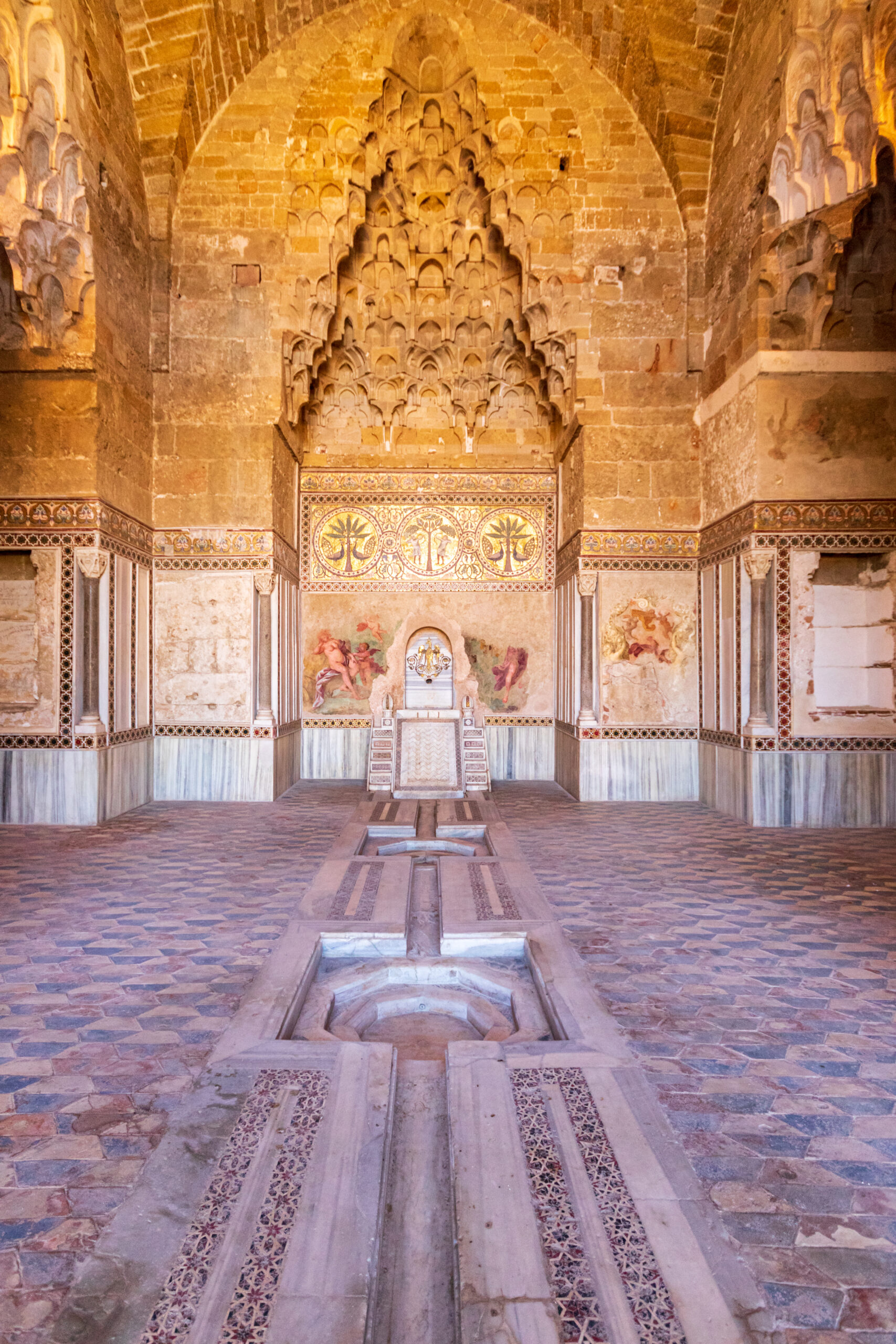
The Zisa Palace (La Zisa) in Palermo is a 12th-century Norman summer residence and hunting lodge, heavily influenced by Arab art and architecture. Built for King William I and completed by William II, its name derives from the Arabic Al-Aziz ("the magnificent"). Located in the outskirts of Palermo, the Palace was originally part of a larger royal park ("Paradise on Earth") with lush gardens, large fountains, and a menagerie of exotic animals in the private royal zoo. The centerpiece of the Palace interior is its ground floor with a large room with vaulted muqarnas wooden ceilings, along with a small decorative waterfall and a large indoor fountain flowing to an outer fish pond, which served as a natural air conditioner to cool the interior. Today, the Palace houses a museum featuring fine examples of Islamic art from the Mediterranean region and Sicily (9th–12th centuries), including North African artifacts and those of local craftsmanship.

Palermo Cathedral

[unesco_gallery_images]
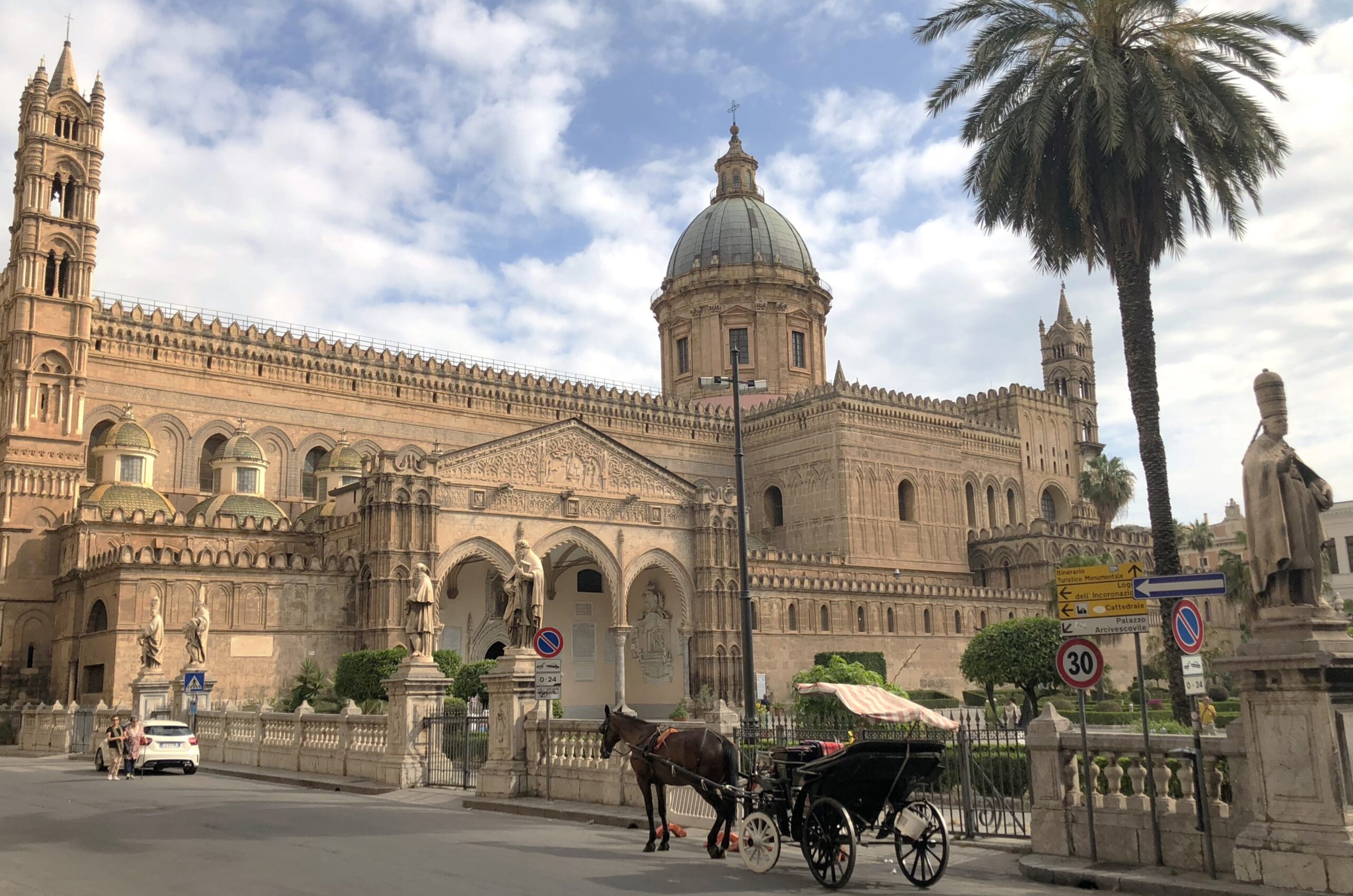
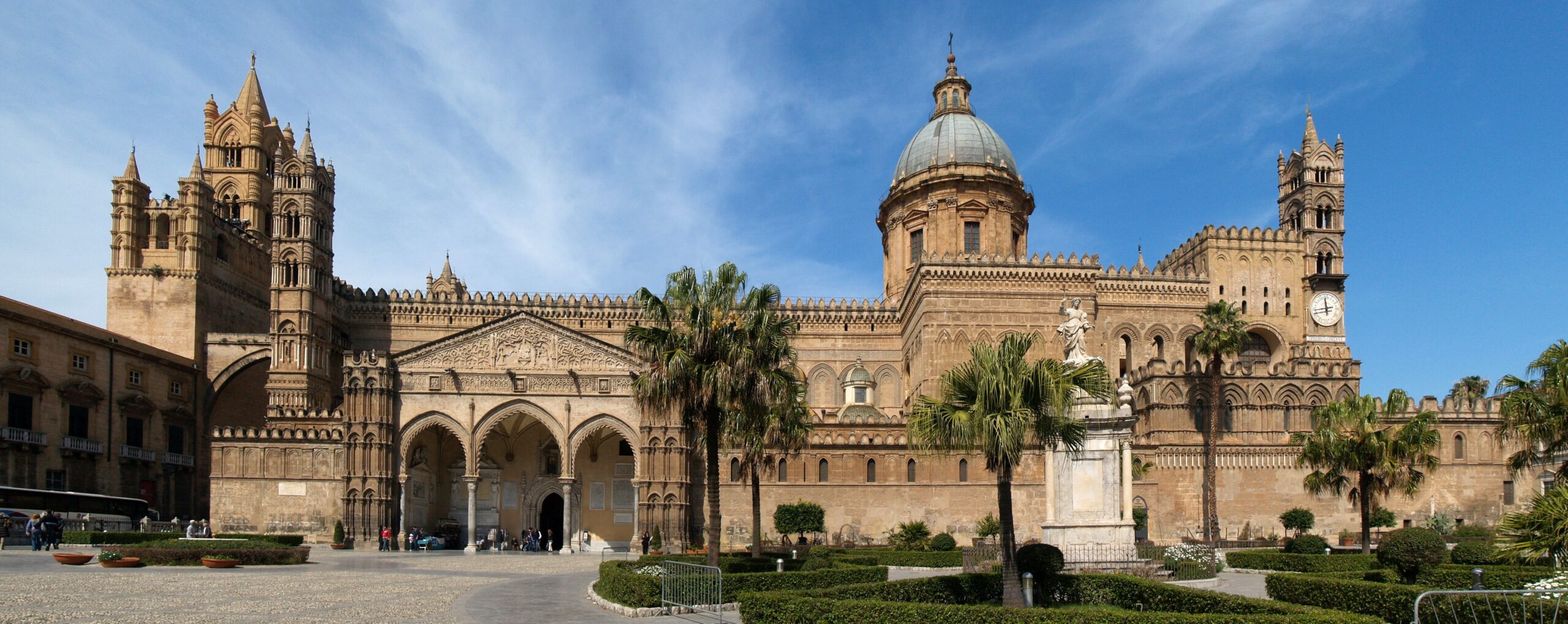
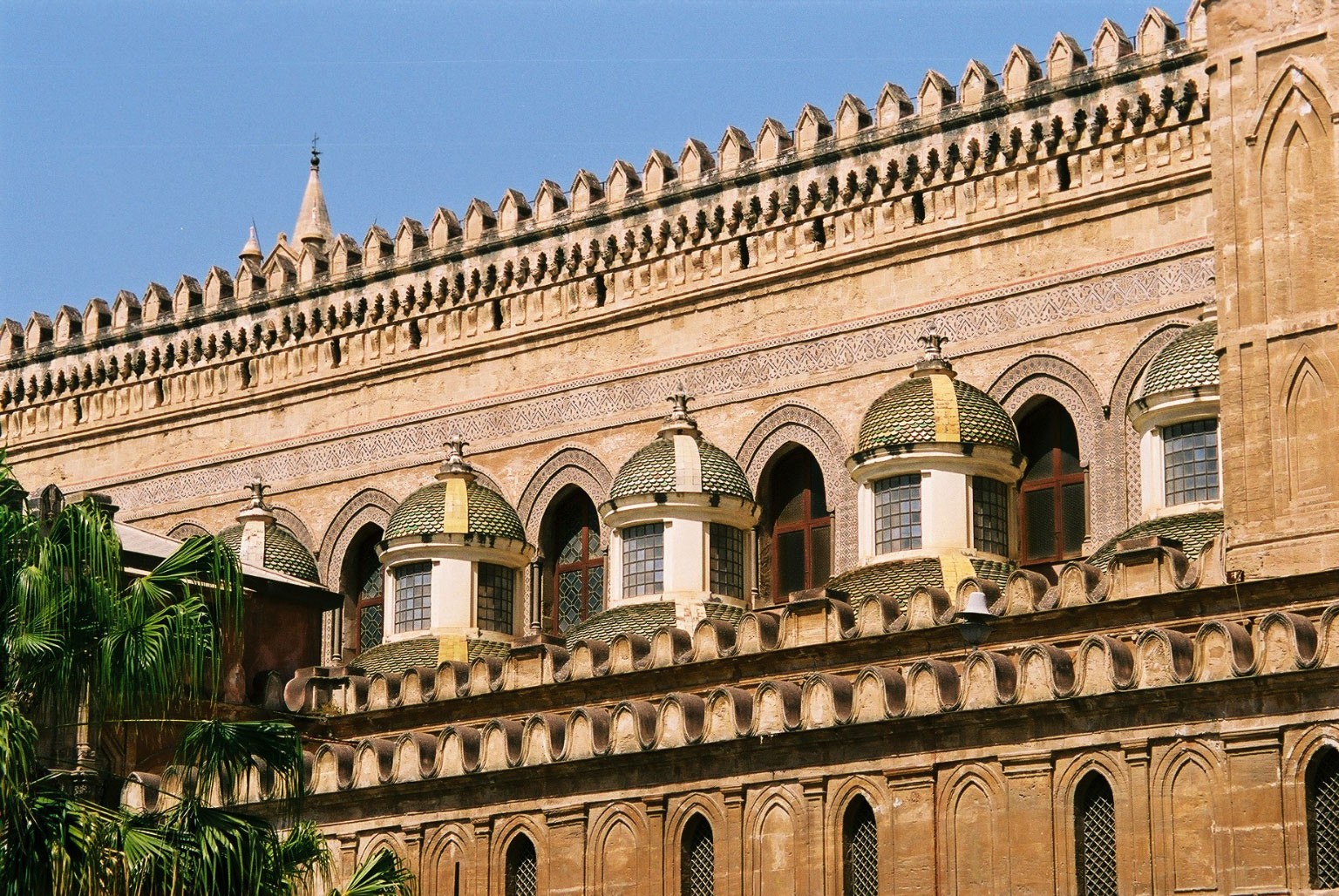
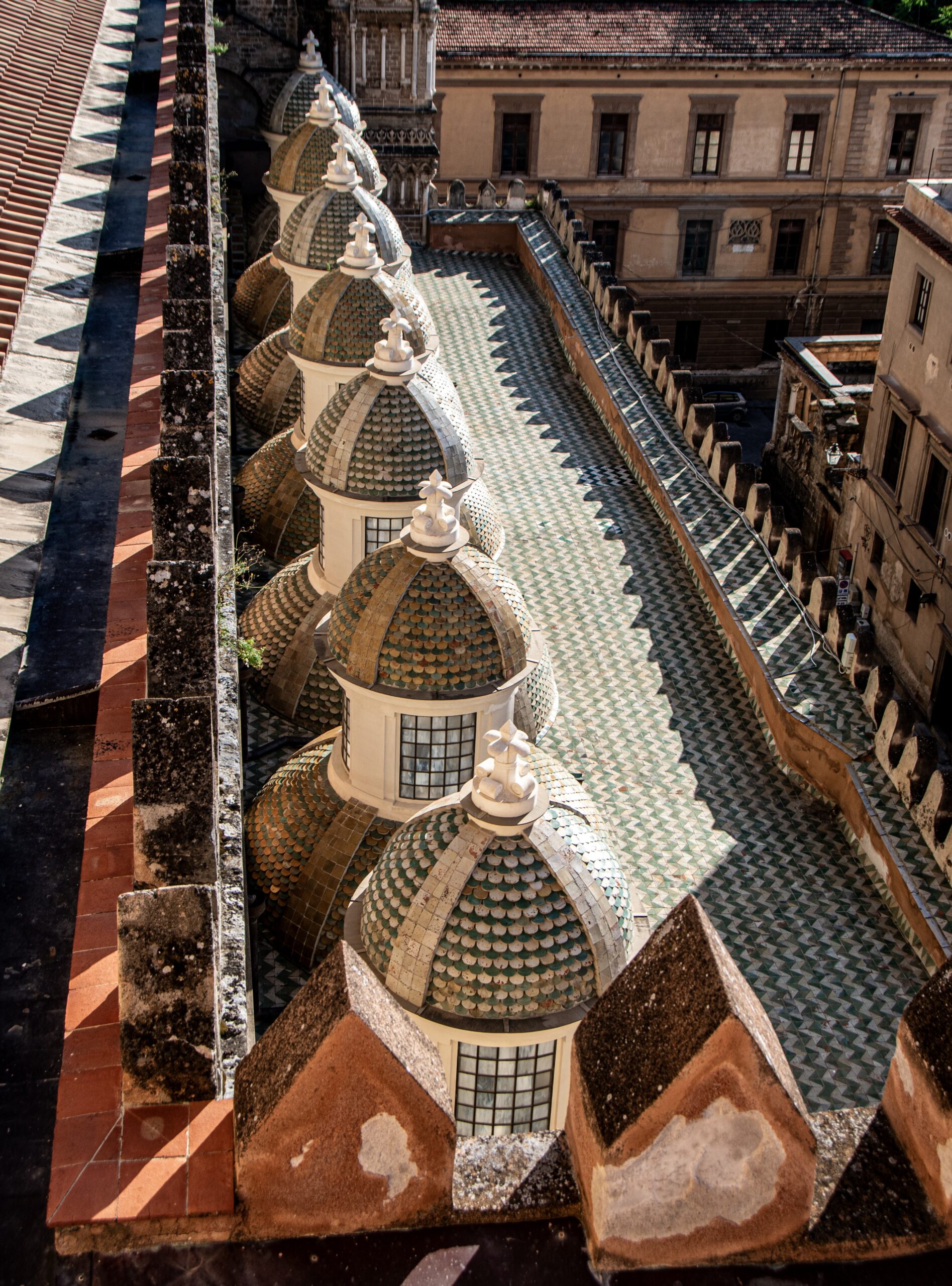
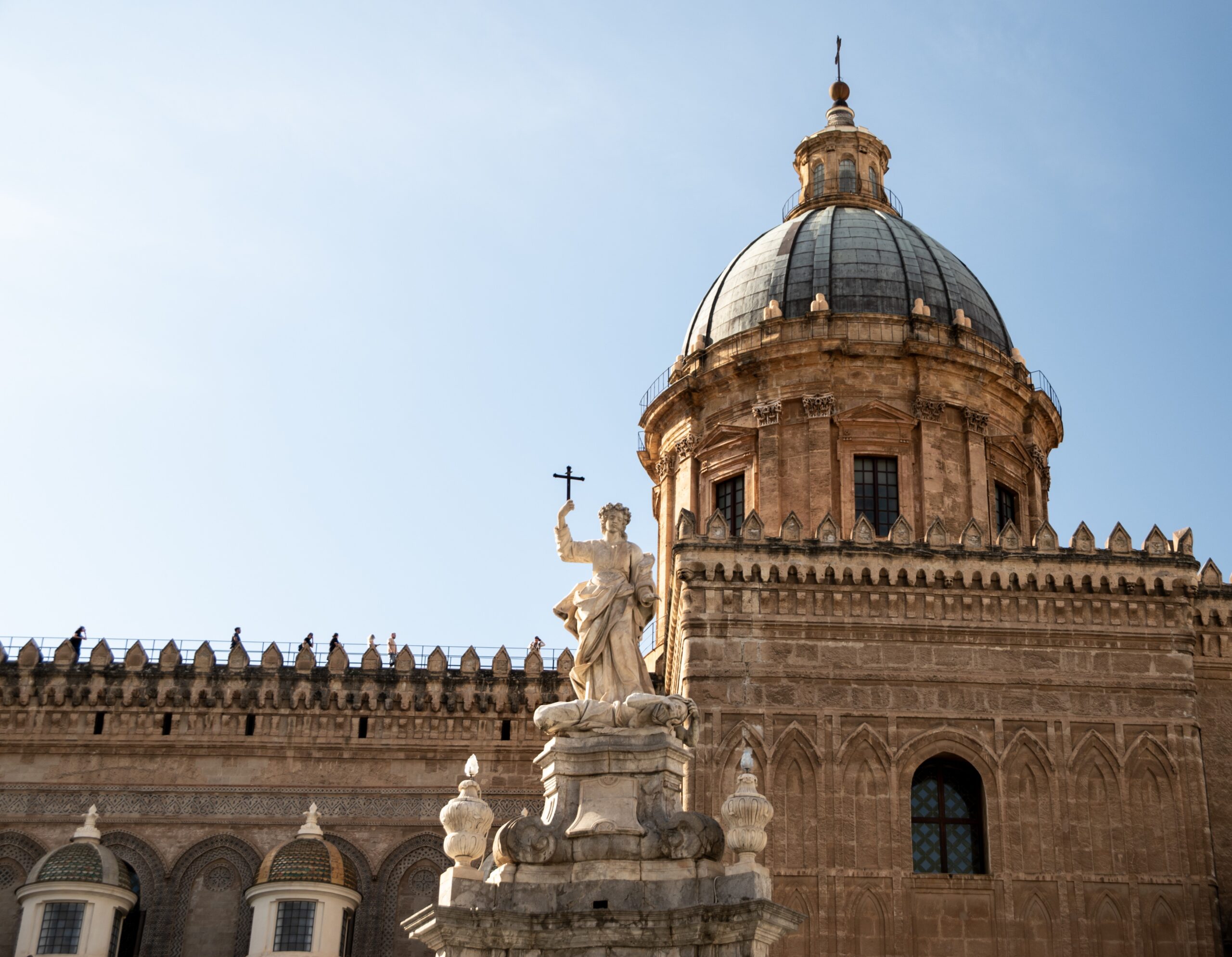
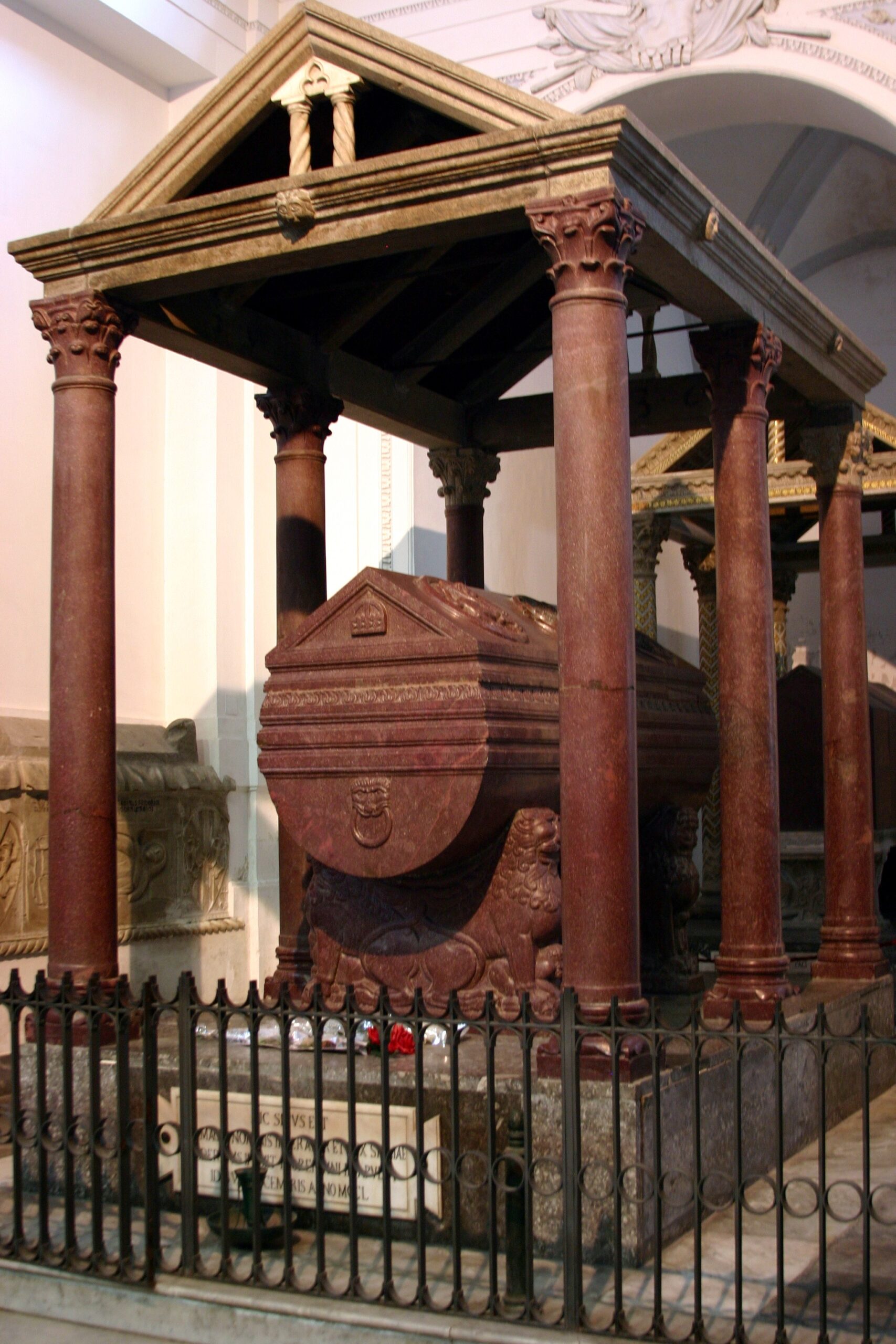
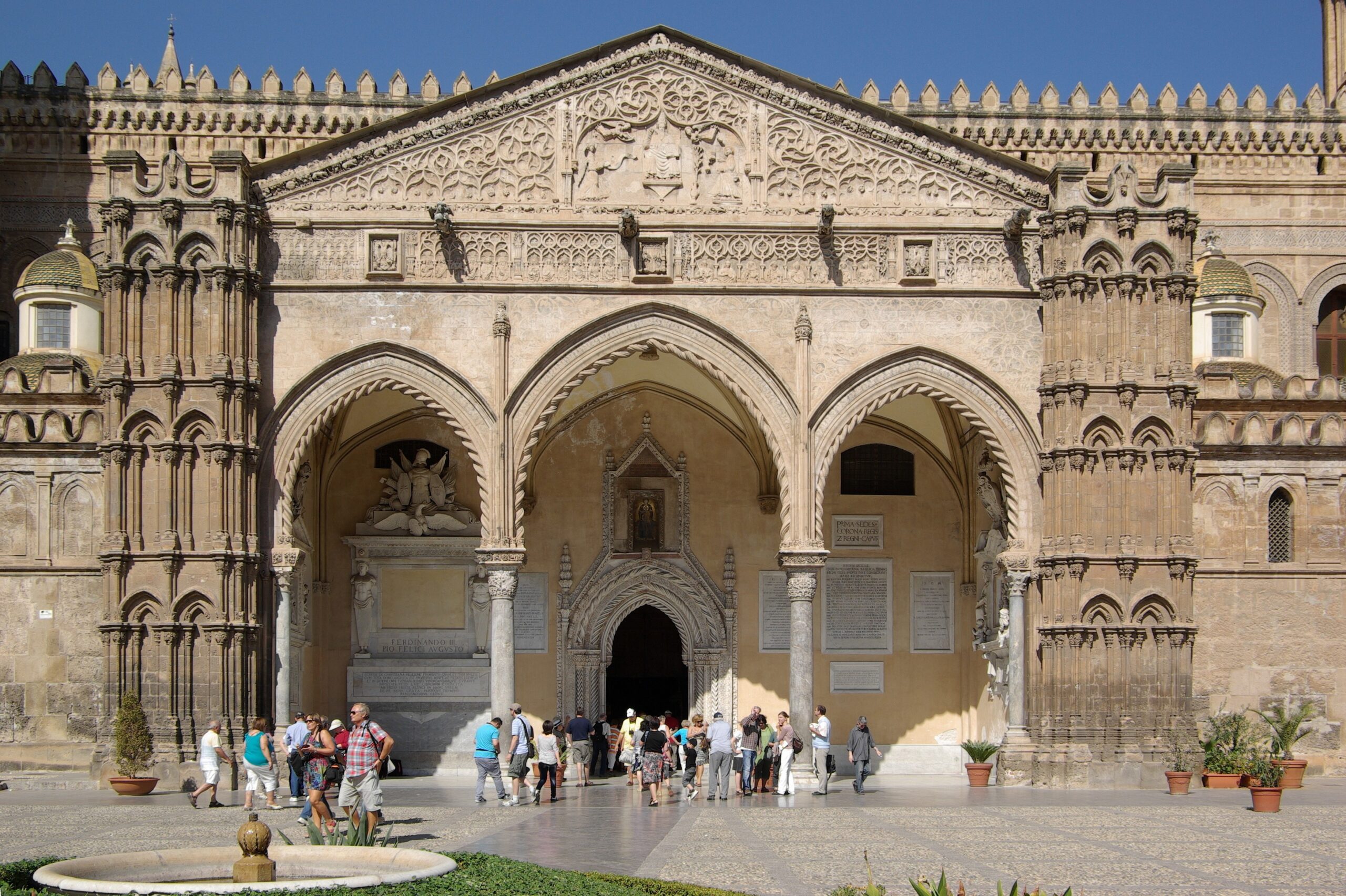
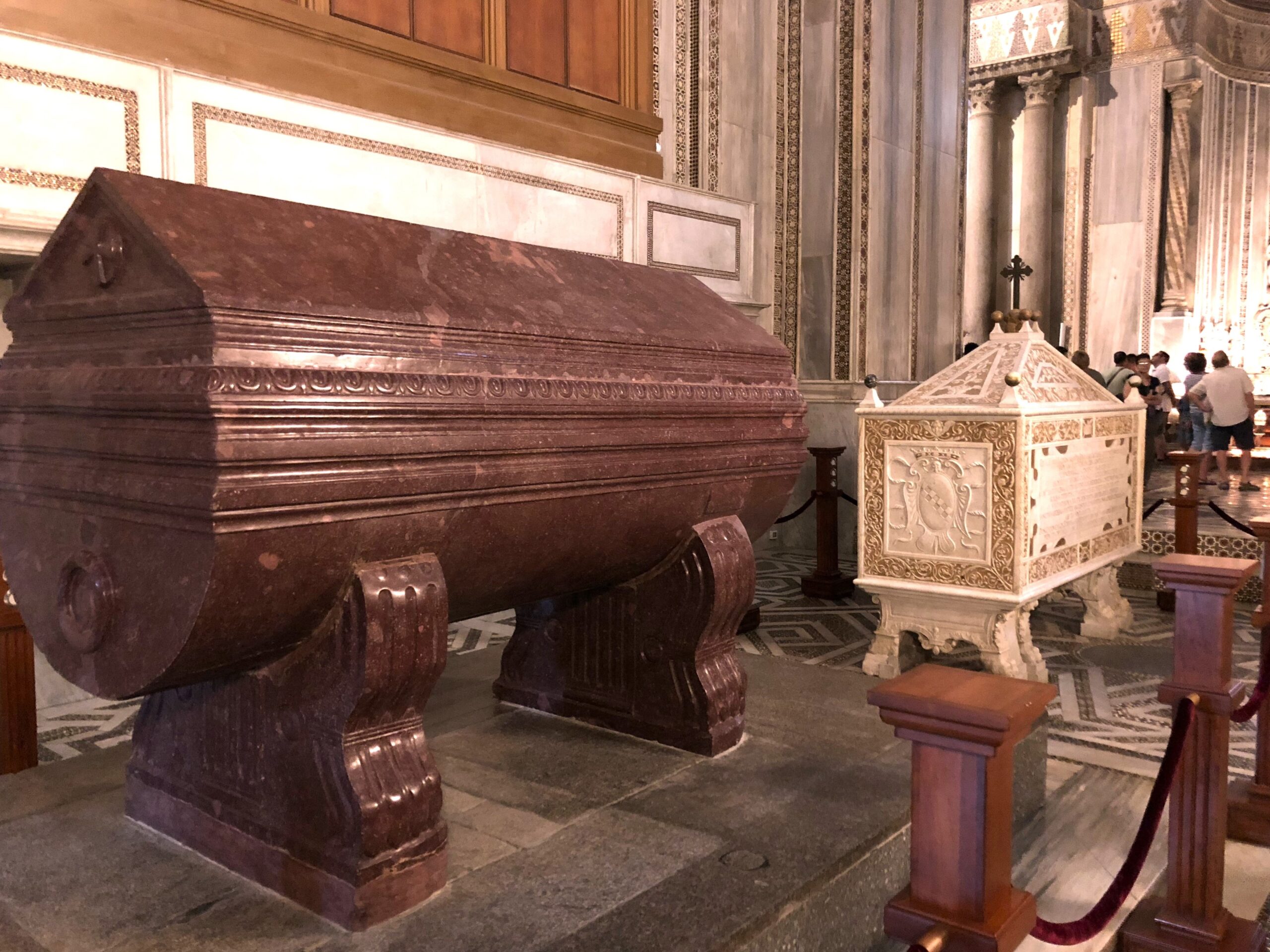
Also known as the Cathedral of the Assumption of the Virgin Mary, the Cathedral is representative of Sicily’s long complex history. The modern structure blends the design elements of many architectural styles, including Norman, Islamic, Gothic, and Baroque, a result of repeated renovations completed during different dynastic periods over the centuries. The original structure was a 12th-century Norman cathedral, commenced in 1184. The location had a nearly 1,000-year cultural history, previously serving at the site of an earlier Byzantine basilica and later as a mosque. Throughout the past 900 years the cathedral has served as the setting for nearly all significant royal coronations and weddings in Sicilian history. It’s exterior courtyard has also been the site of many infamous public trials and executions, conducted during the nearly three century reign of terror by the Spanish Inquisition, as well as an urban battleground during the 1860 people’s revolution of the Risorgimento, led by Giuseppi Garibaldi. The bright interior features a Latin cross plan and includes a royal chapel containing the imperial sarcophagi of the kingdom's Norman and Hohenstaufen founders, including King Roger II, Holy Roman Emperor and King of Sicily Henry VI, his wife Empress and Queen of Sicily Constance, and Holy Roman Emperor and King of Sicily Frederick II (known to history as “Stupor Mundi”, the Wonder of the World). The cathedral also houses a crypt, and an ecclesiastical treasury museum, displaying religious artifacts from its history.

Church of St. John of the Hermits

[unesco_gallery_images]
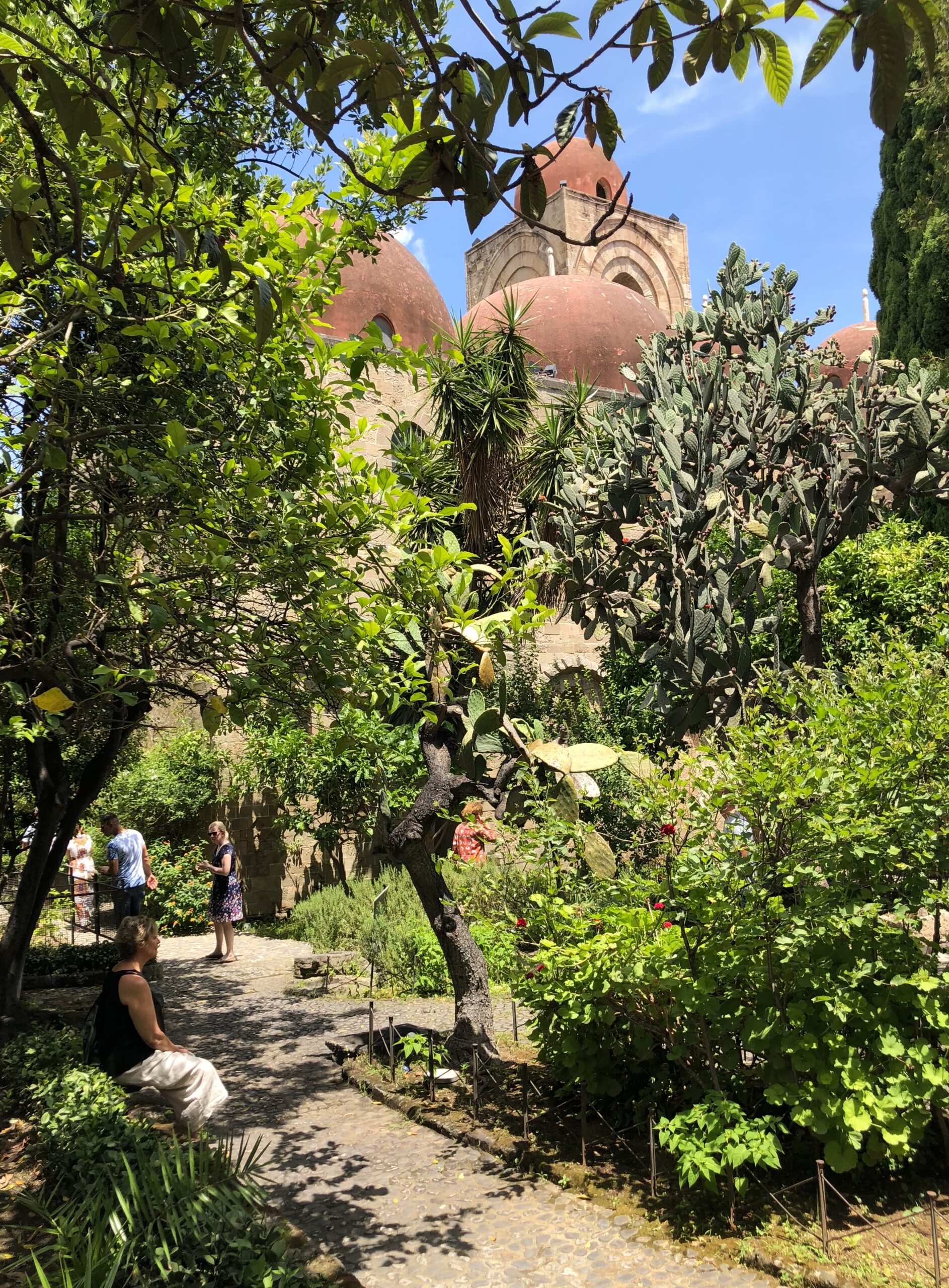
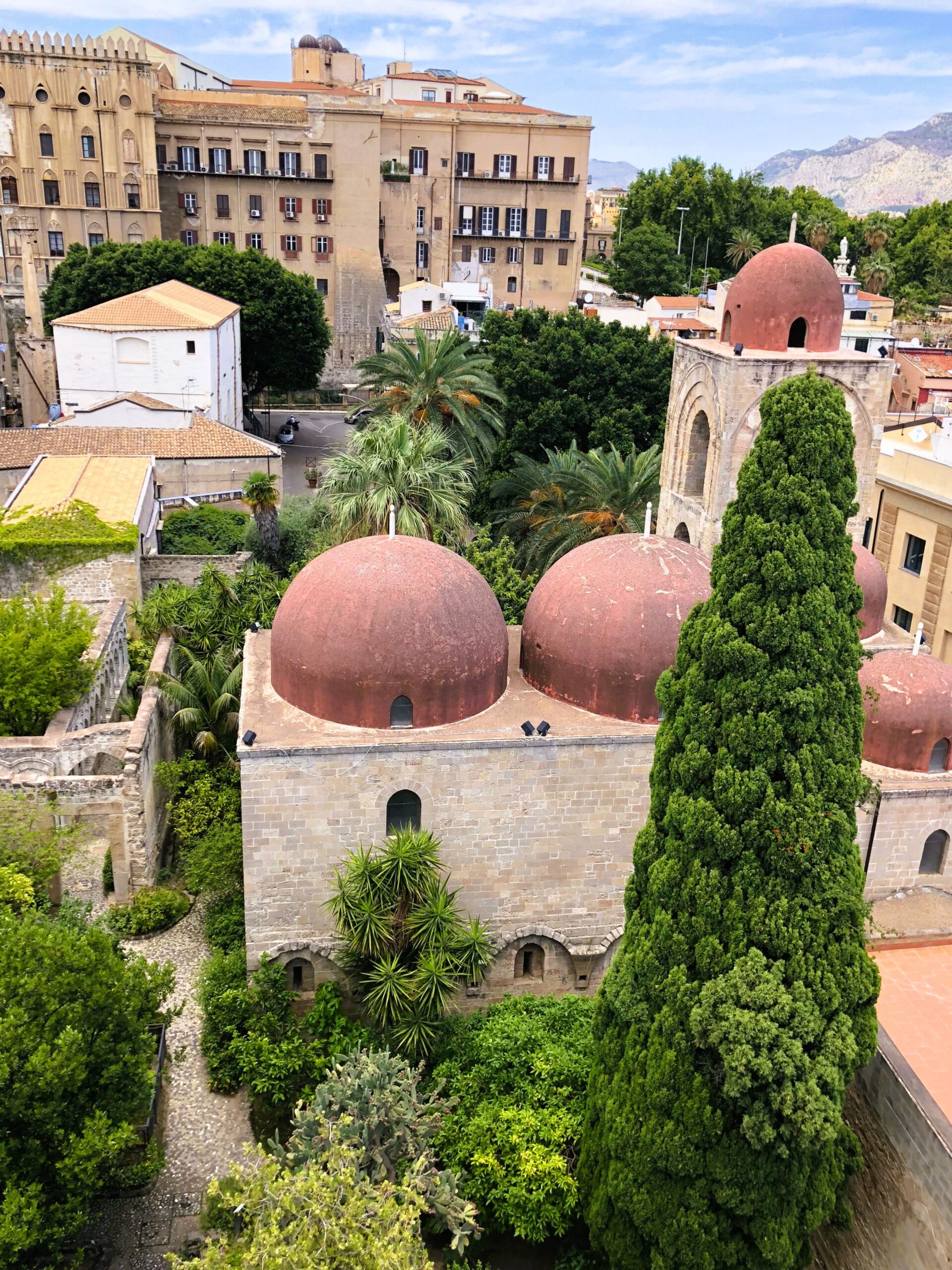
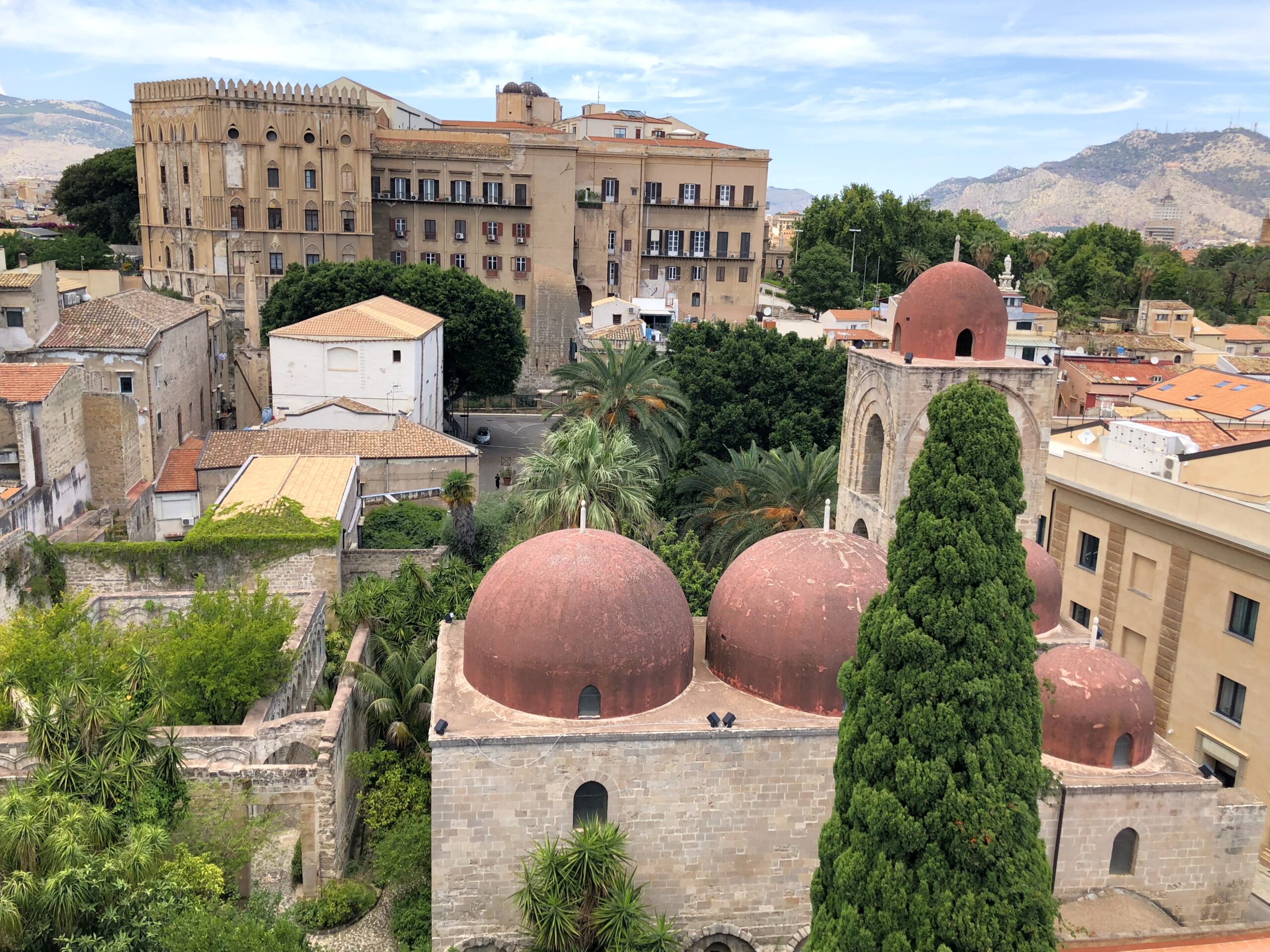
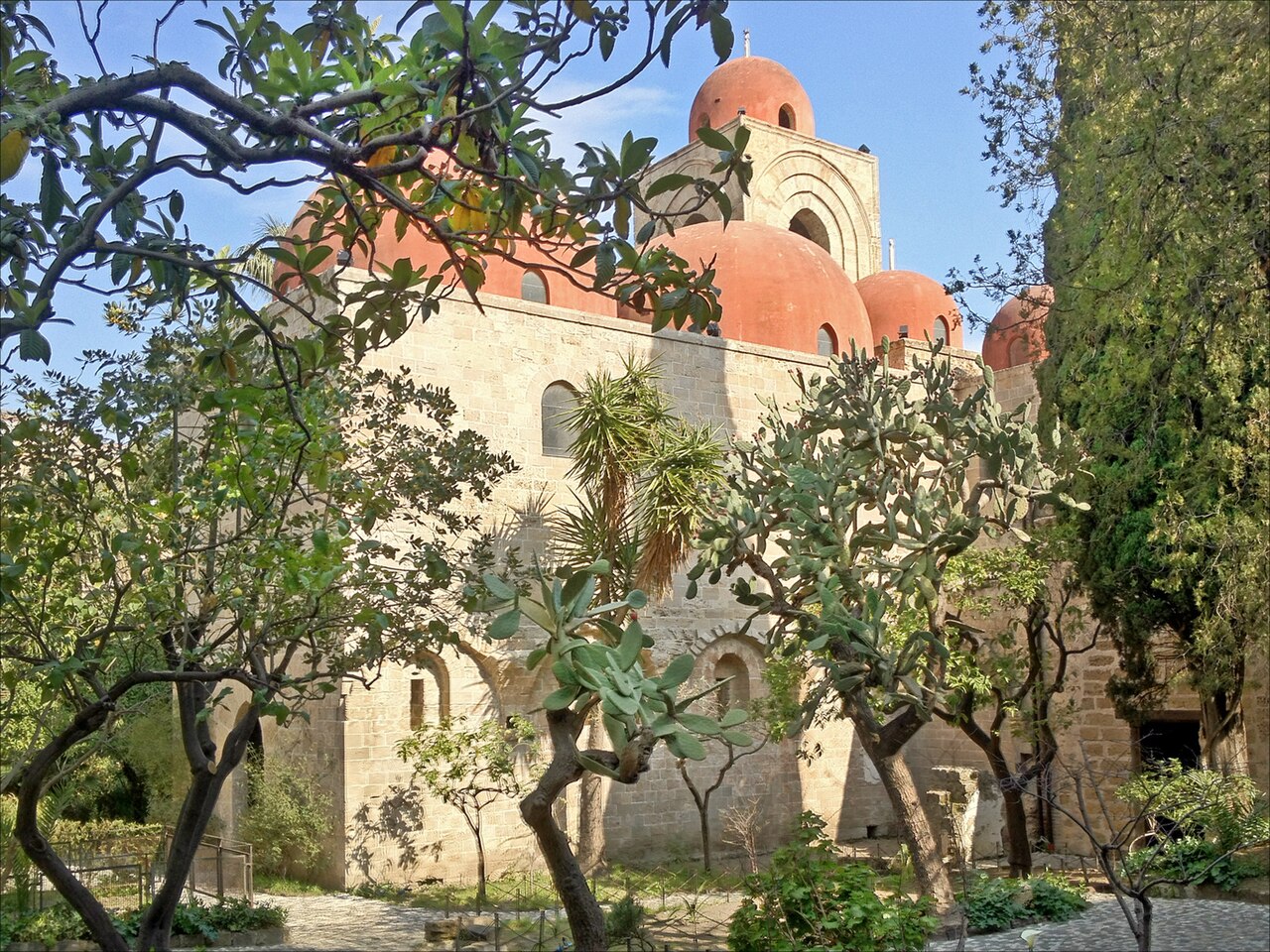
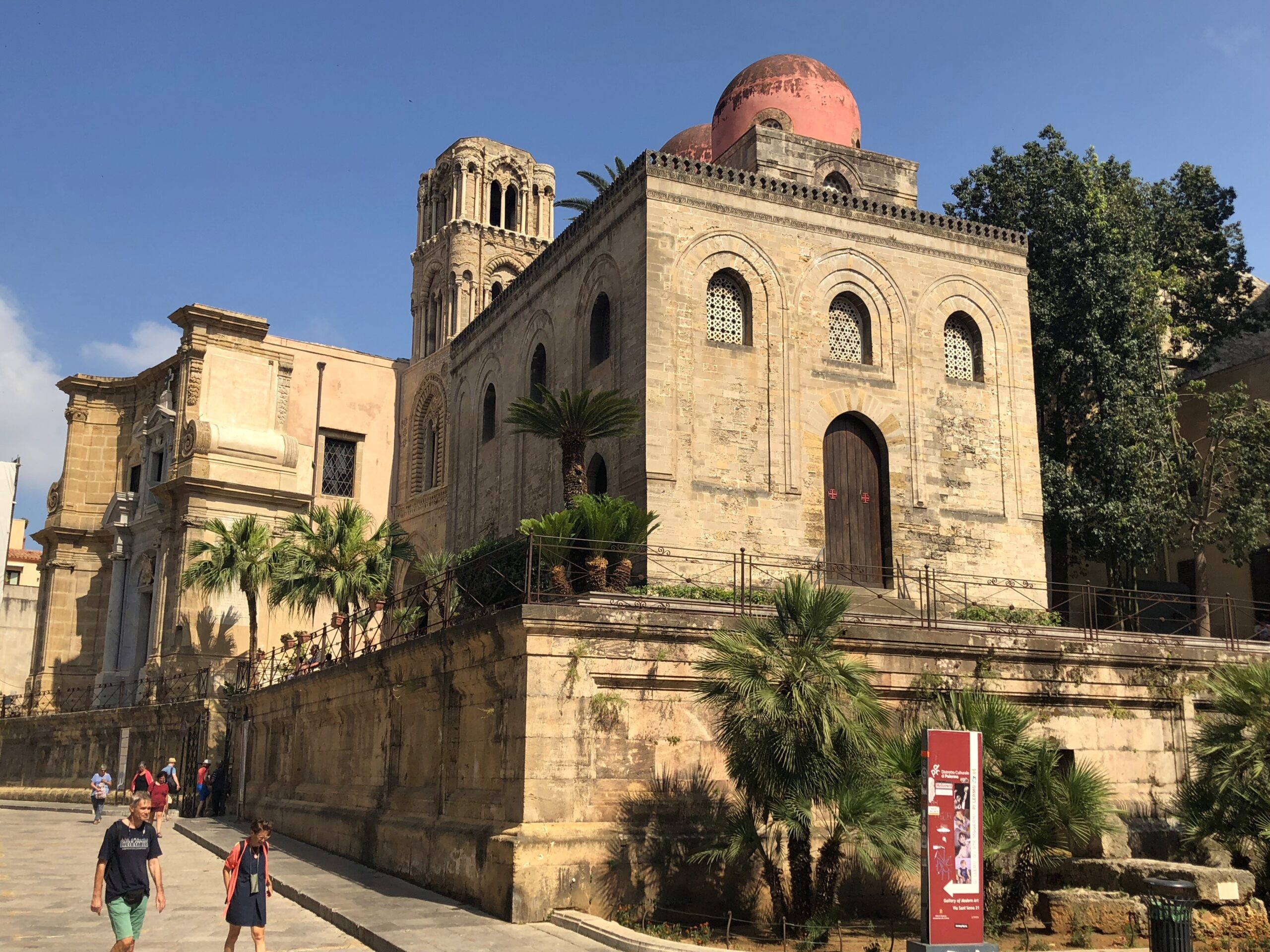
San Giovanni degli Eremiti is a 12th-century former monastic church in Palermo, Sicily, famous for its distinct bright red domes and Arab-Norman architecture. The church and the monastic community was commissioned by King Roger II around 1136. The design is a fusion of Islamic, Byzantine, and Romanesque styles, as becoming the multi-cultural Sicilian society of the 12th century. The site, located near the Norman Palace, includes a serene 13th-century cloister and a lush, tranquil garden. The most provocative and unique feature of the church is its five characteristic, red domes built by Arab craftsmen, an indication of the powerful Islamic influences of Norman Sicily. The site had previously been the site of a church and a Benedictine monastery under Byzantine rule during the 6th century. This Greek church and monastery was believed to have been razed by Arab conquerors in the 9th century and rebuilt as a mosque. Following the Norman conquest the site was restored by Roger II of Sicily to Benedictine monks. The church was dedicated to St John the Evangelist, while the descriptive “Eremiti” (Greek for hermits) likely refers to the cloistered Benedictine monks.

Church of Santa Maria of the Admiral

[unesco_gallery_images]
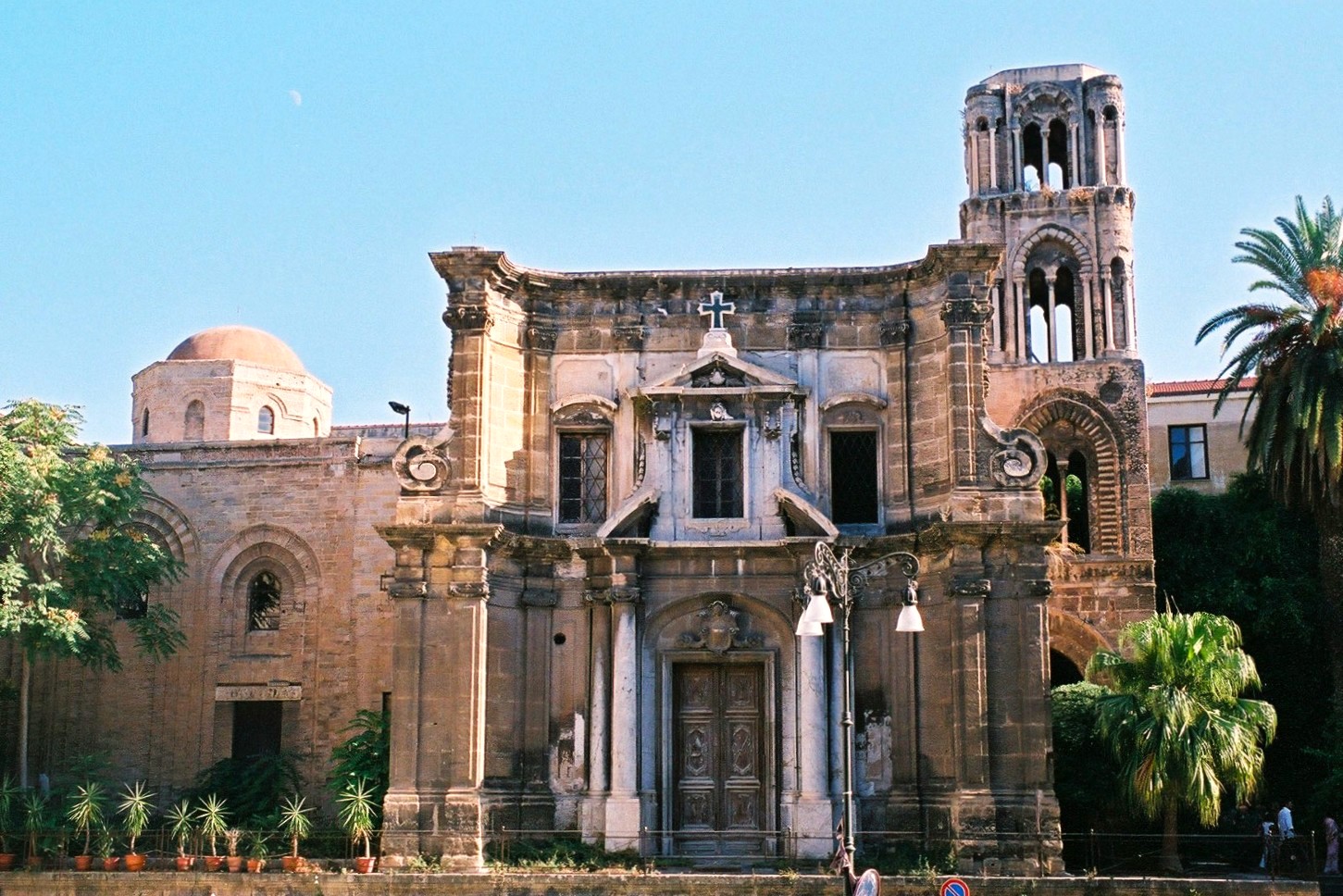
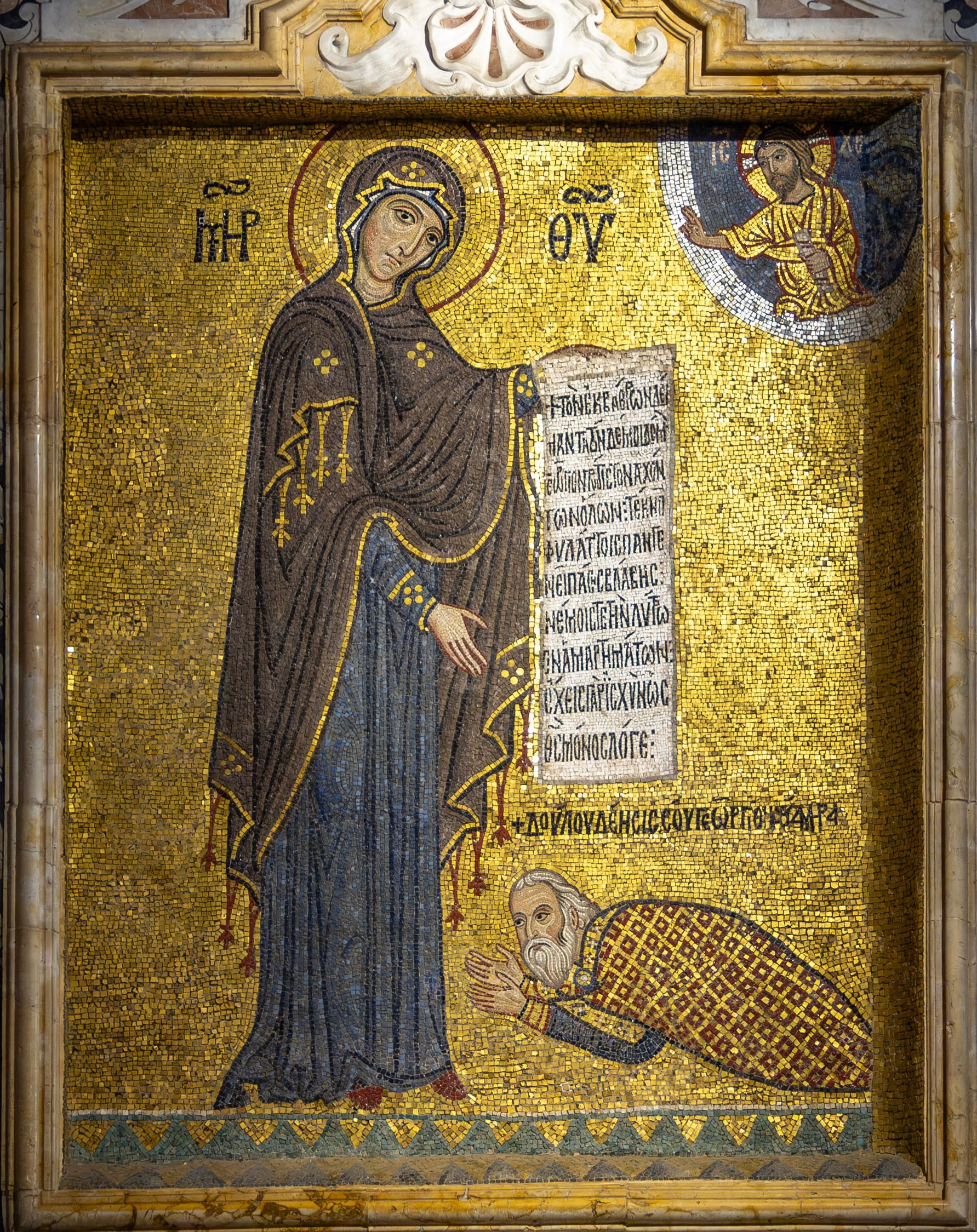
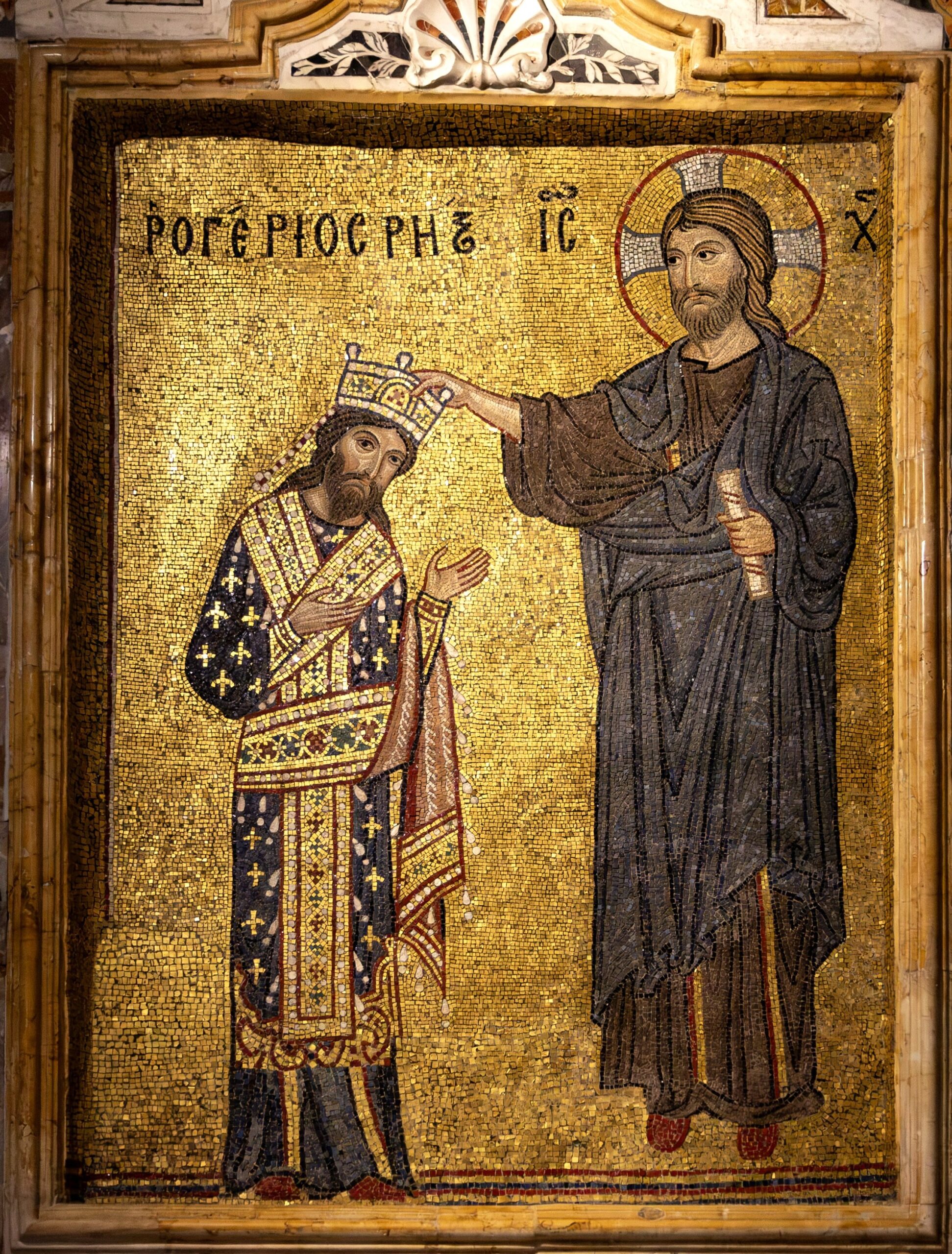
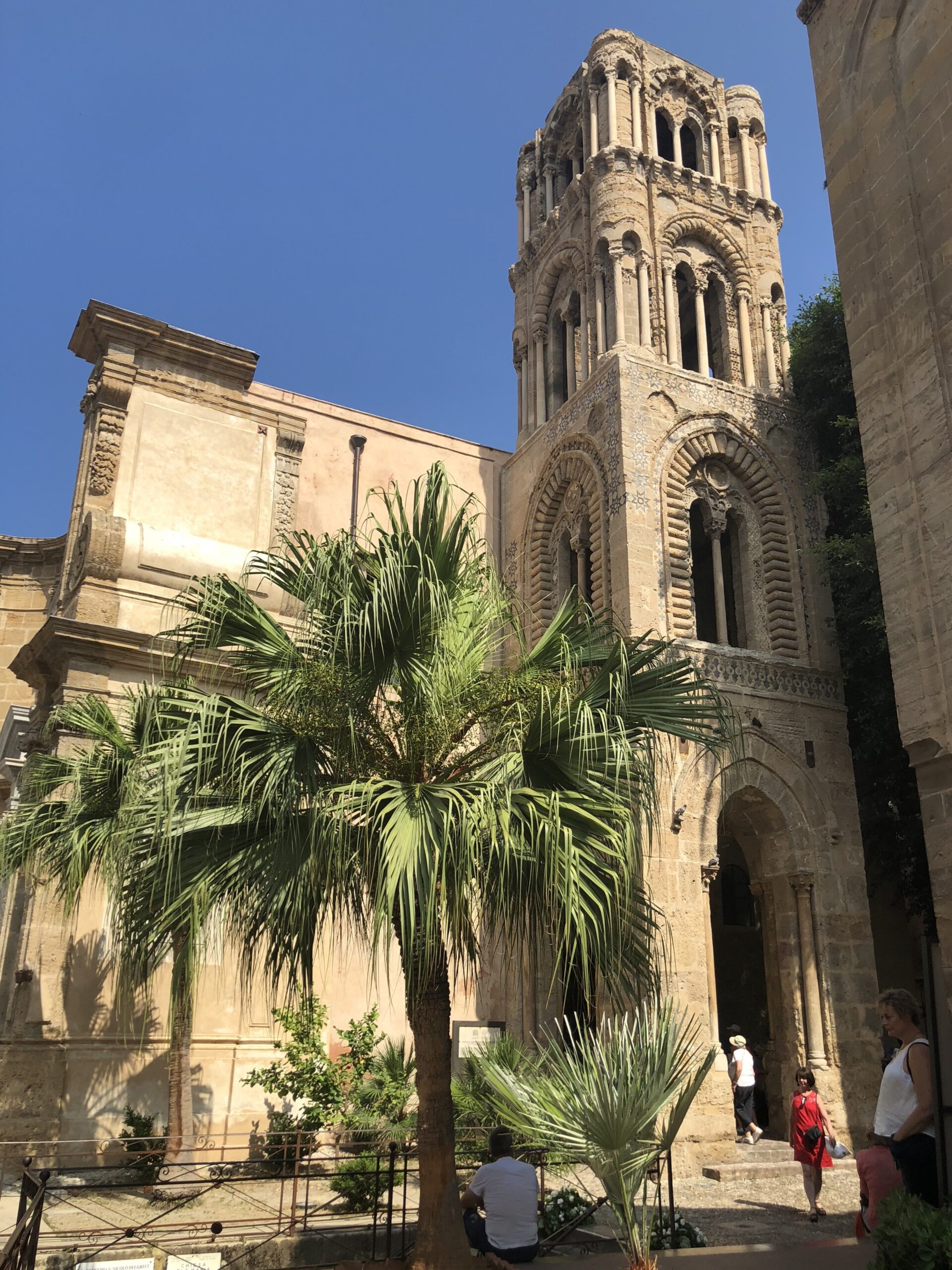
Chiesa di Santa Maria dell'Ammiraglio is a 12th-century church founded in 1143 by George of Antioch, the brilliant Emir of Emirs who served under King Roger II for more than four decades. The church was built in the form of a compact cross-in-square, a common Byzantine church design, and housed the tombs of George of Antioch and his wife. A later Norman addition constructed a richly decorated bell tower with a domed top. The original exterior of the church, a blend of Romanesque and Arab architecture was originally very beautiful. However, later structural additions in the 16th and 17th centuries added an incongruous Baroque façade, facing onto the Piazza Bellini, which appears completely foreign and out of place with the masterpiece of the original Norman-Arabic exterior structure. The original church interior was designed in a Byzantine “cross-in-square” layout, and was adorned by some of the finest, most sublime Byzantine style mosaics ever to grace a Christian church. This church is most famous for its masterful mosaic depictions of King Roger II and of it benefactor, George of Antioch, on large panels located near the entrance. Tragically, interior renovations to enlarge the church during the 16th and 17th centuries resulted in the destruction of its main apse, along with all of the original brilliant Byzantine mosaics in this section, which were replaced by fresco paintings. The Church was recently restored, granted cathedral status, and reopened for community worship, shared jointly by the Italian-Albanian Catholic Church community for both Latin and Greek Orthodox services.

Admiral’s Bridge

[unesco_gallery_images]
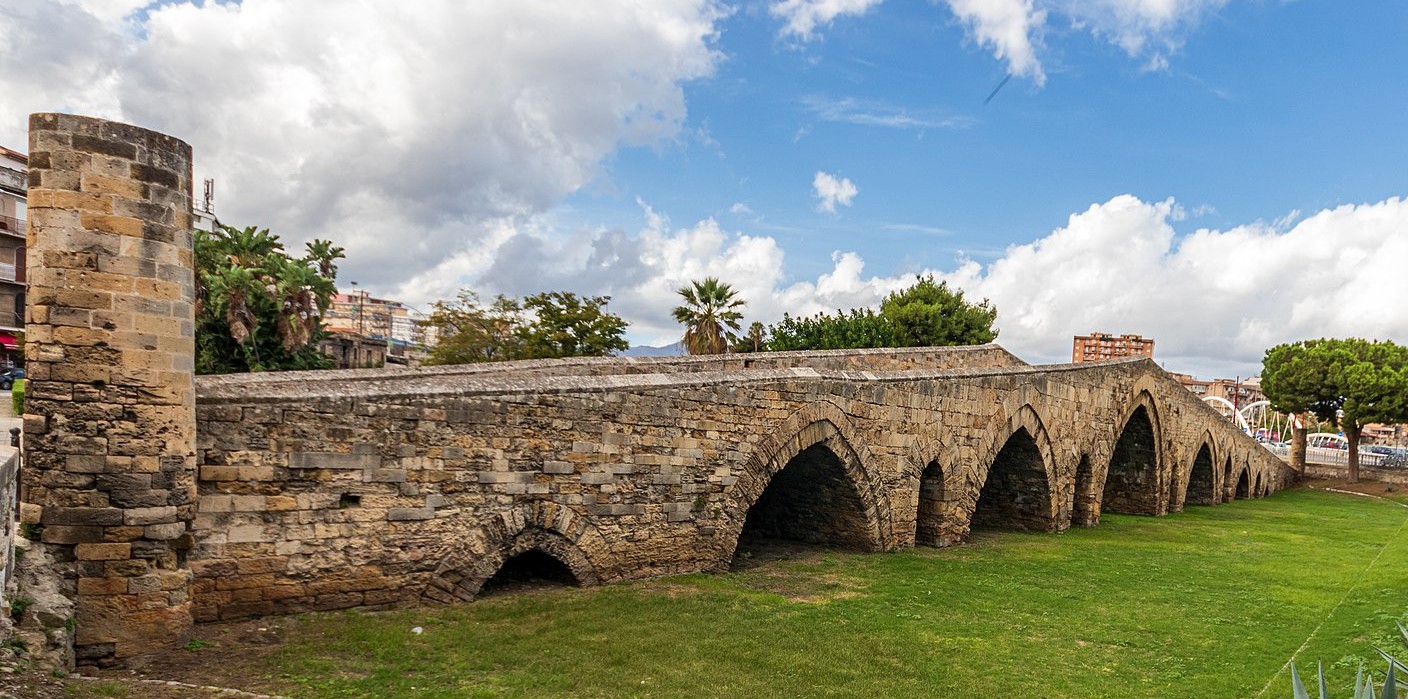
Prior to endowing the Chiesa di Santa Maria dell'Ammiraglio, George of Antioch also ordered and oversaw the construction of a magnificent, 12th century, seven-arched stone bridge (“Ponte dell’Ammiraglio”) spanning the Oreto River, east of Palermo. Construction was completed in 1131, shortly after the coronation of King Roger II. The bridge had the function to connect the capital to the royal gardens located on the far side of the Oreto River. The bridge was also famous as the site of a dawn skirmish between royal Bourbon troops and Garibaldi’s Thousand Volunteers, preceding their capture of the city of Palermo during the revolution in May 1860.

Church of San Cataldo

[unesco_gallery_images]
The Church of San Cataldo, located next to the Church of Santa Maria of the Admiral in the Piazza Bellini, is another masterpiece of Arab-Norman architecture. The church was originally endowed in 1160 by Maio of Bari, Chancellor to the Norman King William I. The structure is instantly recognizable by three distinctive red domes. The interior of today is notably stark, unadorned, and intimate, but the structure still retains its brilliant original 12th-century mosaic floors.

Cathedral of Monreale

[unesco_gallery_images]
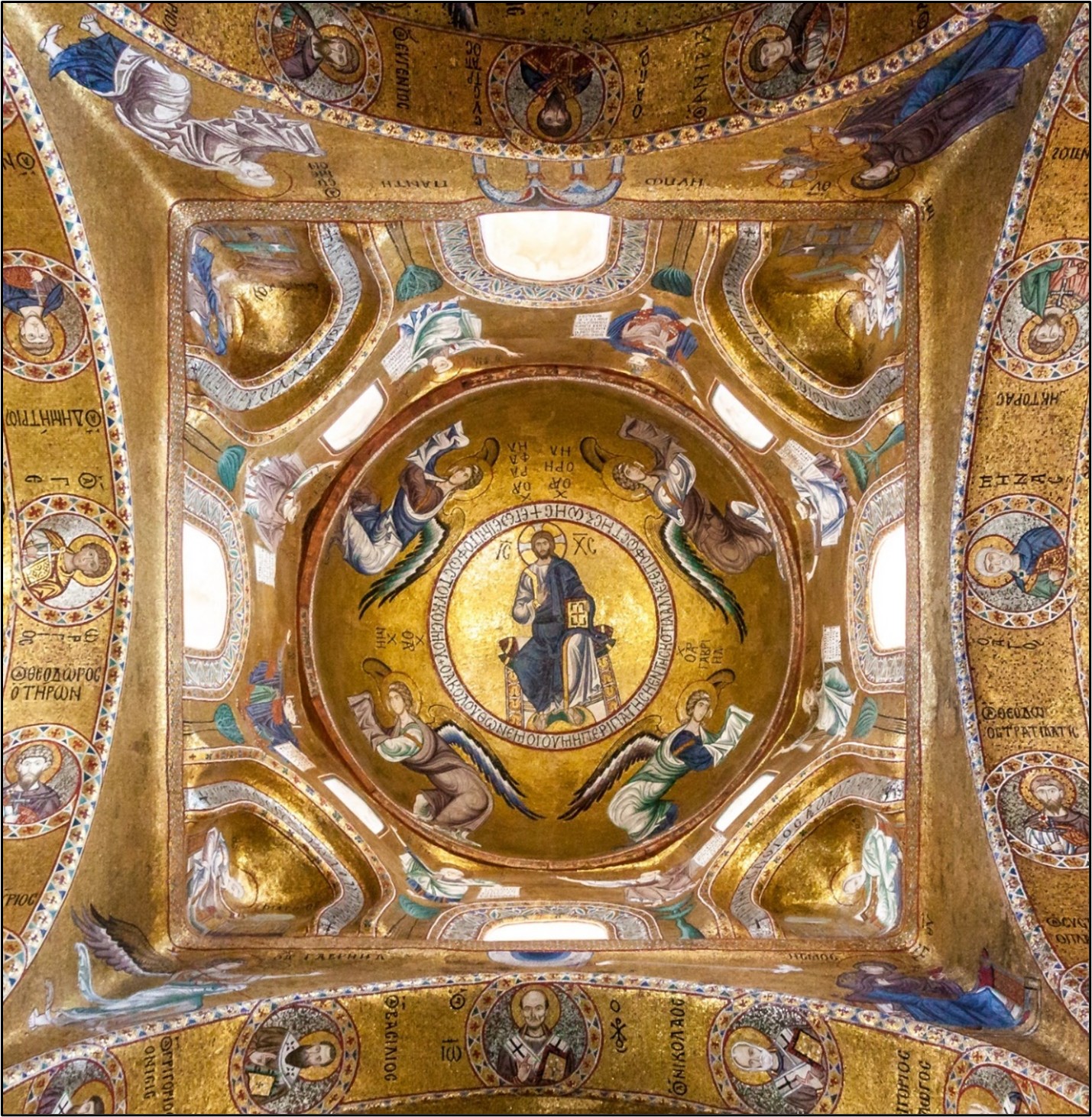
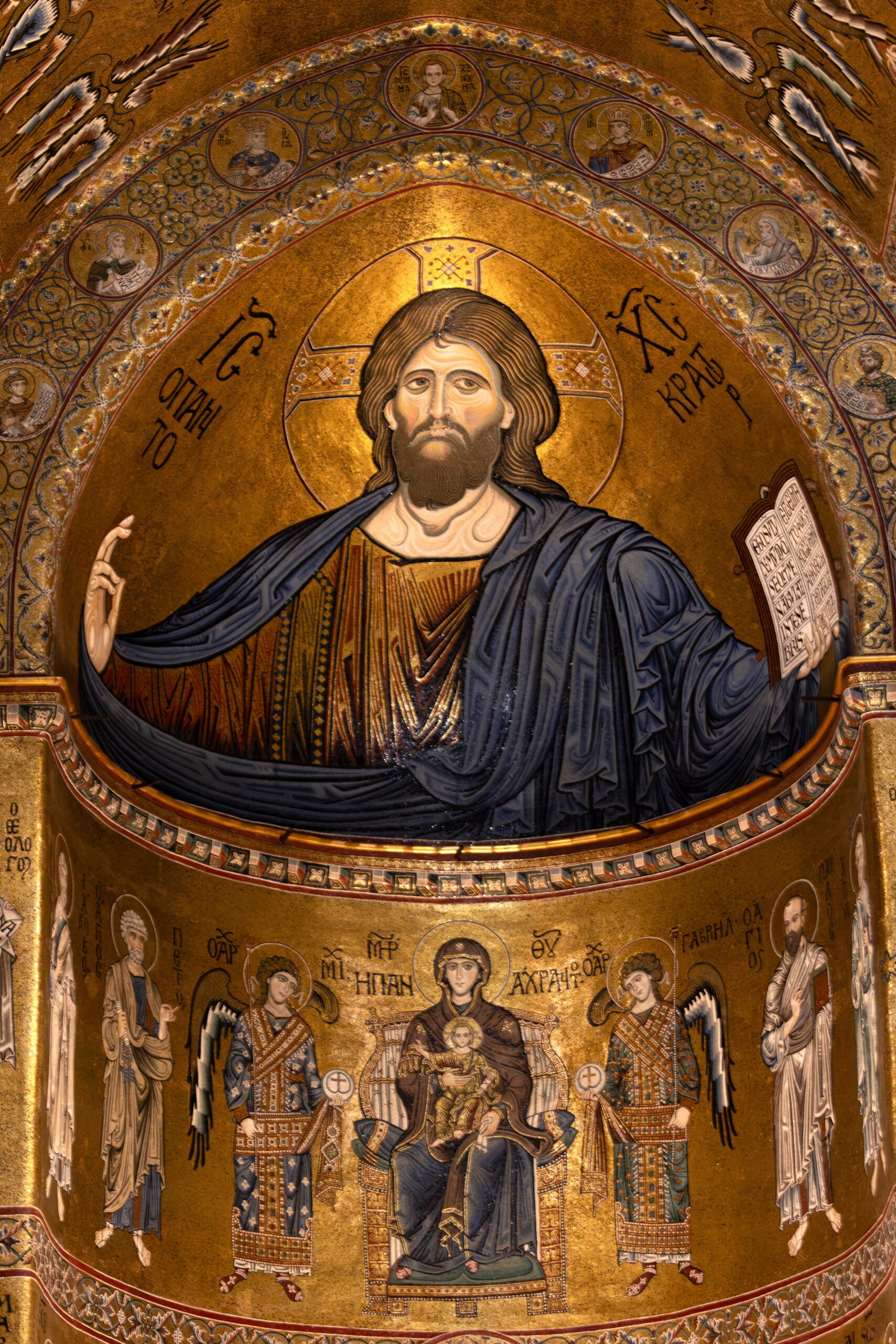
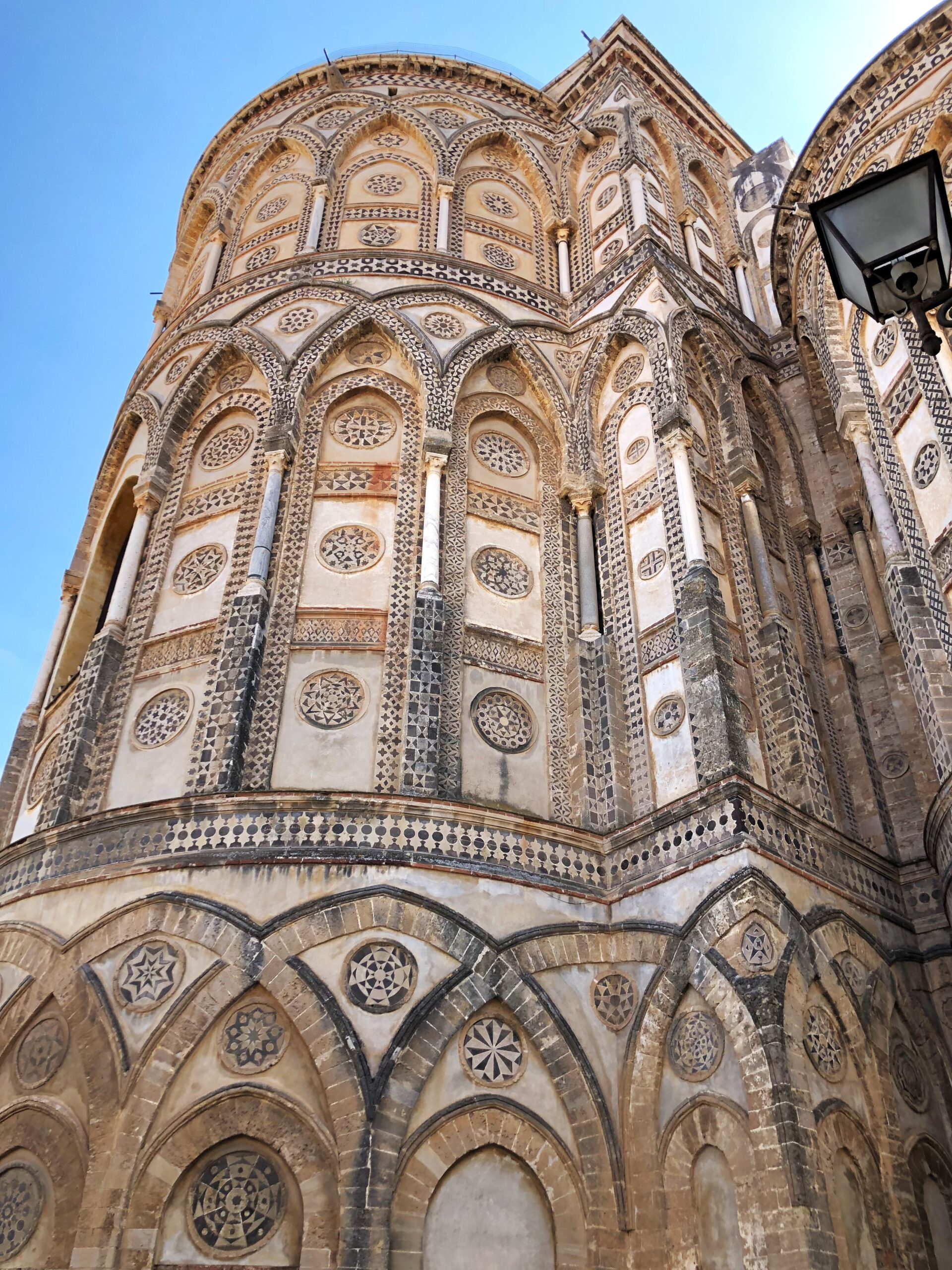
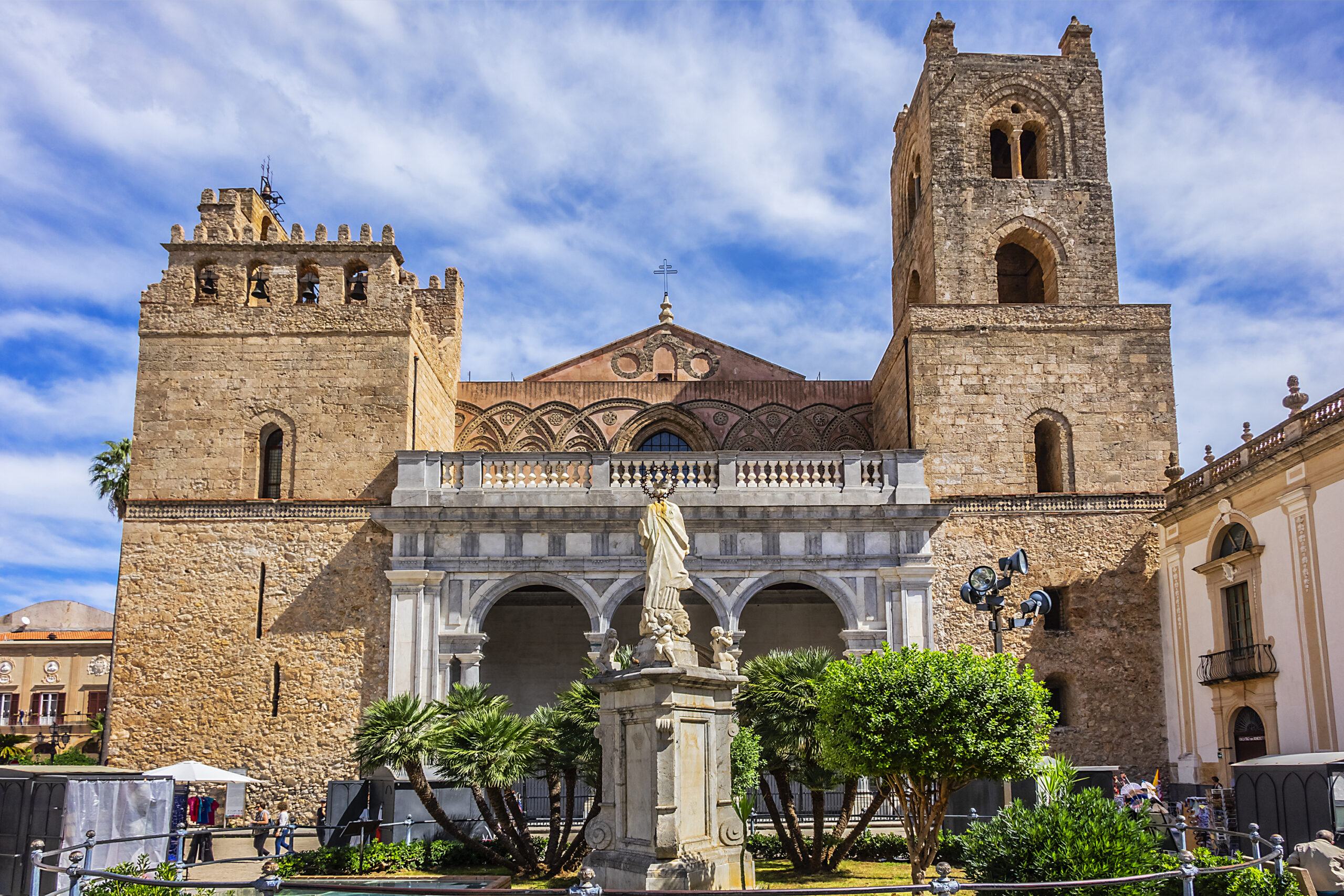
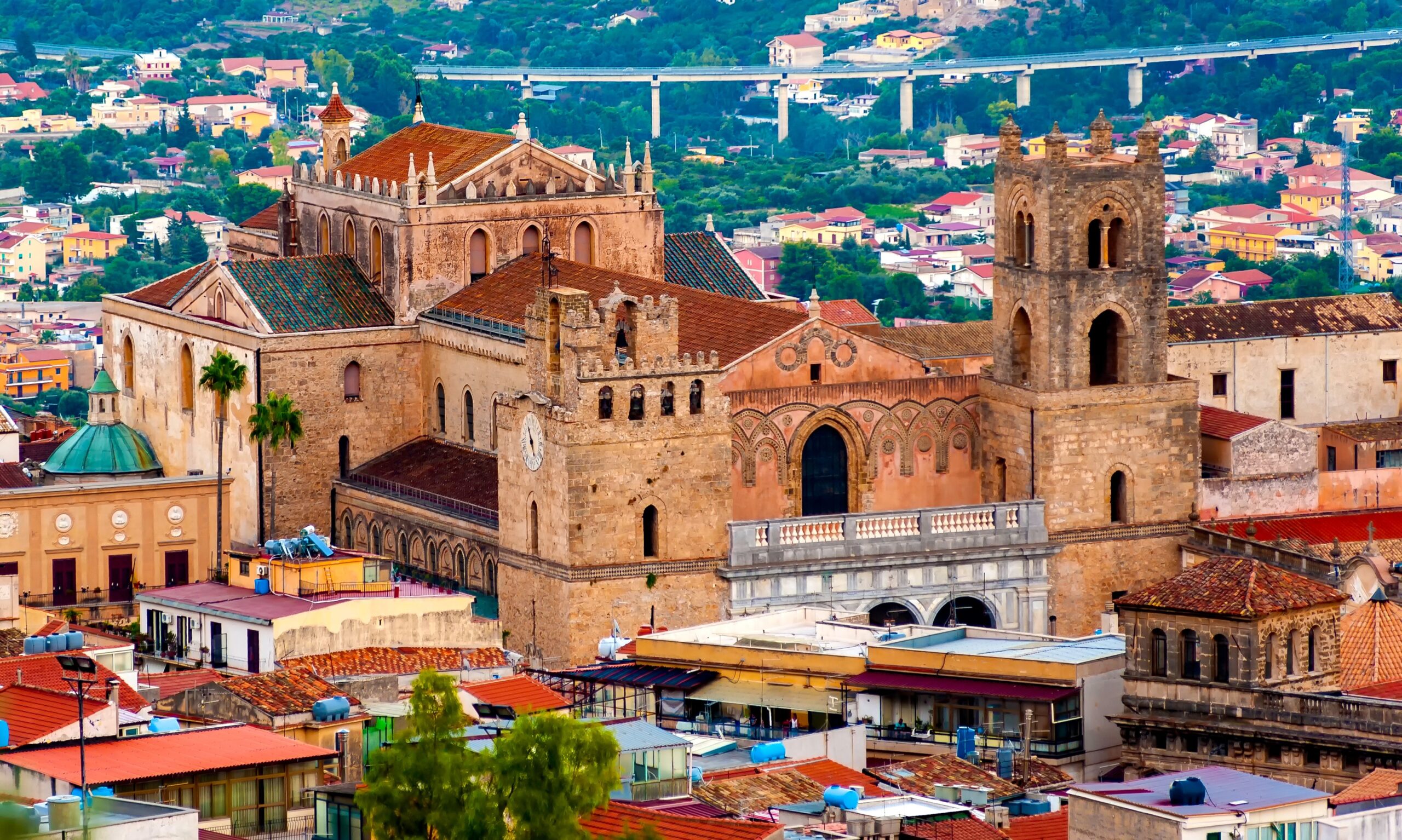
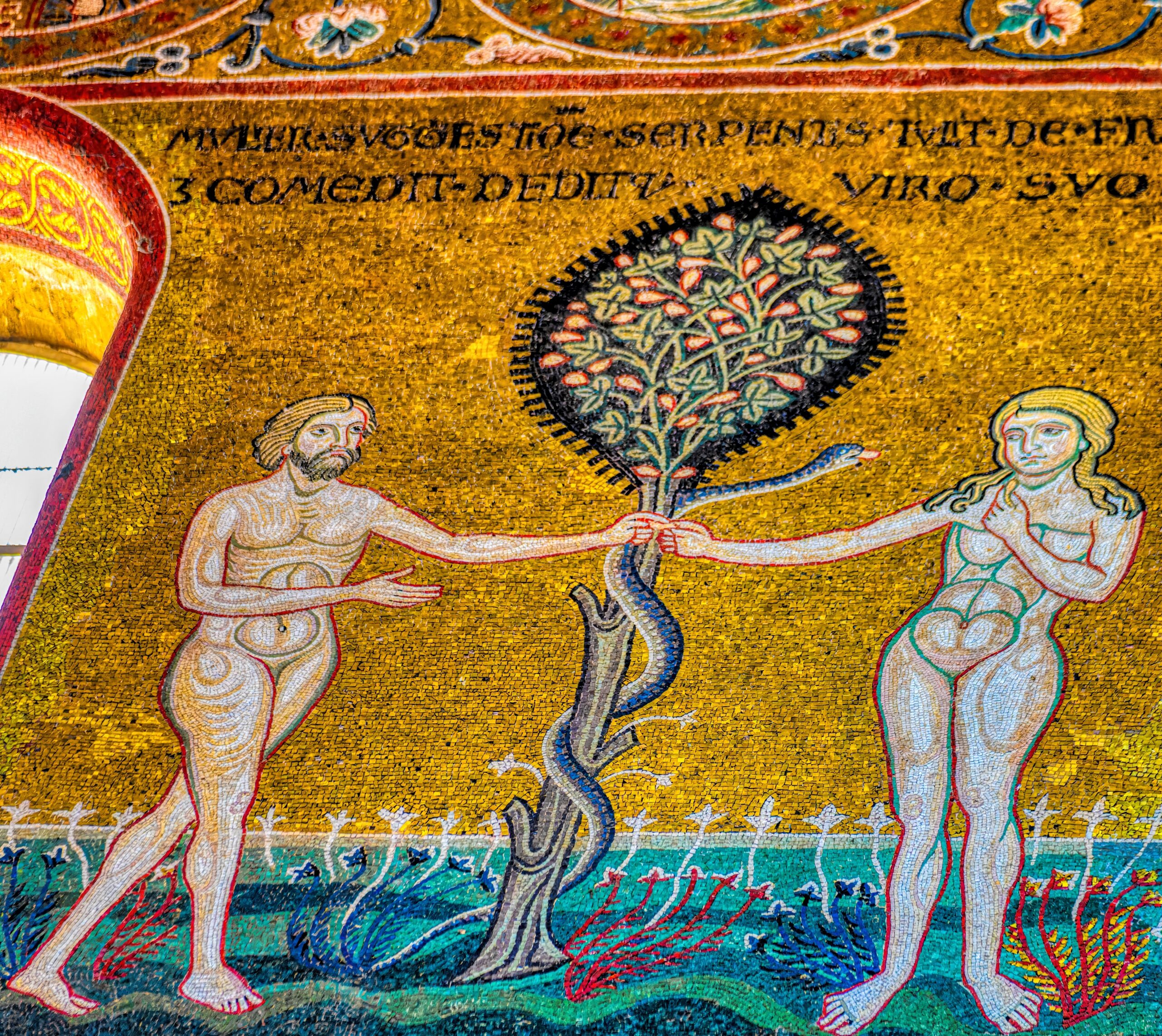
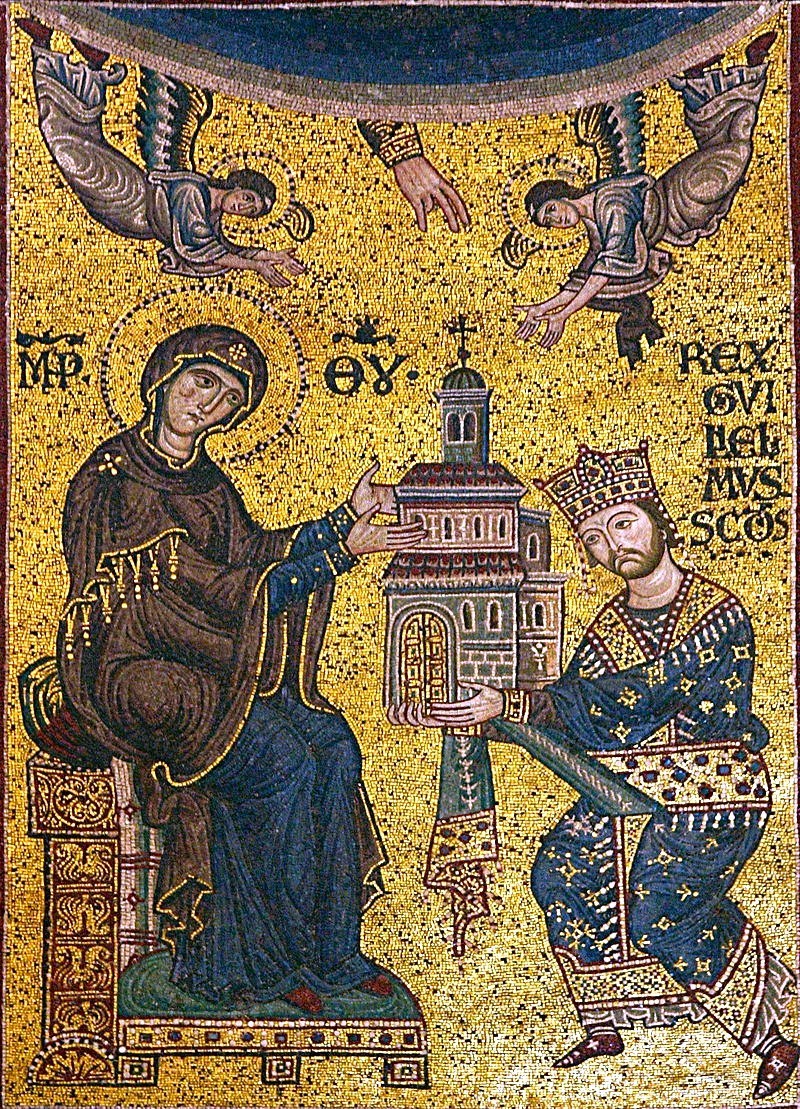
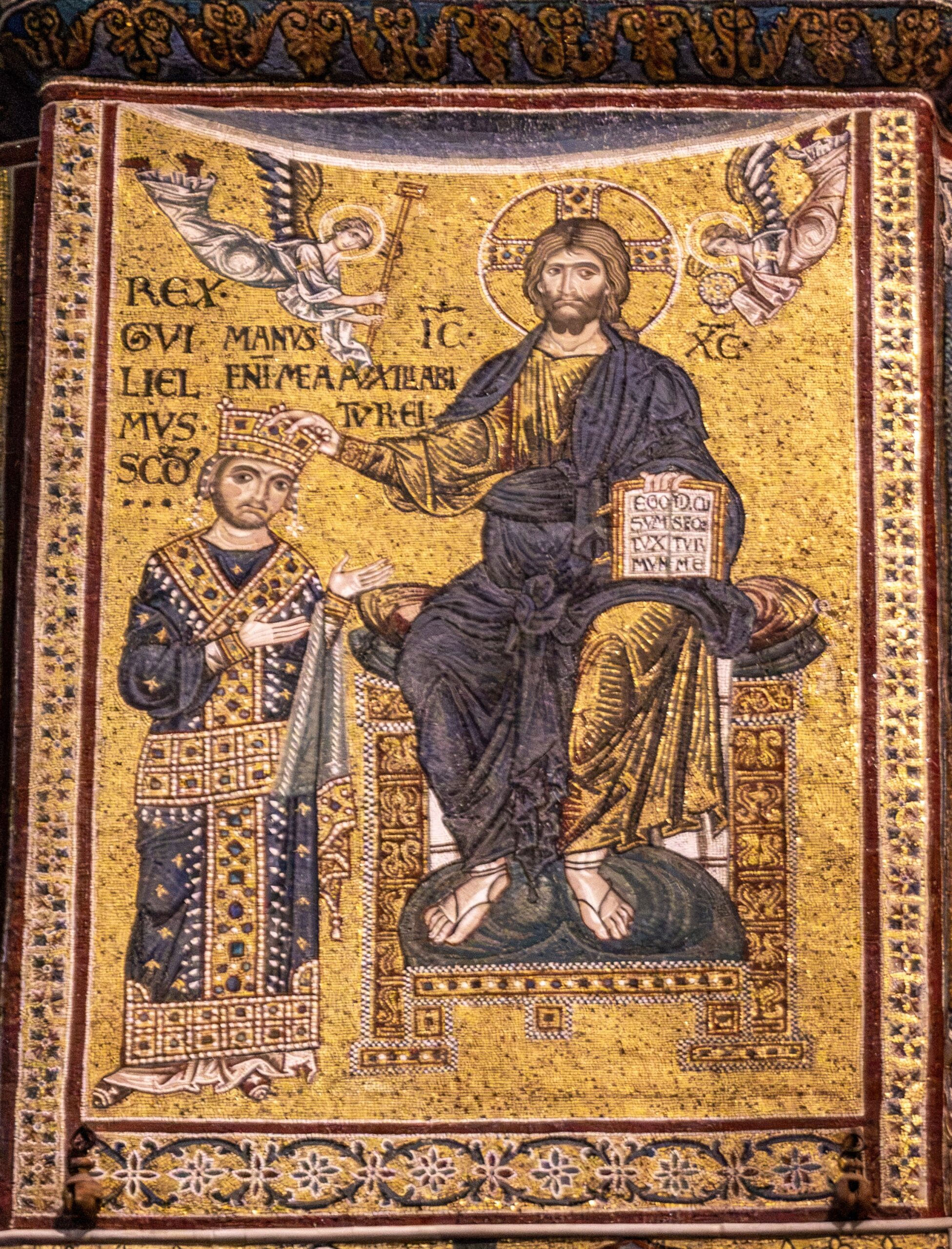
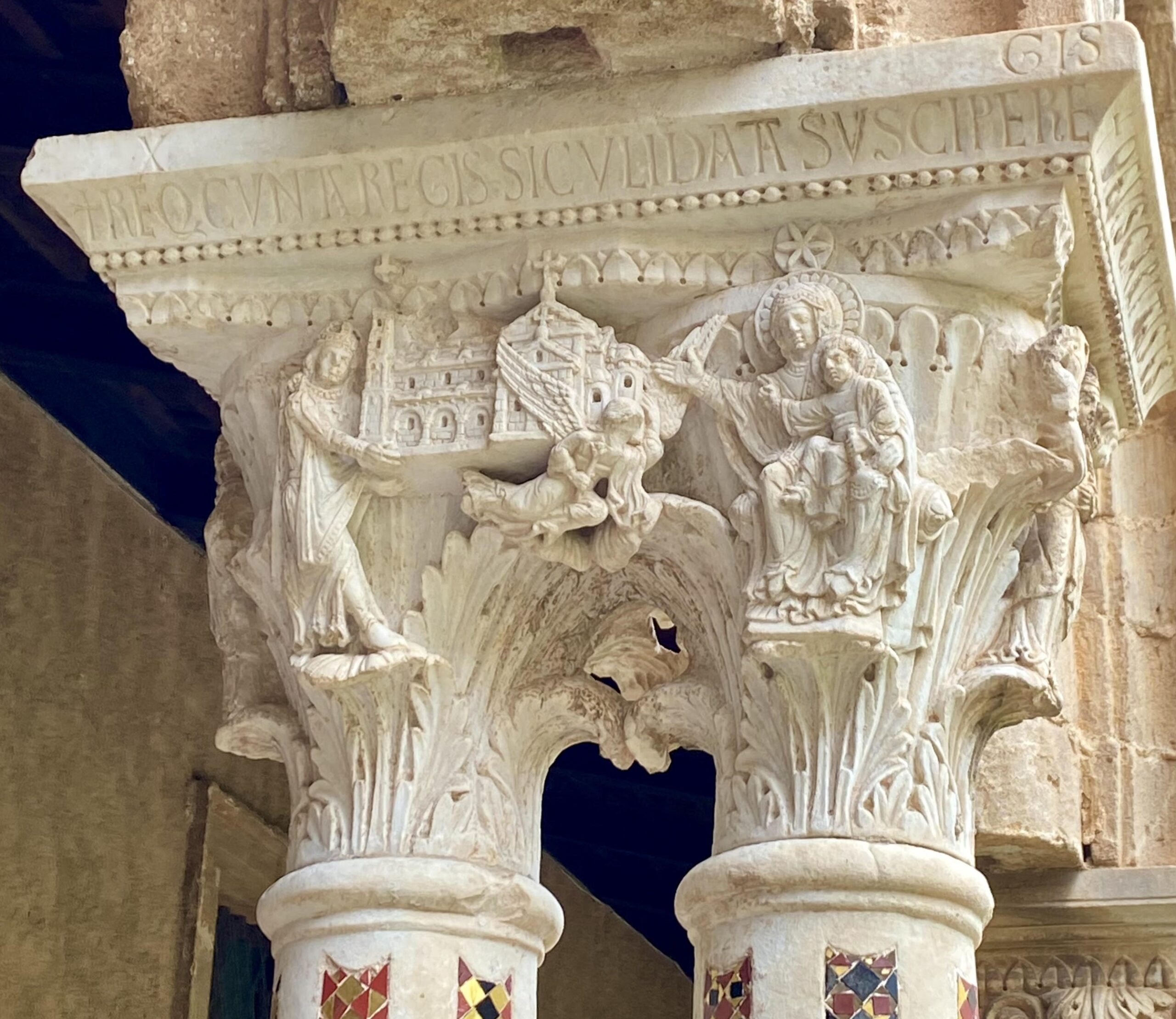
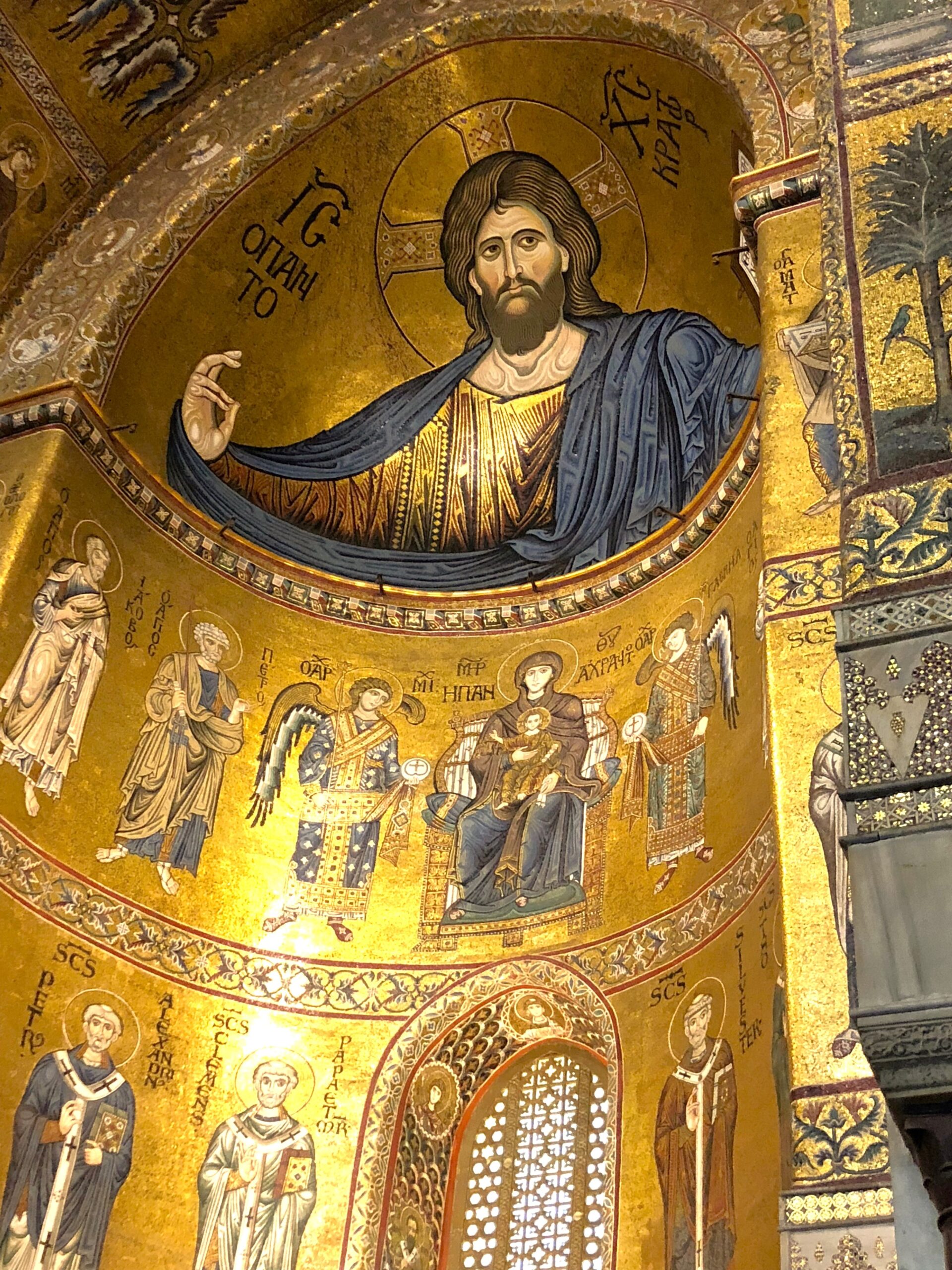
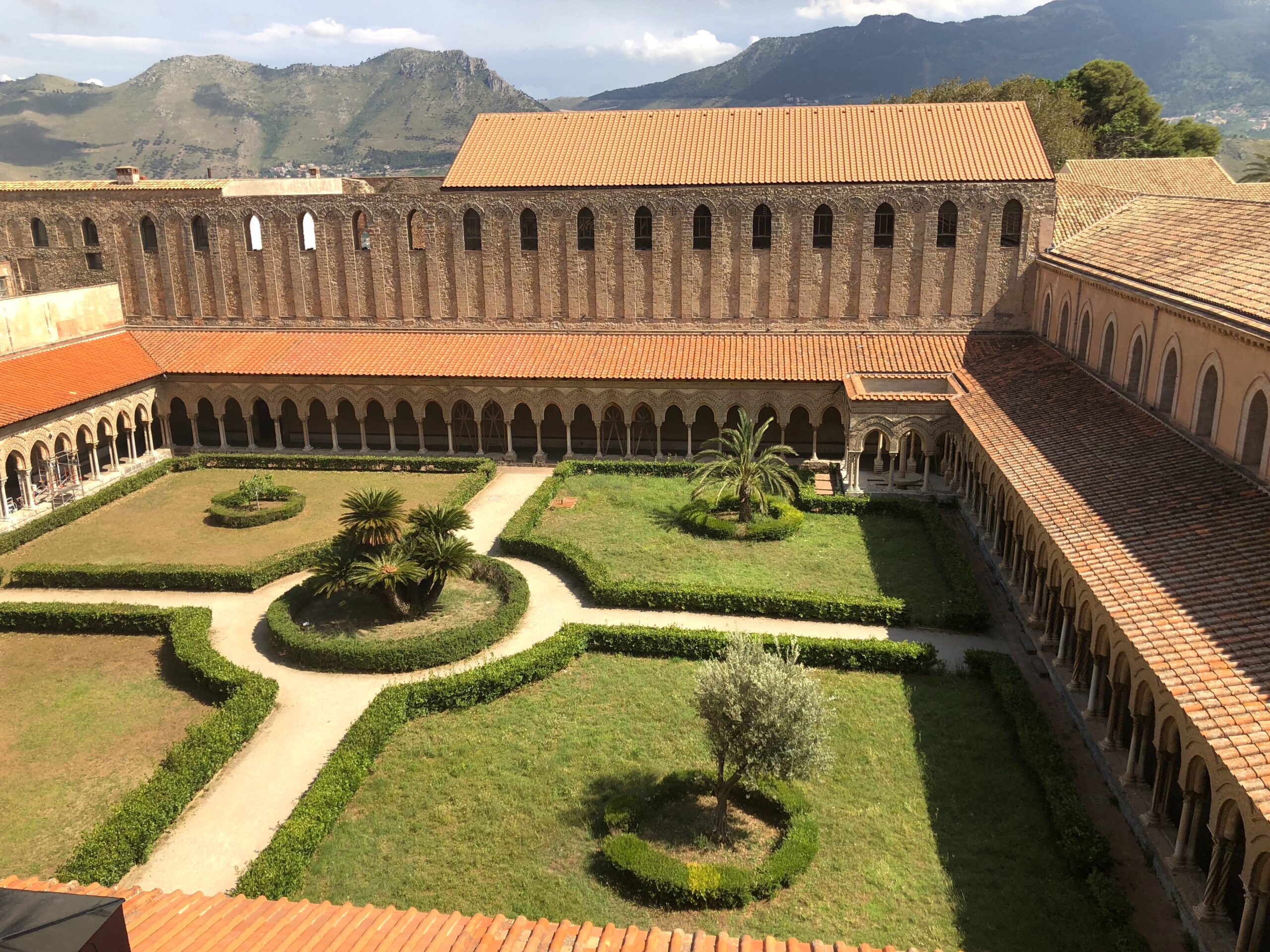
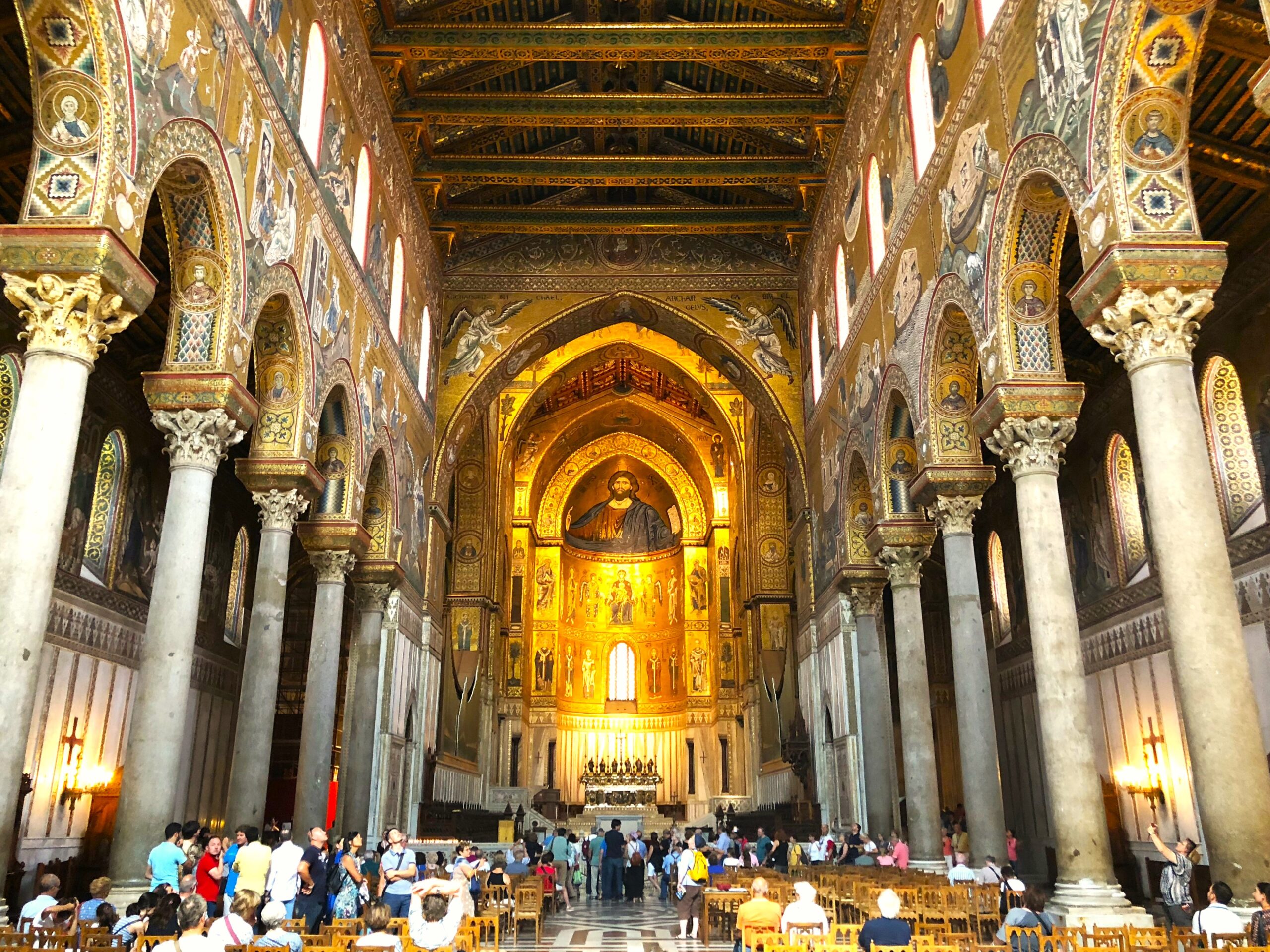
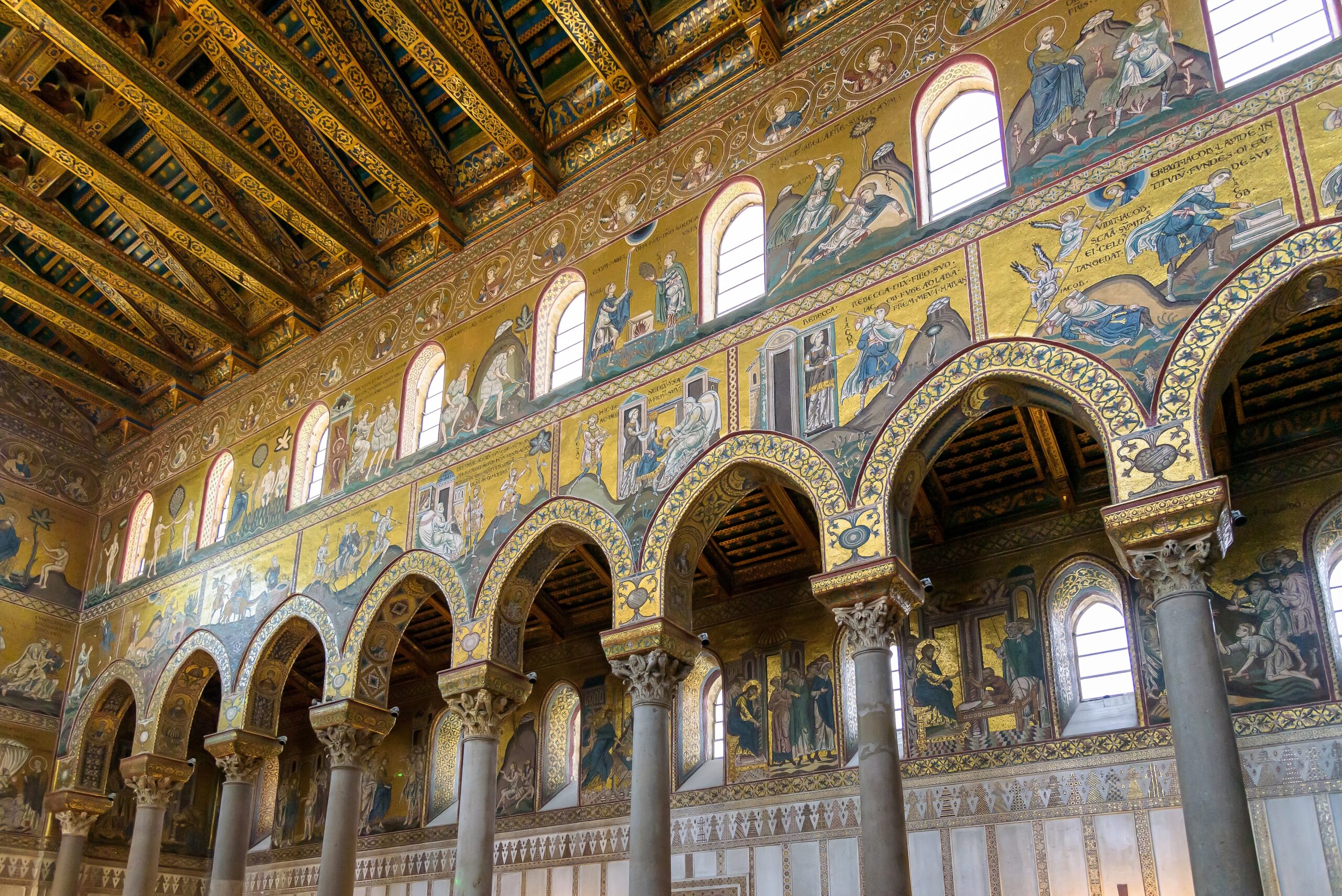
The Cathedral of Monreale (Duomo di Monreale) is a 12th-century masterpiece near Palermo, Sicily, famed for merging Norman, Arab, and Byzantine styles. Built by King William II, beginning in 1174, the cathedral is renowned for over 6,500 square meters of glittering golden Byzantine-styled mosaics and its stunning cloister, representing a high point in medieval Mediterranean art. The building is a massive Romanesque styled structure with two grand towers, adorned with a myriad of Arabic-inspired external ornamentation (such as intersecting pointed arches). The entire interior, walls and floors, are almost entirely covered in brilliant 12th and 13th century golden mosaics, with the massive Christ Pantocrator in the interior dome of the central apse as the focal point.Its renowned Benedictine cloister sits beside the cathedral, featuring 228 double columns with intricately carved capitals. The Cathedral of Monreale is the largest, and arguably the greatest, of the Norman religious monuments of 12th century, called into being by King William II as a demonstration of the tremendous wealth, and the absolute power and authority of the Kingdom of Sicily.

Cathedral of Cefalù

[unesco_gallery_images]
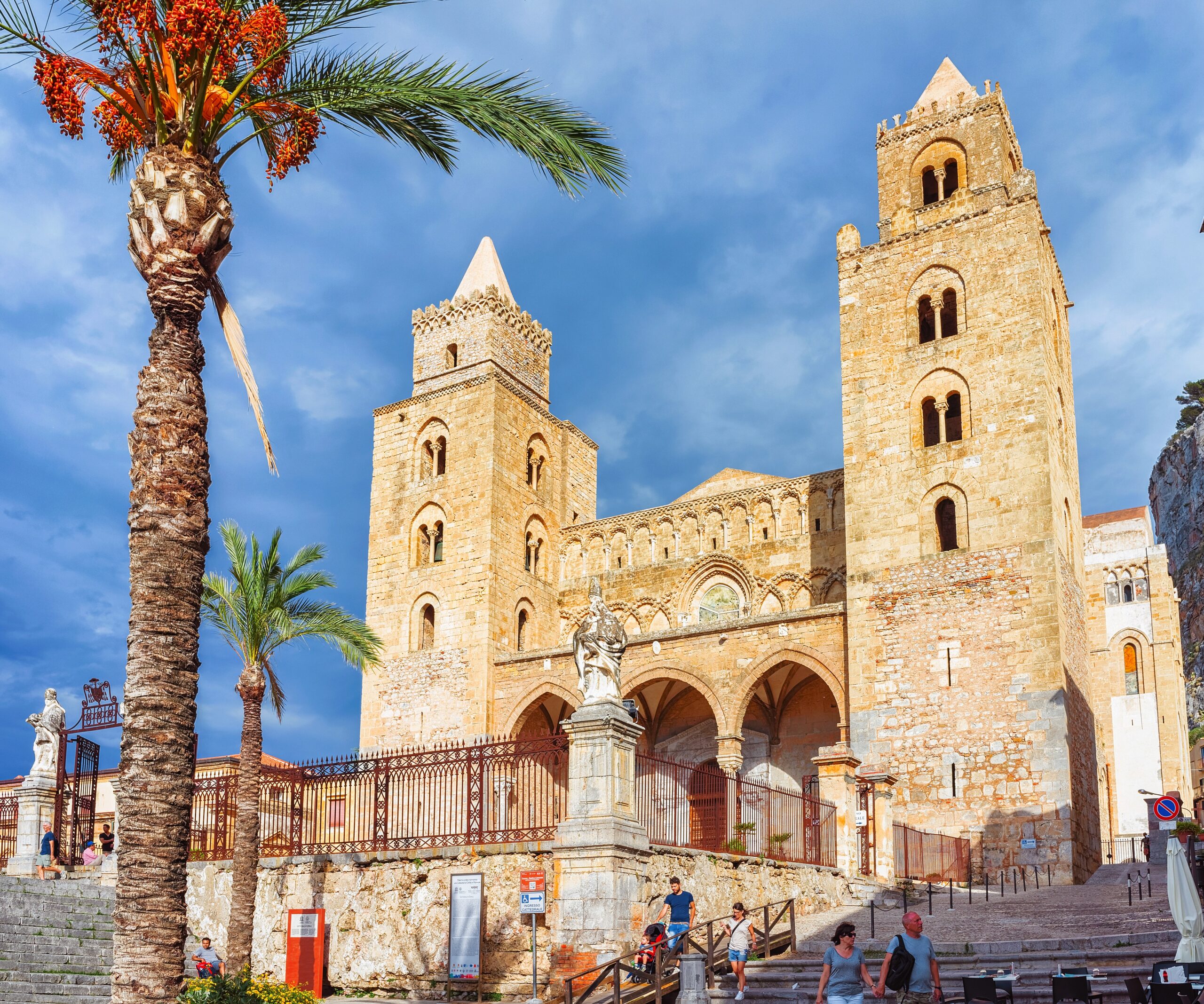
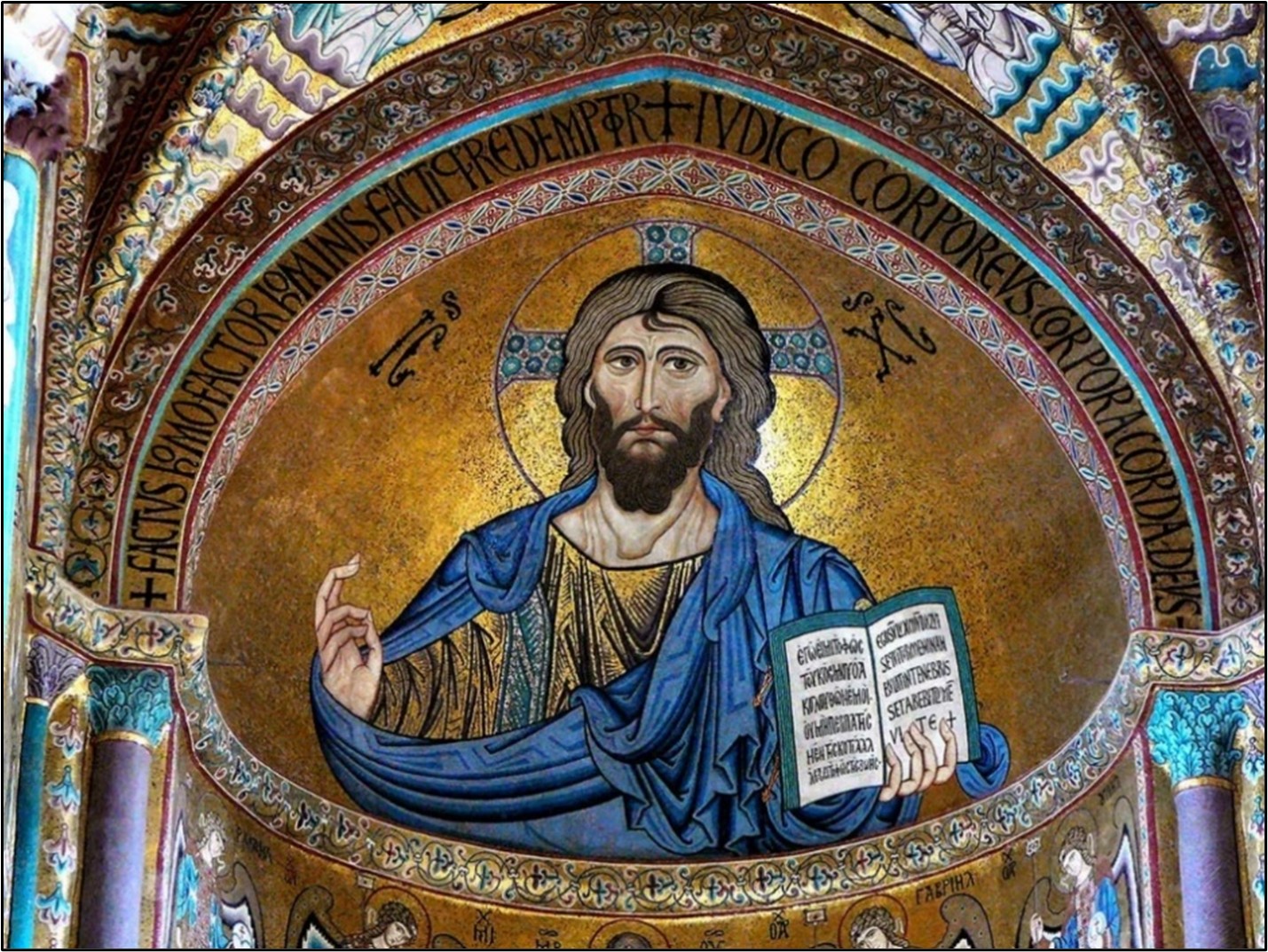
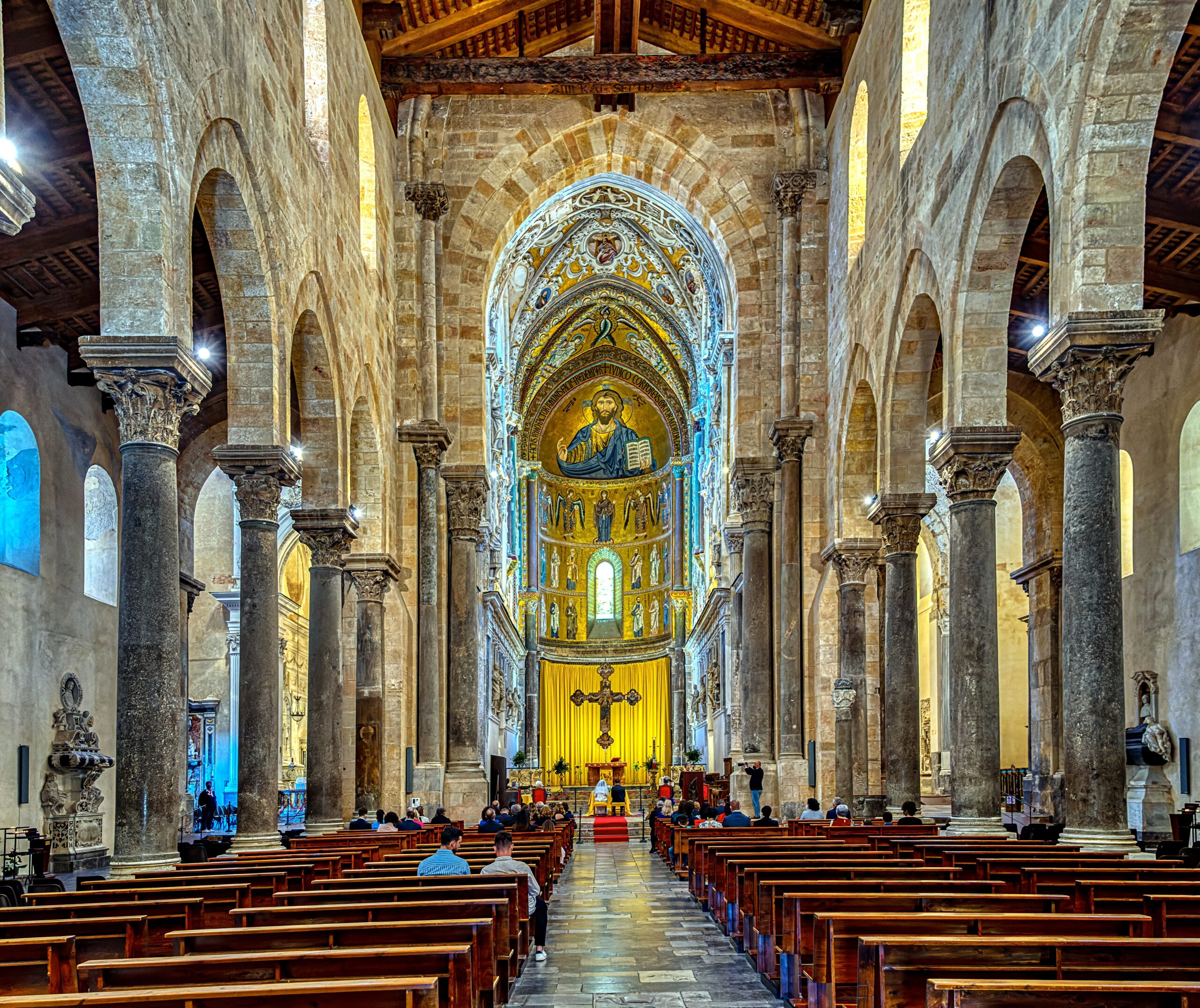
The Cefalù Cathedral is yet another 12th-century masterpiece of Norman-Arab-Byzantine design, commissioned by King Roger II in 1131. Similar to other Norman cathedrals of the era, the exterior design features a commanding, fortress-like Romanesque façade with twin towers, adorned with numerous Islamic artistic design elements, such as detailed geometric patterns, blind arcades, and decorative stone inlays. The interior apse is adorned with golden Byzantine mosaics (1148–1166), including a large image of Christ Pantocrator, believed by many to be the most exquisite single piece of religious art in all of Christendom.

Royal Norman Palance and the Palatine Chapel

Located inside the Norman Palace of Palermo, the Palatine Chapel may be the most exquisite religious monument in all of Sicily. The Palatine Chapel was commissioned by the Norman King Roger II in 1129 and completed around 1140. As the personal royal chapel to the king, its splendor reflects Roger’s exalted view of the Sicilian monarchy, as being derived directly from God. Its walls are covered in brilliant Byzantine-style gold mosaics depicting biblical scenes. Its sculpted wooden Islamic muqarnas ceiling is a masterpiece of intricate geometric carvings, painted with scenes of everyday life, including messages inscribed with fine Arabic calligraphy. Its colorful cosmati mosaic flooring is an Arab-inspired masterwork of geometric designs. Many believe the bedazzling chapel to be one of the most beautiful, visually stunning and artistically splendid religious monuments in all Christendom.

Zisa Palace

The Zisa Palace (La Zisa) in Palermo is a 12th-century Norman summer residence and hunting lodge, heavily influenced by Arab art and architecture. Built for King William I and completed by William II, its name derives from the Arabic Al-Aziz ("the magnificent"). Located in the outskirts of Palermo, the Palace was originally part of a larger royal park ("Paradise on Earth") with lush gardens, large fountains, and a menagerie of exotic animals in the private royal zoo. The centerpiece of the Palace interior is its ground floor with a large room with vaulted muqarnas wooden ceilings, along with a small decorative waterfall and a large indoor fountain flowing to an outer fish pond, which served as a natural air conditioner to cool the interior. Today, the Palace houses a museum featuring fine examples of Islamic art from the Mediterranean region and Sicily (9th–12th centuries), including North African artifacts and those of local craftsmanship.

Palermo Cathedral

Also known as the Cathedral of the Assumption of the Virgin Mary, the Cathedral is representative of Sicily’s long complex history. The modern structure blends the design elements of many architectural styles, including Norman, Islamic, Gothic, and Baroque, a result of repeated renovations completed during different dynastic periods over the centuries. The original structure was a 12th-century Norman cathedral, commenced in 1184. The location had a nearly 1,000-year cultural history, previously serving at the site of an earlier Byzantine basilica and later as a mosque. Throughout the past 900 years the cathedral has served as the setting for nearly all significant royal coronations and weddings in Sicilian history. It’s exterior courtyard has also been the site of many infamous public trials and executions, conducted during the nearly three century reign of terror by the Spanish Inquisition, as well as an urban battleground during the 1860 people’s revolution of the Risorgimento, led by Giuseppi Garibaldi. The bright interior features a Latin cross plan and includes a royal chapel containing the imperial sarcophagi of the kingdom's Norman and Hohenstaufen founders, including King Roger II, Holy Roman Emperor and King of Sicily Henry VI, his wife Empress and Queen of Sicily Constance, and Holy Roman Emperor and King of Sicily Frederick II (known to history as “Stupor Mundi”, the Wonder of the World). The cathedral also houses a crypt, and an ecclesiastical treasury museum, displaying religious artifacts from its history.

Church of St. John of the Hermits

San Giovanni degli Eremiti is a 12th-century former monastic church in Palermo, Sicily, famous for its distinct bright red domes and Arab-Norman architecture. The church and the monastic community was commissioned by King Roger II around 1136. The design is a fusion of Islamic, Byzantine, and Romanesque styles, as becoming the multi-cultural Sicilian society of the 12th century. The site, located near the Norman Palace, includes a serene 13th-century cloister and a lush, tranquil garden. The most provocative and unique feature of the church is its five characteristic, red domes built by Arab craftsmen, an indication of the powerful Islamic influences of Norman Sicily. The site had previously been the site of a church and a Benedictine monastery under Byzantine rule during the 6th century. This Greek church and monastery was believed to have been razed by Arab conquerors in the 9th century and rebuilt as a mosque. Following the Norman conquest the site was restored by Roger II of Sicily to Benedictine monks. The church was dedicated to St John the Evangelist, while the descriptive “Eremiti” (Greek for hermits) likely refers to the cloistered Benedictine monks.

Church of Santa Maria of the Admiral

Chiesa di Santa Maria dell'Ammiraglio is a 12th-century church founded in 1143 by George of Antioch, the brilliant Emir of Emirs who served under King Roger II for more than four decades. The church was built in the form of a compact cross-in-square, a common Byzantine church design, and housed the tombs of George of Antioch and his wife. A later Norman addition constructed a richly decorated bell tower with a domed top. The original exterior of the church, a blend of Romanesque and Arab architecture was originally very beautiful. However, later structural additions in the 16th and 17th centuries added an incongruous Baroque façade, facing onto the Piazza Bellini, which appears completely foreign and out of place with the masterpiece of the original Norman-Arabic exterior structure. The original church interior was designed in a Byzantine “cross-in-square” layout, and was adorned by some of the finest, most sublime Byzantine style mosaics ever to grace a Christian church. This church is most famous for its masterful mosaic depictions of King Roger II and of it benefactor, George of Antioch, on large panels located near the entrance. Tragically, interior renovations to enlarge the church during the 16th and 17th centuries resulted in the destruction of its main apse, along with all of the original brilliant Byzantine mosaics in this section, which were replaced by fresco paintings. The Church was recently restored, granted cathedral status, and reopened for community worship, shared jointly by the Italian-Albanian Catholic Church community for both Latin and Greek Orthodox services.

Admiral’s Bridge

Prior to endowing the Chiesa di Santa Maria dell'Ammiraglio, George of Antioch also ordered and oversaw the construction of a magnificent, 12th century, seven-arched stone bridge (“Ponte dell’Ammiraglio”) spanning the Oreto River, east of Palermo. Construction was completed in 1131, shortly after the coronation of King Roger II. The bridge had the function to connect the capital to the royal gardens located on the far side of the Oreto River. The bridge was also famous as the site of a dawn skirmish between royal Bourbon troops and Garibaldi’s Thousand Volunteers, preceding their capture of the city of Palermo during the revolution in May 1860.

Church of San Cataldo

The Church of San Cataldo, located next to the Church of Santa Maria of the Admiral in the Piazza Bellini, is another masterpiece of Arab-Norman architecture. The church was originally endowed in 1160 by Maio of Bari, Chancellor to the Norman King William I. The structure is instantly recognizable by three distinctive red domes. The interior of today is notably stark, unadorned, and intimate, but the structure still retains its brilliant original 12th-century mosaic floors.

Cathedral of Monreale

The Cathedral of Monreale (Duomo di Monreale) is a 12th-century masterpiece near Palermo, Sicily, famed for merging Norman, Arab, and Byzantine styles. Built by King William II, beginning in 1174, the cathedral is renowned for over 6,500 square meters of glittering golden Byzantine-styled mosaics and its stunning cloister, representing a high point in medieval Mediterranean art. The building is a massive Romanesque styled structure with two grand towers, adorned with a myriad of Arabic-inspired external ornamentation (such as intersecting pointed arches). The entire interior, walls and floors, are almost entirely covered in brilliant 12th and 13th century golden mosaics, with the massive Christ Pantocrator in the interior dome of the central apse as the focal point.Its renowned Benedictine cloister sits beside the cathedral, featuring 228 double columns with intricately carved capitals. The Cathedral of Monreale is the largest, and arguably the greatest, of the Norman religious monuments of 12th century, called into being by King William II as a demonstration of the tremendous wealth, and the absolute power and authority of the Kingdom of Sicily.

Cathedral of Cefalù

The Cefalù Cathedral is yet another 12th-century masterpiece of Norman-Arab-Byzantine design, commissioned by King Roger II in 1131. Similar to other Norman cathedrals of the era, the exterior design features a commanding, fortress-like Romanesque façade with twin towers, adorned with numerous Islamic artistic design elements, such as detailed geometric patterns, blind arcades, and decorative stone inlays. The interior apse is adorned with golden Byzantine mosaics (1148–1166), including a large image of Christ Pantocrator, believed by many to be the most exquisite single piece of religious art in all of Christendom.

Planning Your Visit

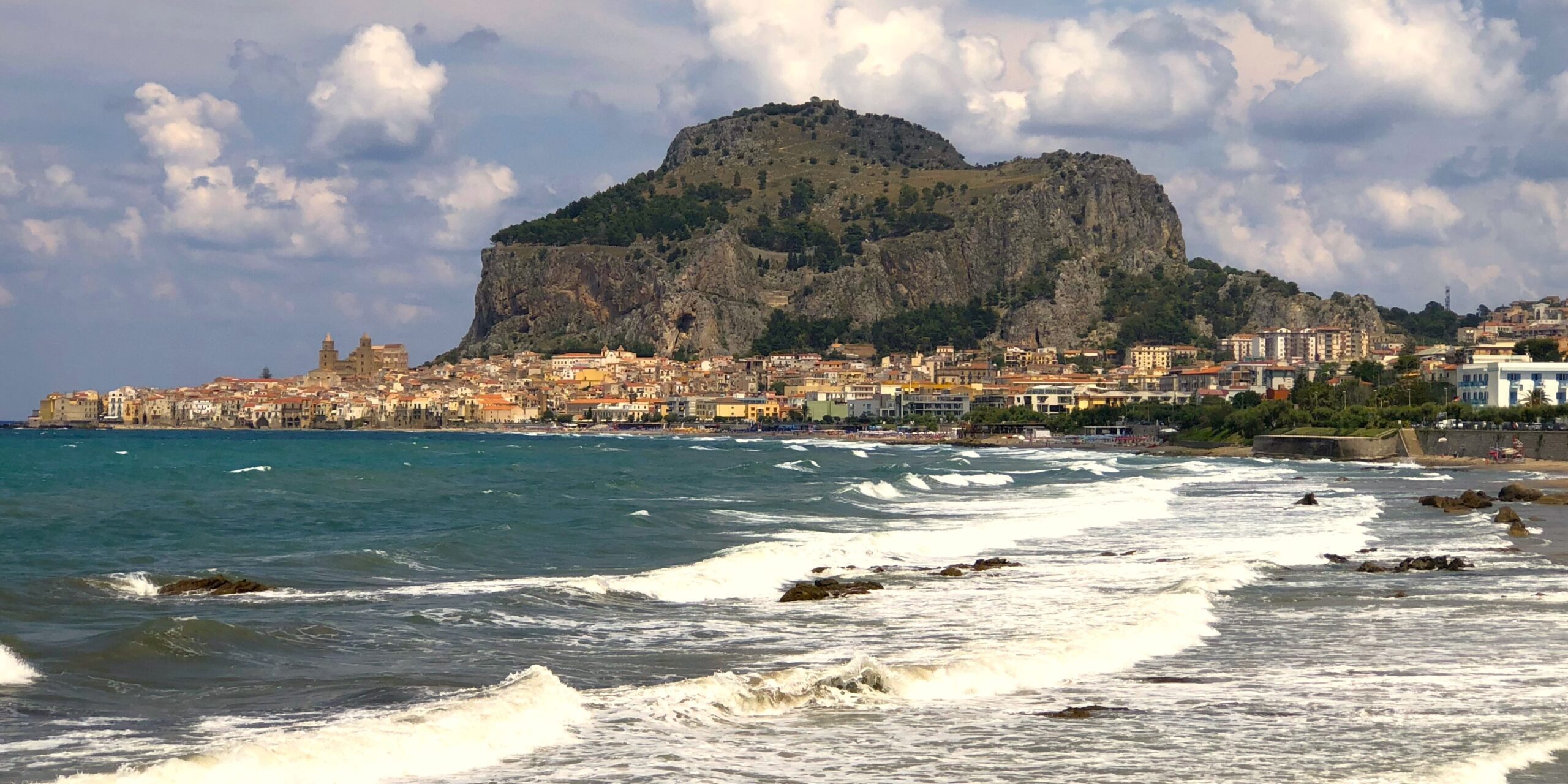
All nine monuments can be visited on a single well-planned two-day trip to Palermo. Monreale is slightly outside the city (8 km south) and is best visited as a half-day excursion. Cefalù Cathedral is 70 km east of Palermo and can be combined with a day at the beach. The Palermo monuments themselves are all within walking distance of the city center.

Practical visitor information

Interactive Location

Related Chapters

The Normans in Italy

The Normans in Italy

To understand the Norman Kingdom of Sicily, one must first understand how Normans came to southern Italy at all. This chapter tells the extraordinary story of Norman expansion in the Mediterranean — one of the most improbable chapters in medieval history. In the early 11th century, small groups of Norman warriors (descendants of Viking settlers […]

Read More
Norman Invasion of Sicily

Norman Invasion of Sicily

The Norman invasion of Sicily was a 30-year campaign of conquest, from the first landing in 1060 to the fall of the last Arab stronghold in 1091. This chapter details the military campaigns, key battles, and remarkable leadership that transformed the island from a Muslim emirate into a Norman Christian kingdom — while preserving the […]

Read More
Norman Kingdom — Golden Age

Norman Kingdom — Golden Age

On Christmas Day 1130, Roger II, the son of the Roger I the Great Count of Sicily and Calabria,  was crowned the first King of Sicily in the cathedral of Palermo. The new Norman Kingdom of Sicily, comprised of the island and  most of southern Italy, would last only 64 years, but would leave behind […]

Read More
Norman Succession

Norman Succession

Upon the death of King Roger II of Sicily in 1154, the Sicilian Kingdom passed to his fourth son William. Roger’s three older sons had been trained for kingship from an early age and held key governing positions within the Sicilian kingdom, but they all died young. This left Roger’s forth son, William, as the […]
Read More
The Lengthening Shadow

The Lengthening Shadow

Every golden age must end. For Norman Sicily, the end began with succession problems. King William II, called “the Good,” ruled from 1166 until his death in 1189 but left no direct heir. The Norman crown of Sicily passed to his aunt Constance, wife of Henry of Hohenstaufen, the son of the German Emperor Frederick […]

Read More

It is a long established fact that a reader will be distracted by the readable content.. 

Greek Tyrants of Sicily

It is a long established fact that a reader will be distracted by the readable content.. 

Arrival of the Romans

It is a long established fact that a reader will be distracted by the readable content.. 

0
0
Your Cart
Empty CartYour cart is emptyReturn to Shop
Secure Checkout
Fast Shipping
Easy Returns