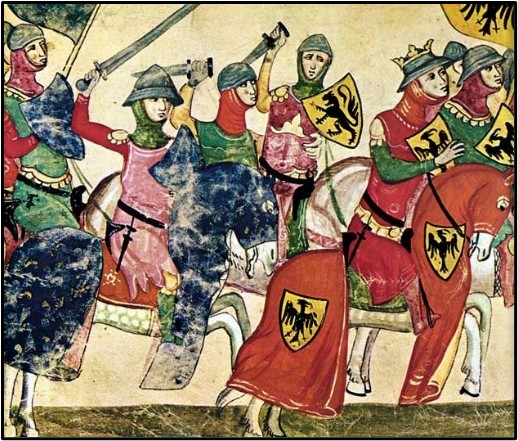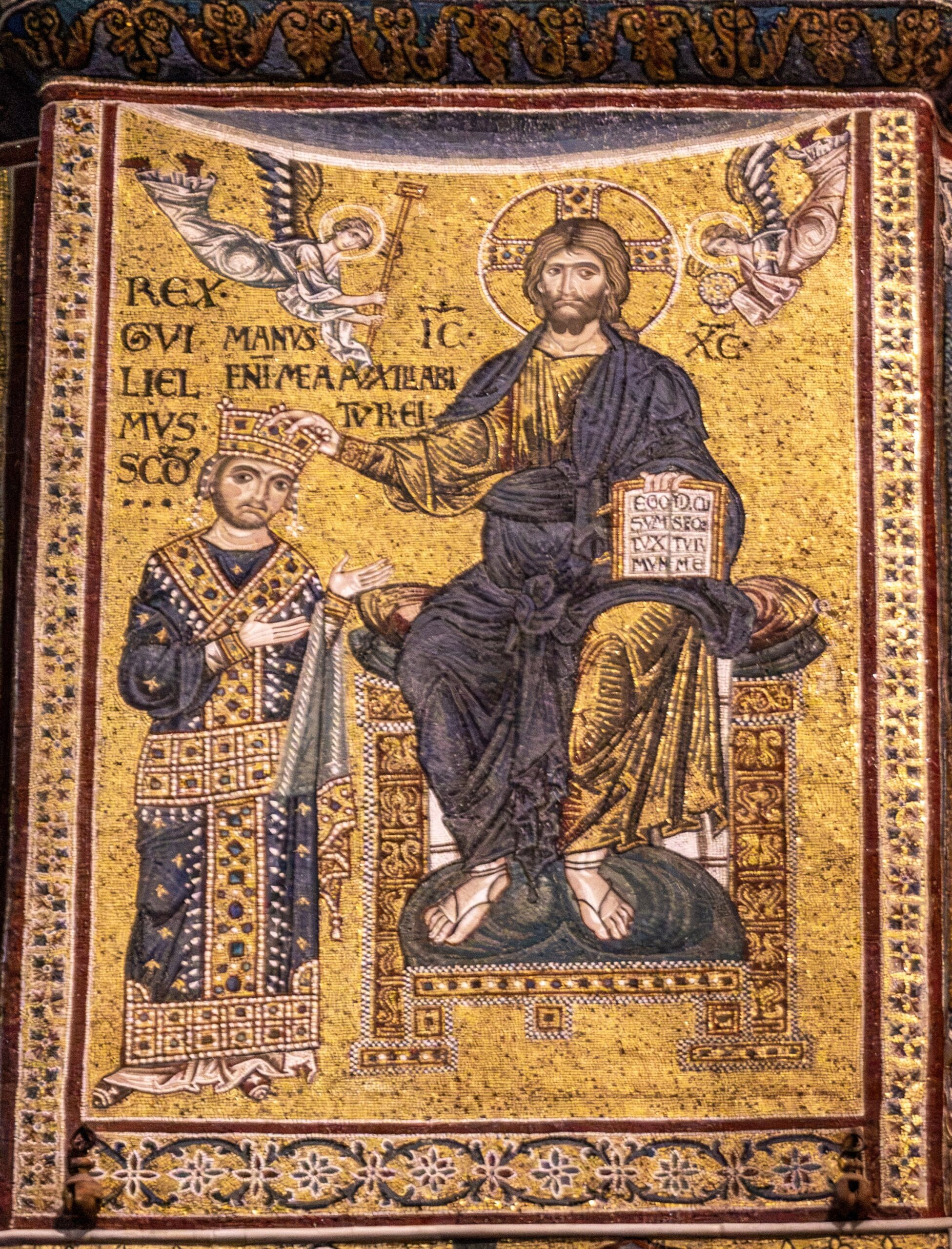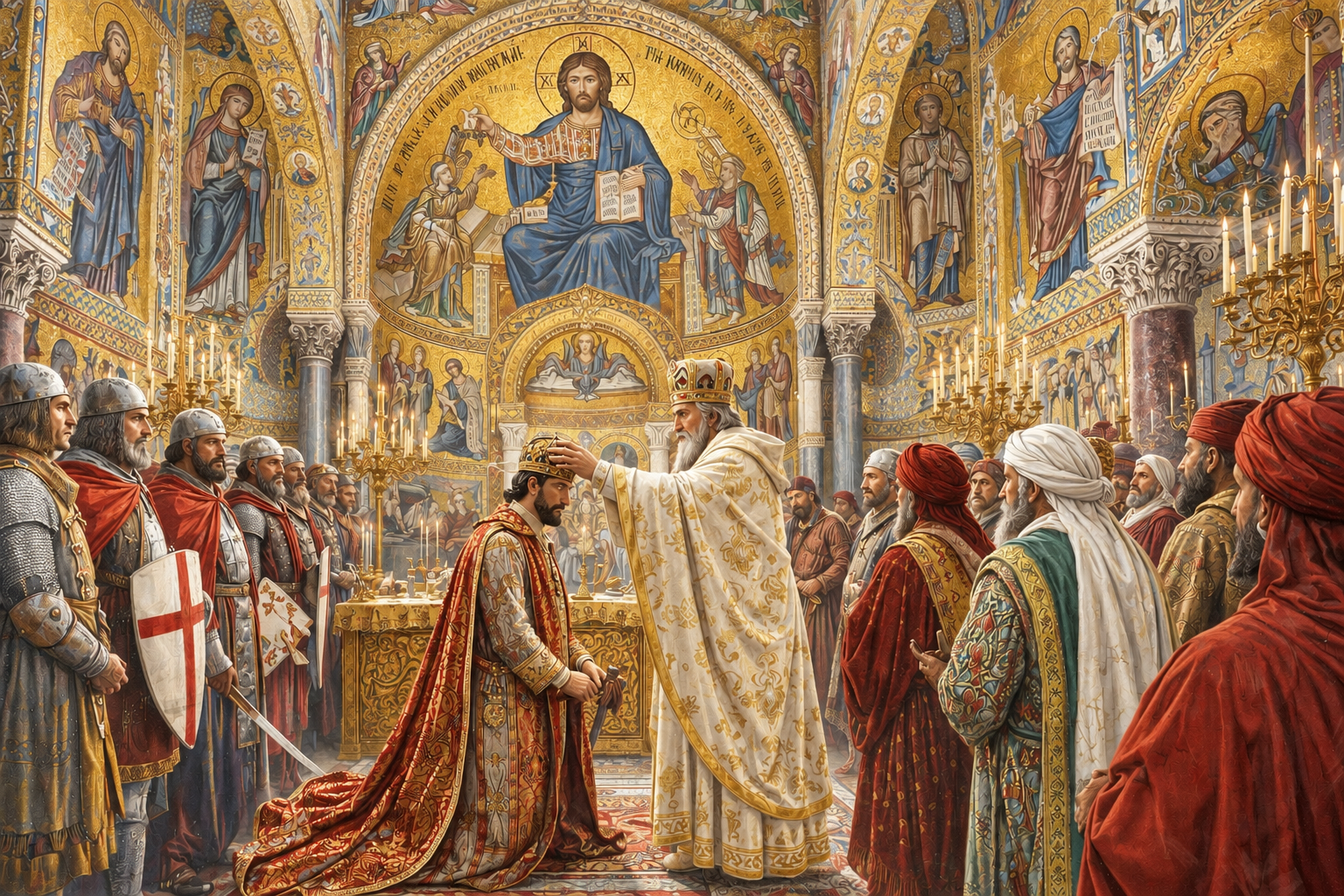


Every golden age must end. For Norman Sicily, the end began with succession problems. King William II, called “the Good,” ruled from 1166 until his death in 1189 but left no direct heir. The Norman crown of Sicily passed to his aunt Constance, wife of Henry of Hohenstaufen, the son of the German Emperor Frederick Barbarossa. As a result of King William II’s tragic foreign policy error, the magnificent Kingdom of Sicily was practically gifted to the kingdom’s oldest enemy, the Hohenstaufen family dynasty of the Holy Roman Empire.
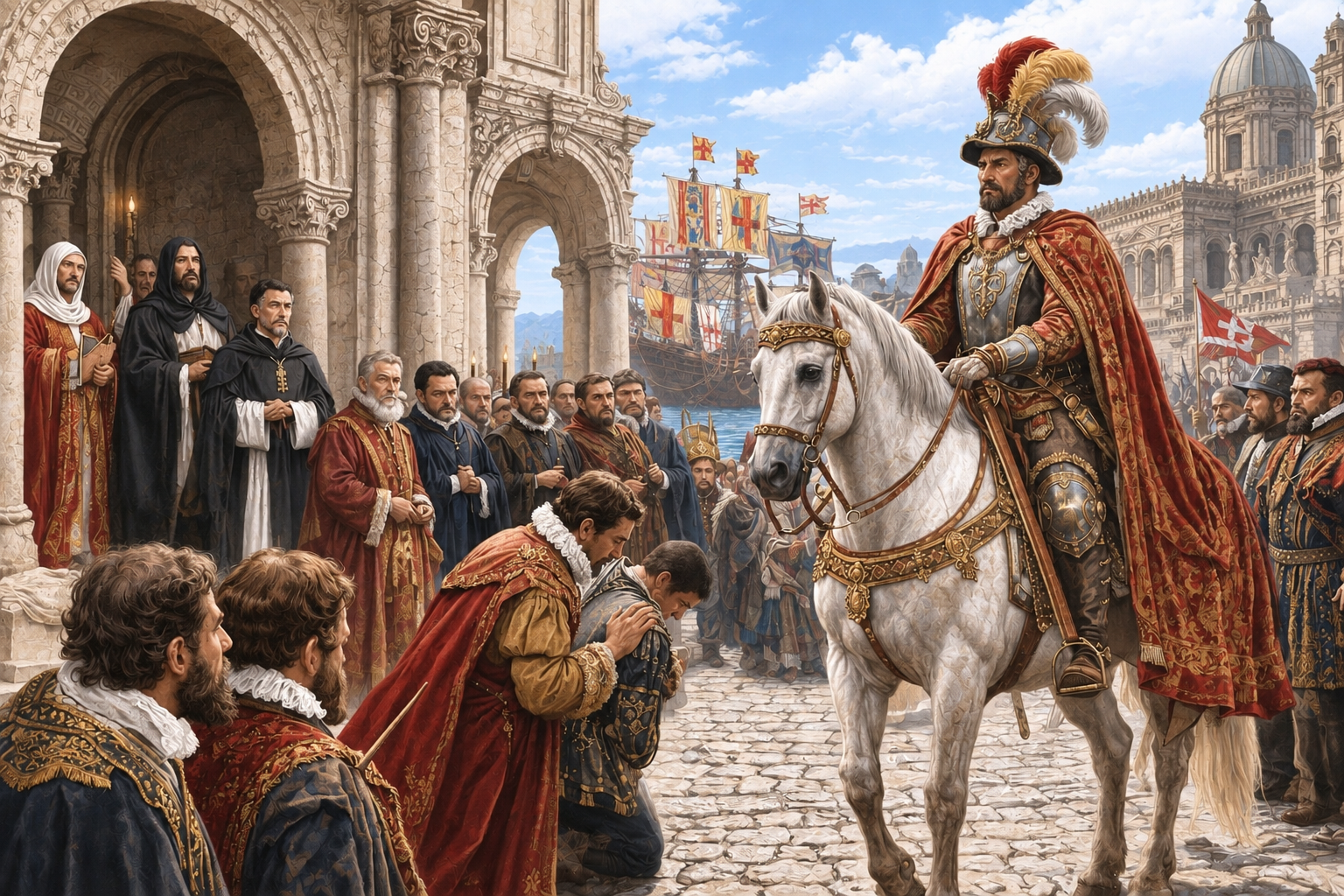
This chapter traces the complicated final decades of Norman rule, including the short, troubled reign of the last Norman King Tancred of Lecce, who briefly held the throne in opposition to the Hohenstaufen claim, and follows the invasion of Sicily by Emperor Henry VI in 1194.
The chapter ends with the birth of Frederick II, son of Emperor Henry IV and Queen Constance of Sicily, who was destined to become one of the most extraordinary monarchs of the Middle Ages.