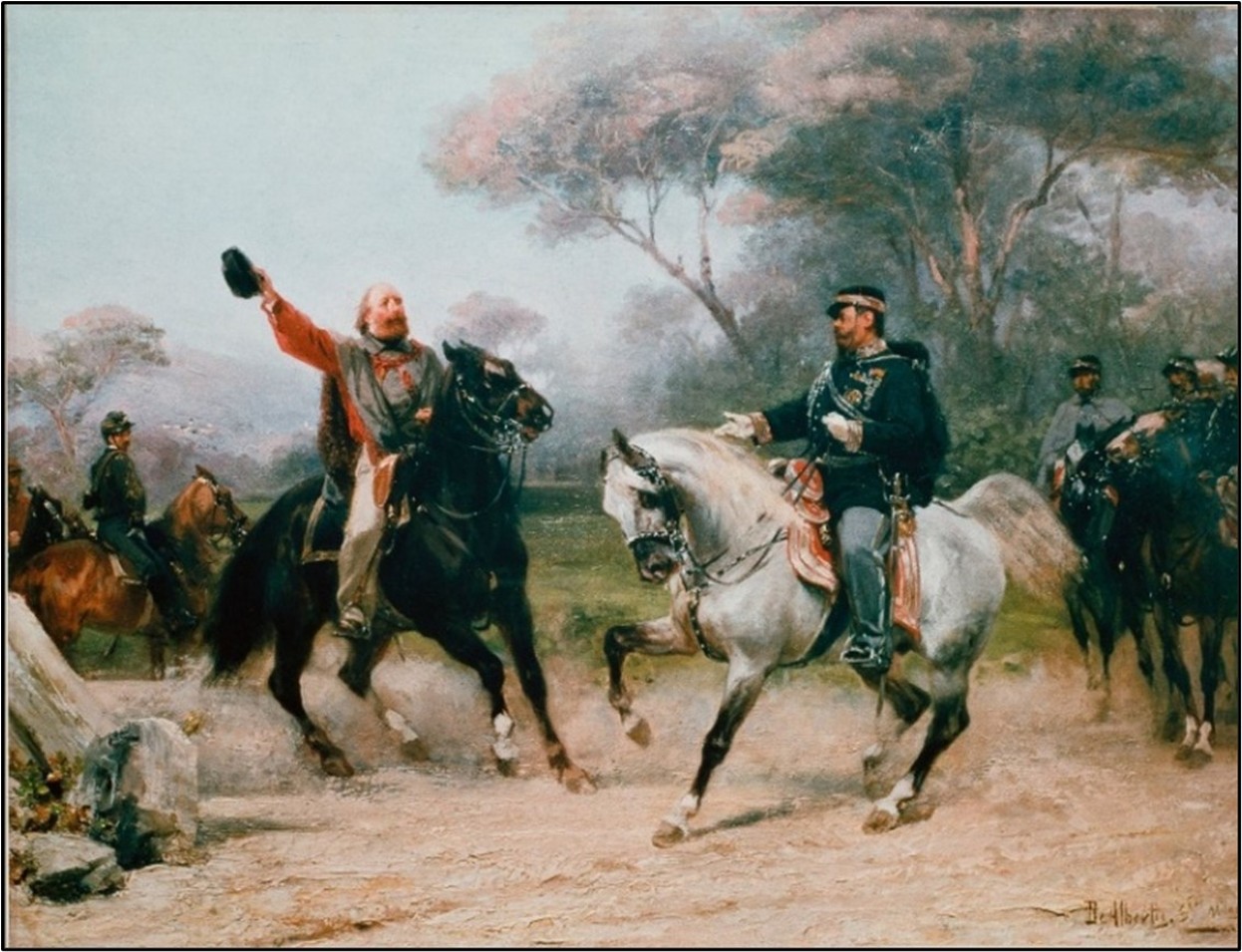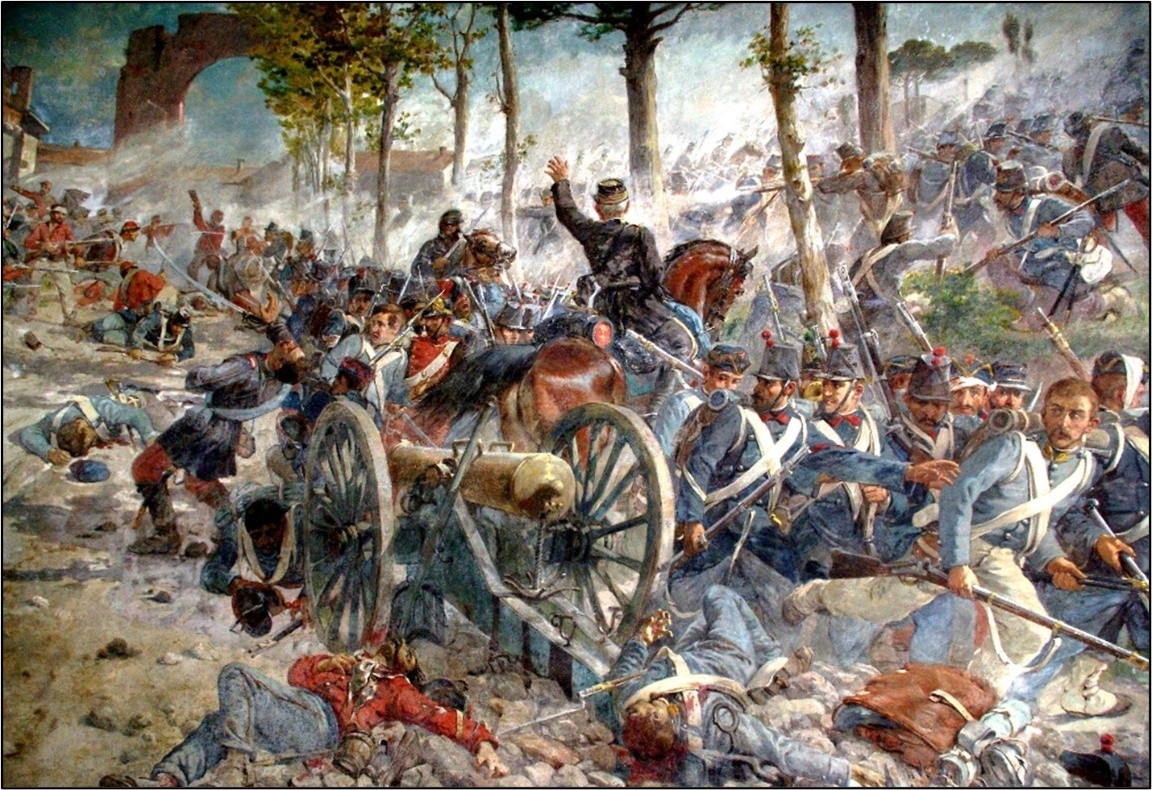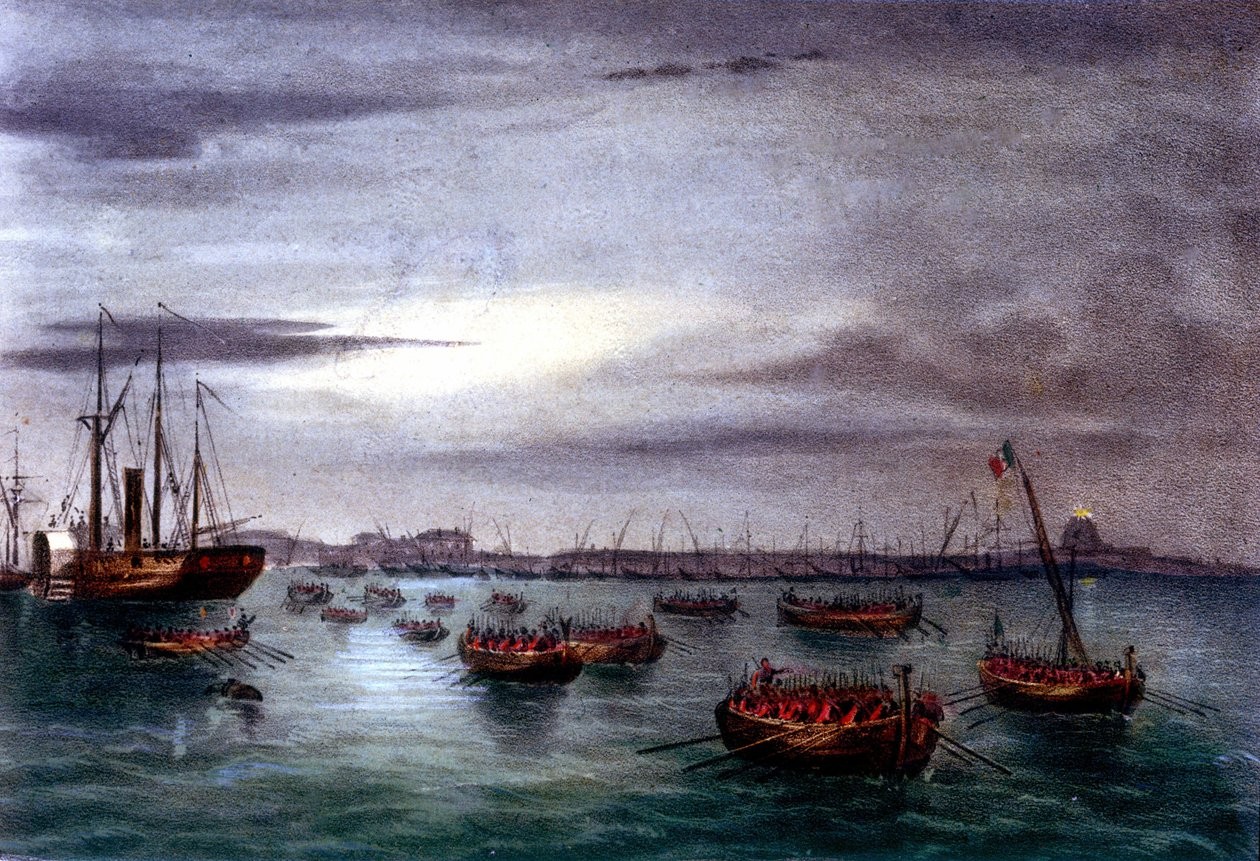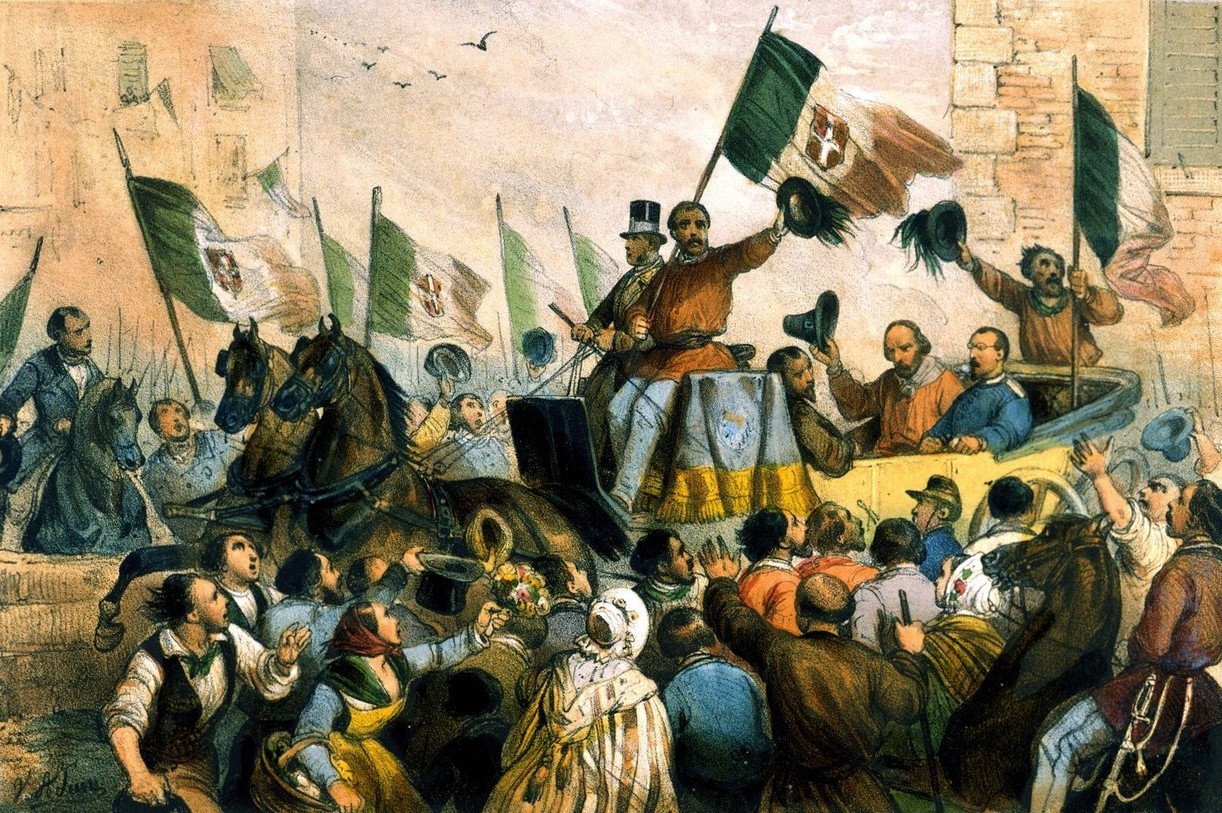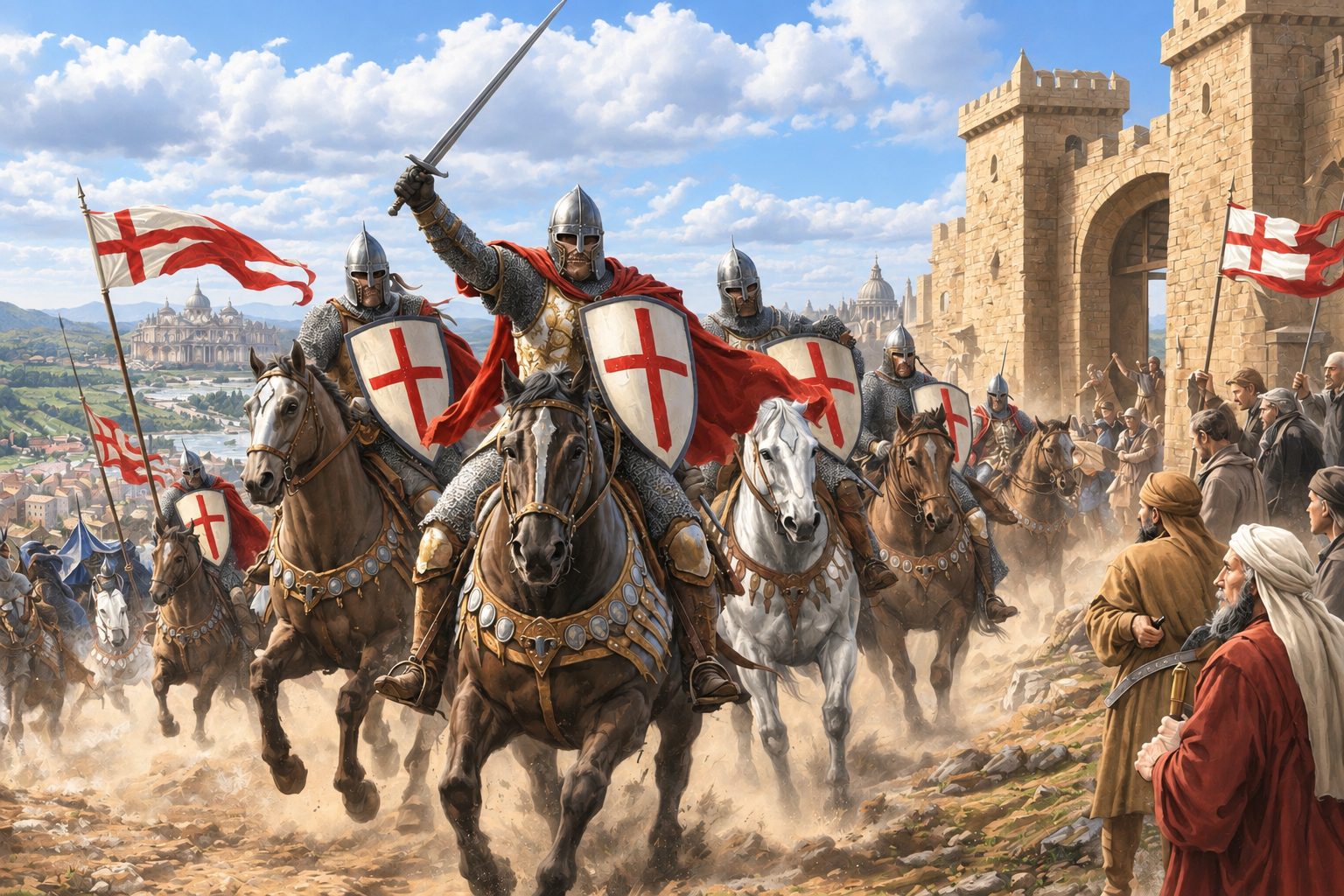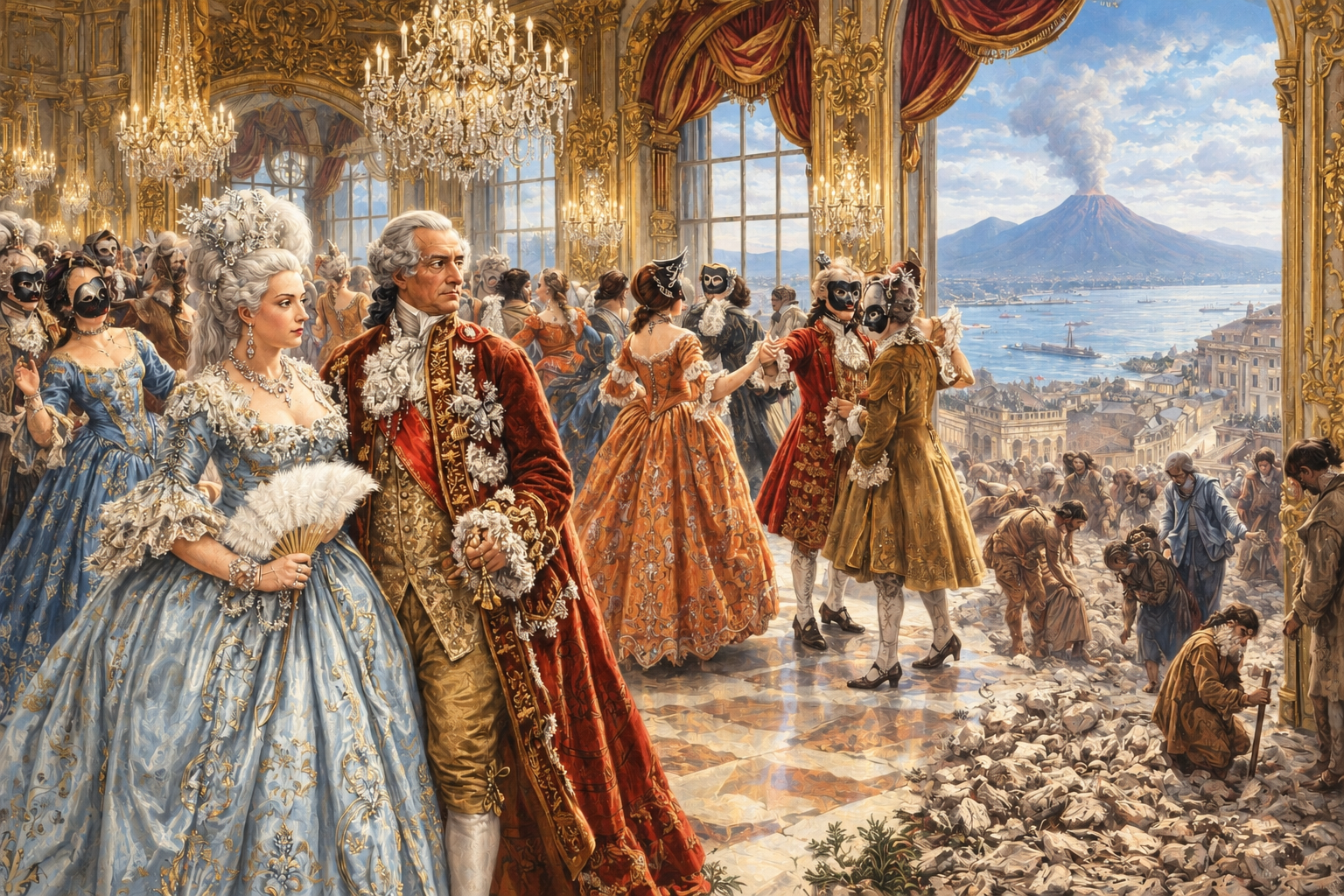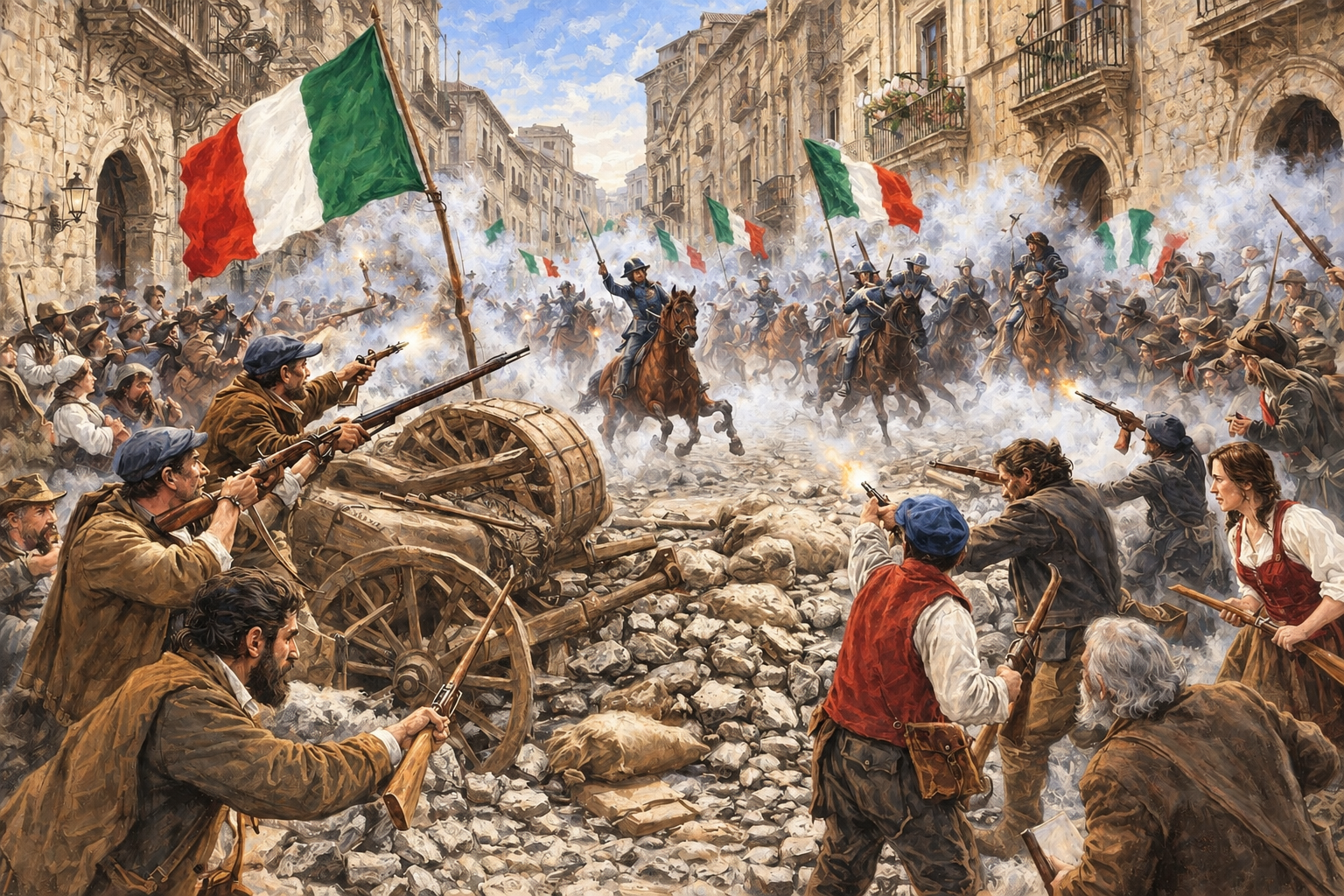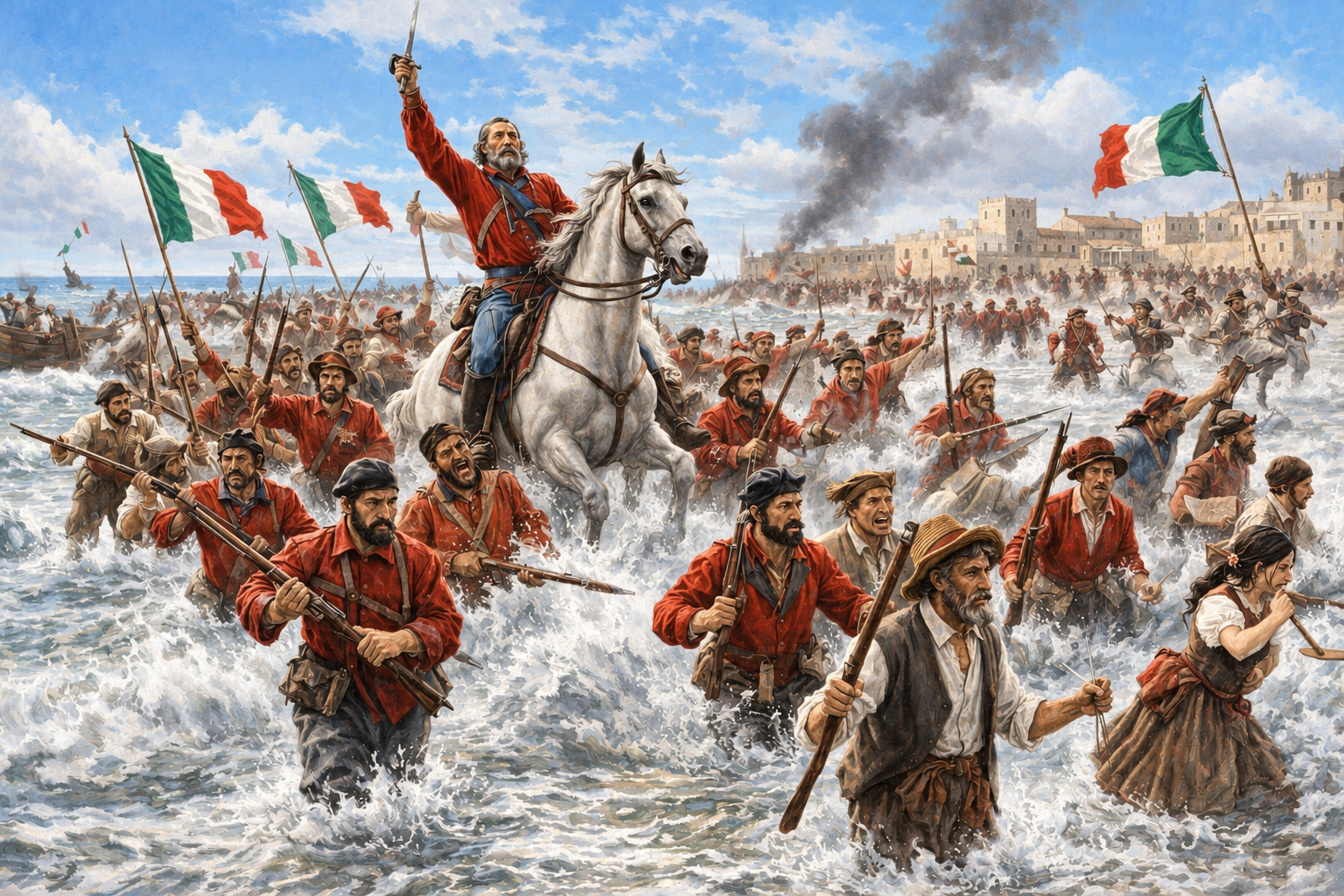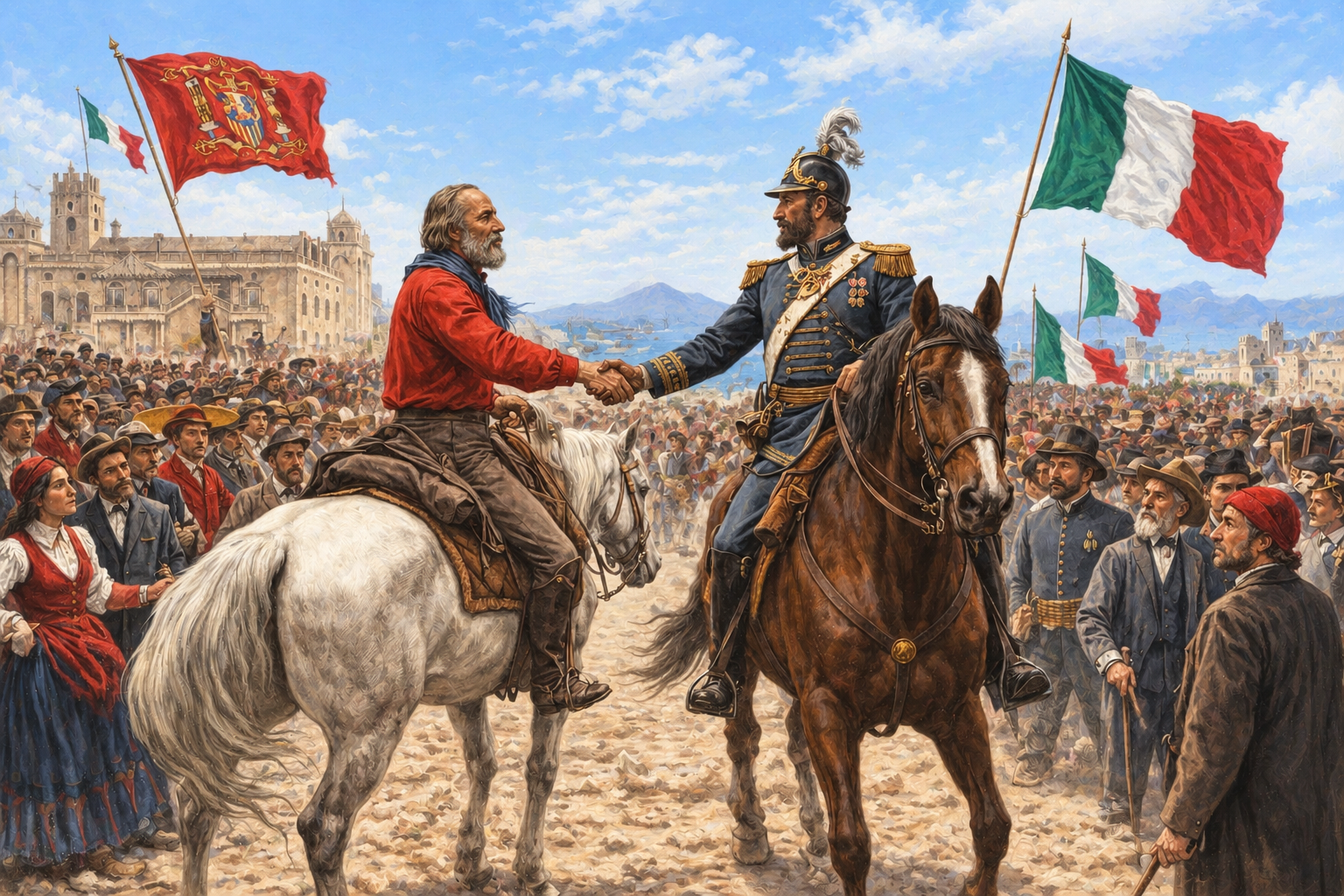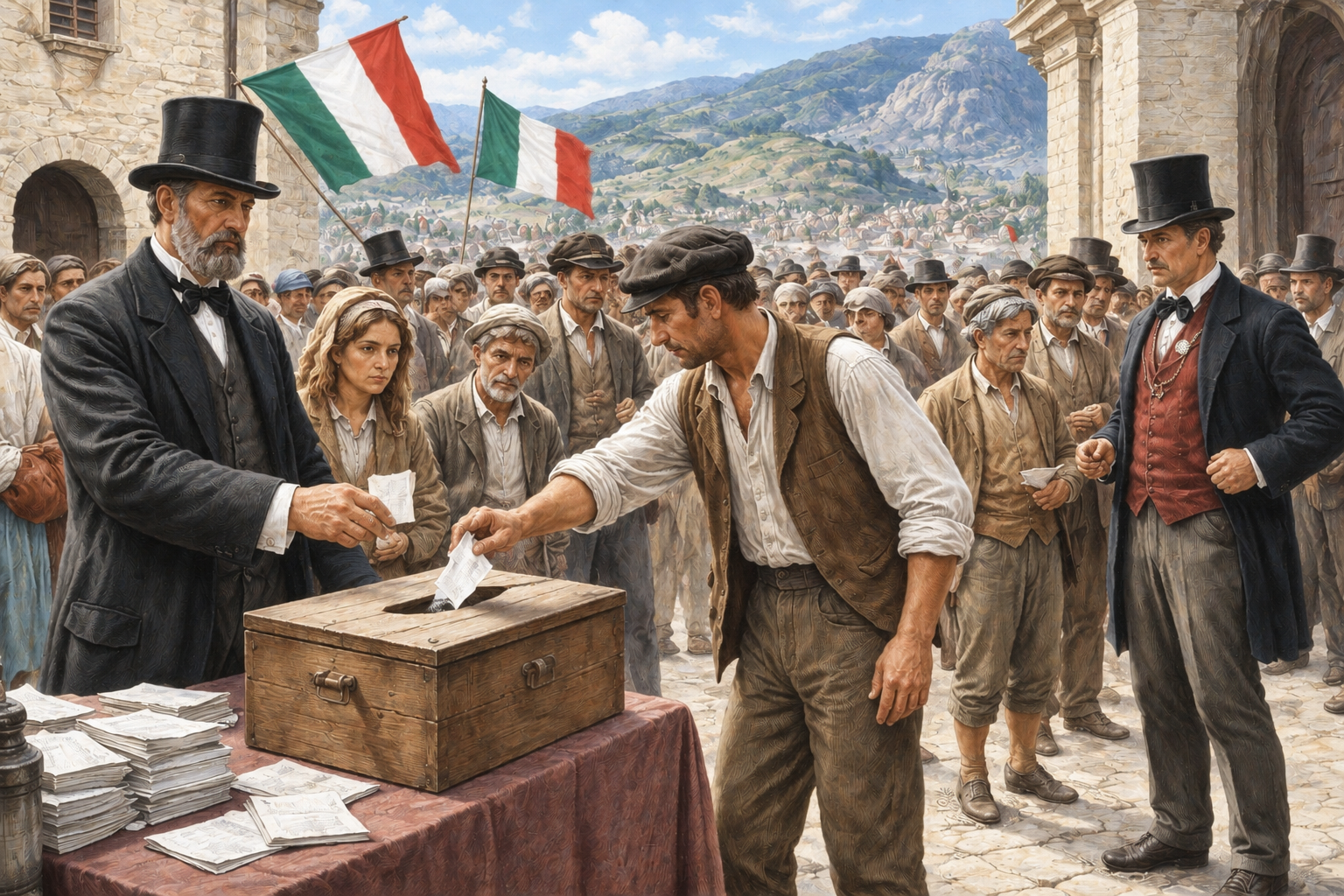


The fall of the Bourbons in 1860 completed one of the longest chapters of Sicilian history. More than five centuries of combined Spanish and Bourbon rule ended with the collapse of the Kingdom of the Two Sicilies and the absorption of Sicily into the new Kingdom of Italy. This chapter details the invasion by Garibaldi’s volunteer army onto the Italian mainland, and traces his impressive string of seemingly impossible military victories over the vastly superior royal Bourbon armies, culminating with his bloodless capture of the Bourbon capital of Naples, and his final showdown against the mighty royal forces on the banks of the Volturno River. The chapter also follows the unification process in detail, including the plebiscite of 1860 in which Sicilians voted overwhelmingly to join the new united Italy, the formal proclamation of the Kingdom of Italy in 1861, and the consolidation of Italian rule across the newly unified peninsula.
The chapter places Sicily’s experience within the broader context of the Italian Risorgimento — the 19th century movement for Italian national unification. It covers the key figures beyond Garibaldi: the political genius of Count Cavour, the diplomatic maneuvering that enabled the House of Savoy to unite Italy under its leadership, and the role of King Victor Emmanuel II, who would become the first king of a unified Italy. It examines the complex coalition of liberal nationalists, Garibaldi’s radical republicans, moderate monarchists, and regional elites that made Italian unification possible. The chapter ends with the success of the Risorgimento and the final years of its glorious great hero, Giuseppe Garibaldi.