


Illustrated History of Sicily

A visual journey through the land, cuisine, people, language, and living traditions of Sicily — the crossroads of civilizations.

Illustrated History of Sicily

A visual journey through the land, cuisine, people, language, and living traditions of Sicily — the crossroads of civilizations.

Hohenstaufen & Angevin Succession

1194–1282 AD

Emperor Frederick II dazzled the world from Palermo. Then came the French. And then came the Vespers.

overview

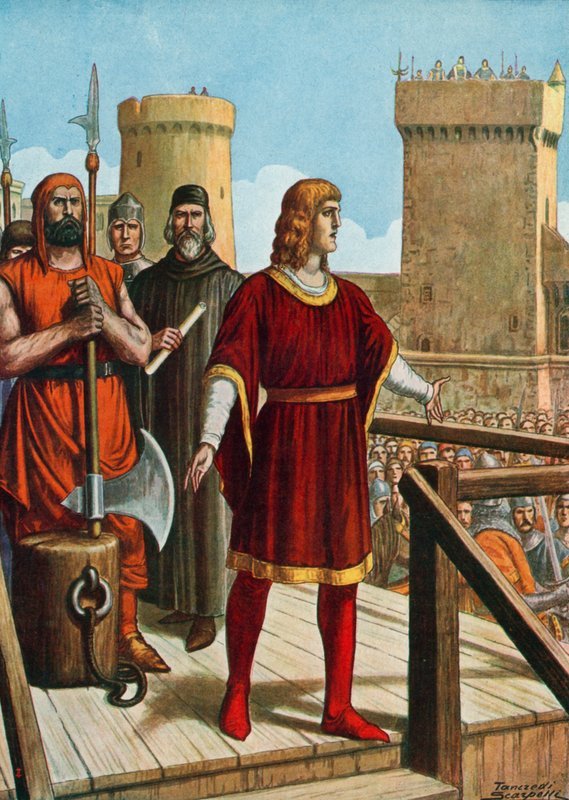
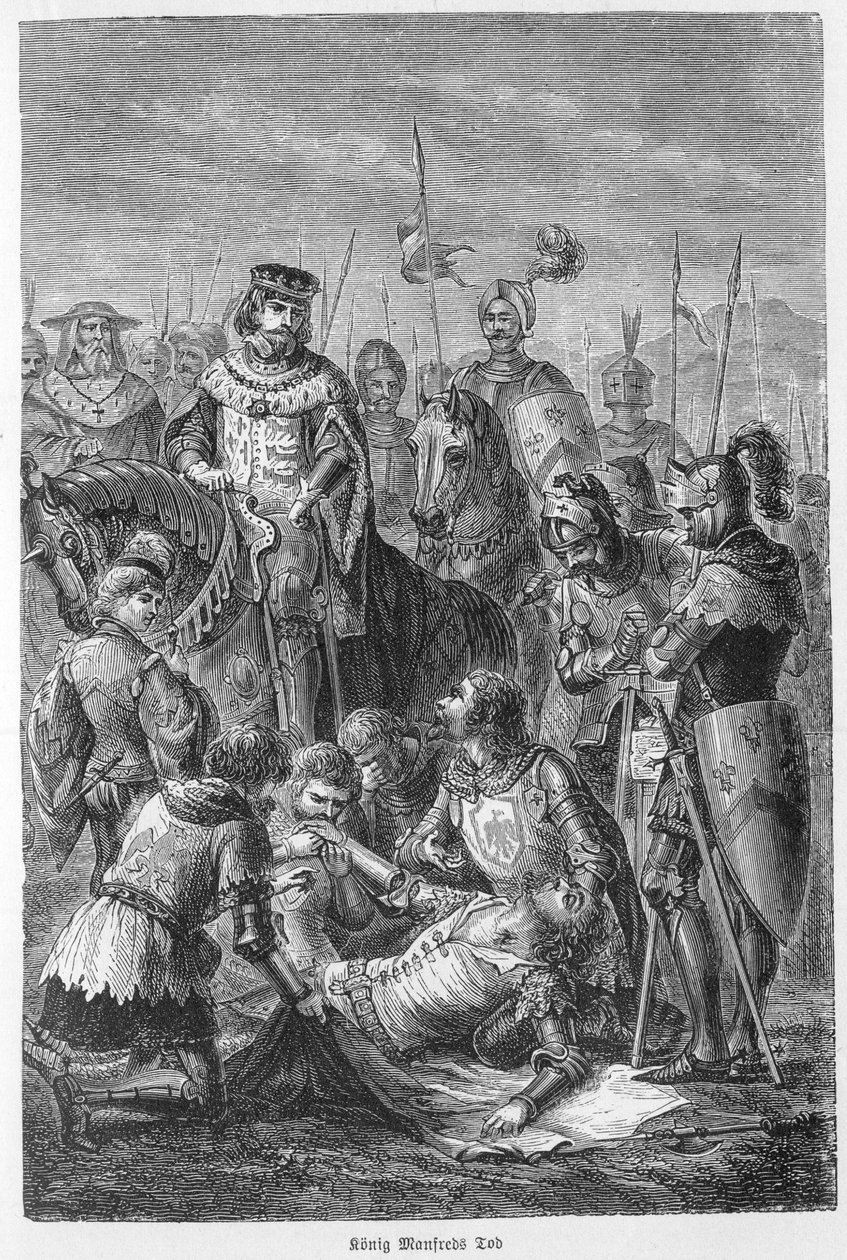
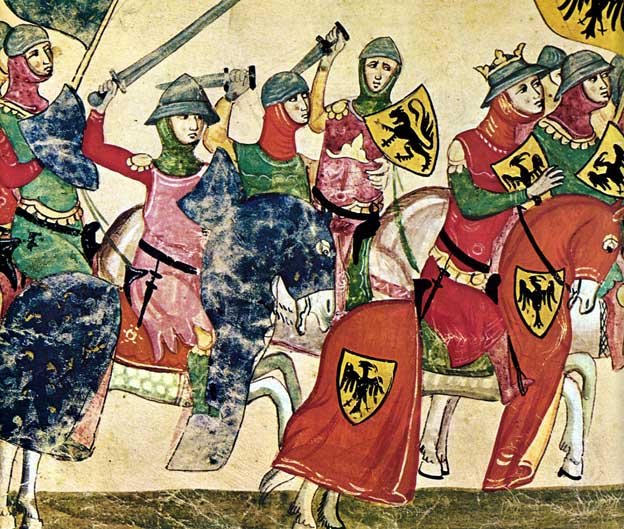
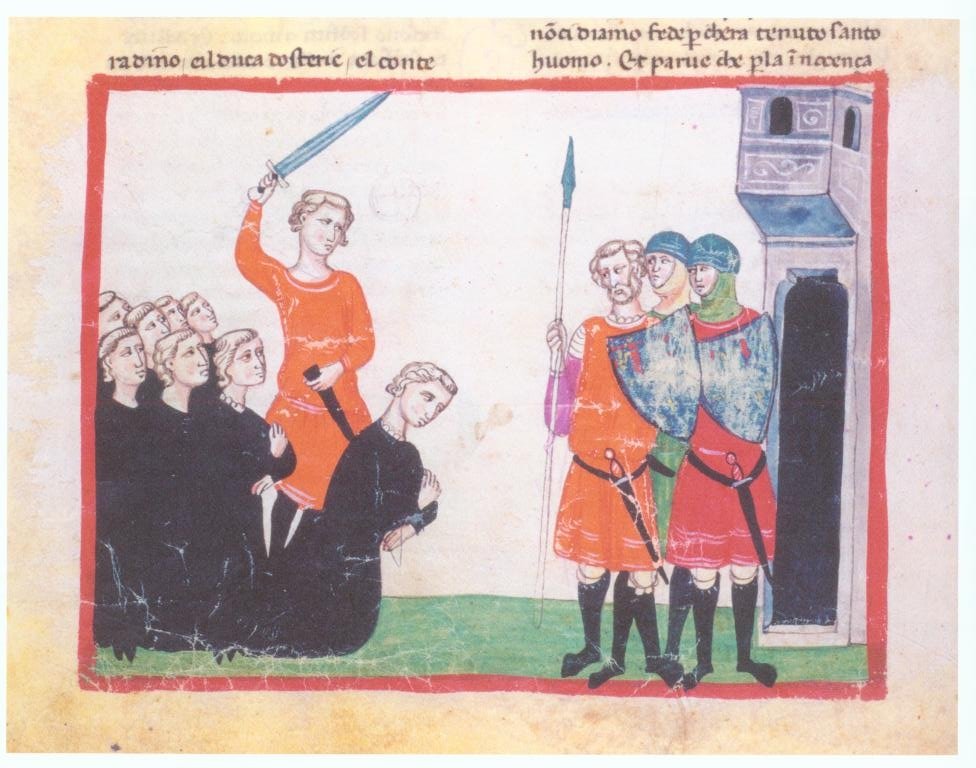
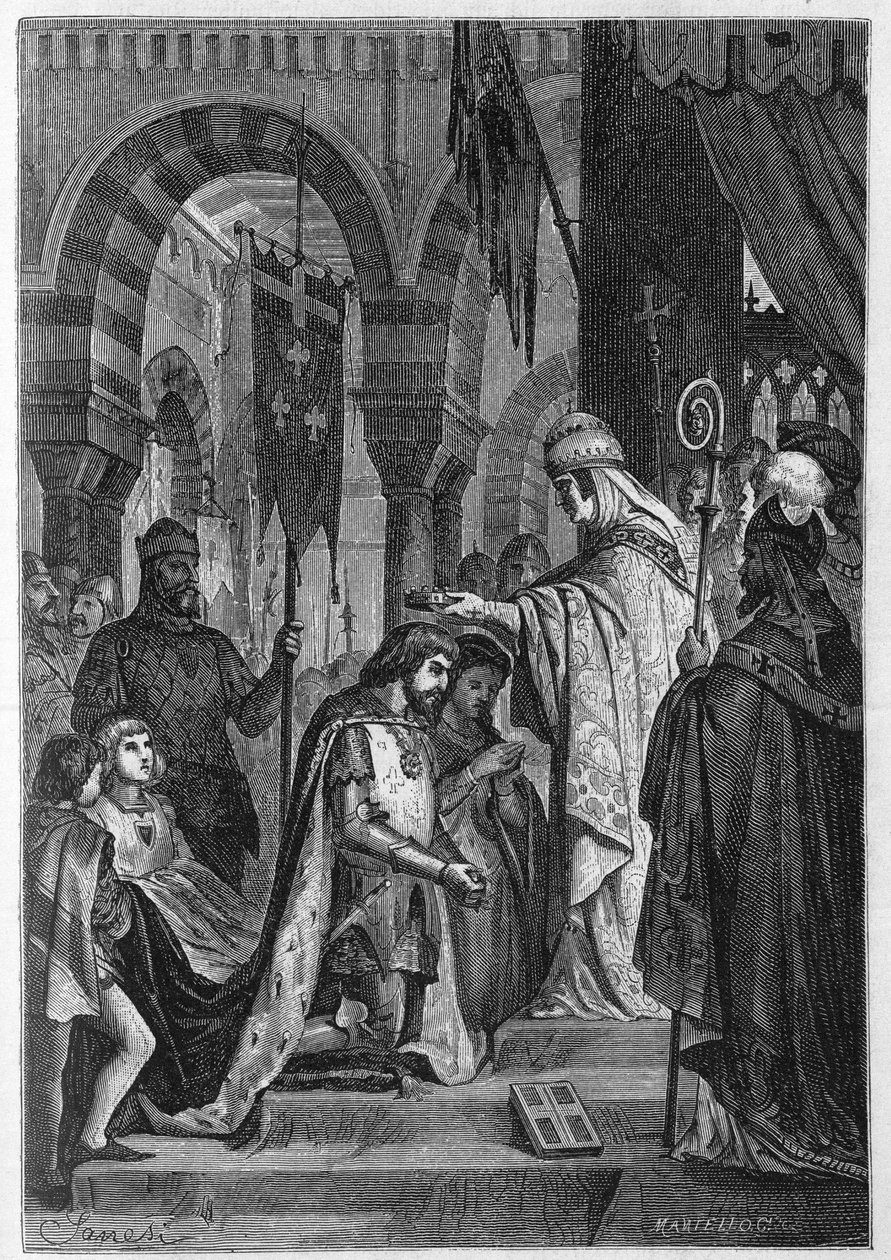
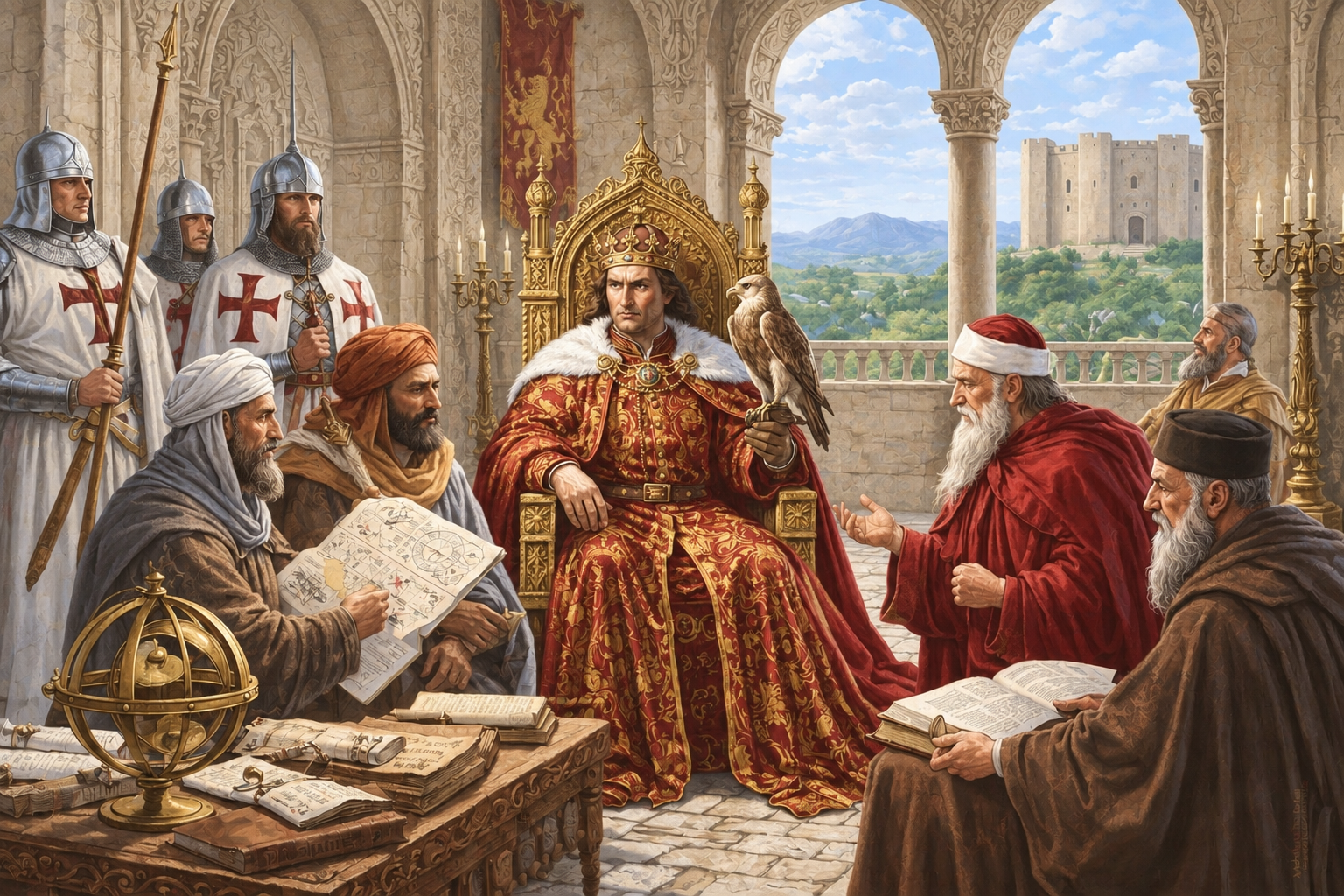
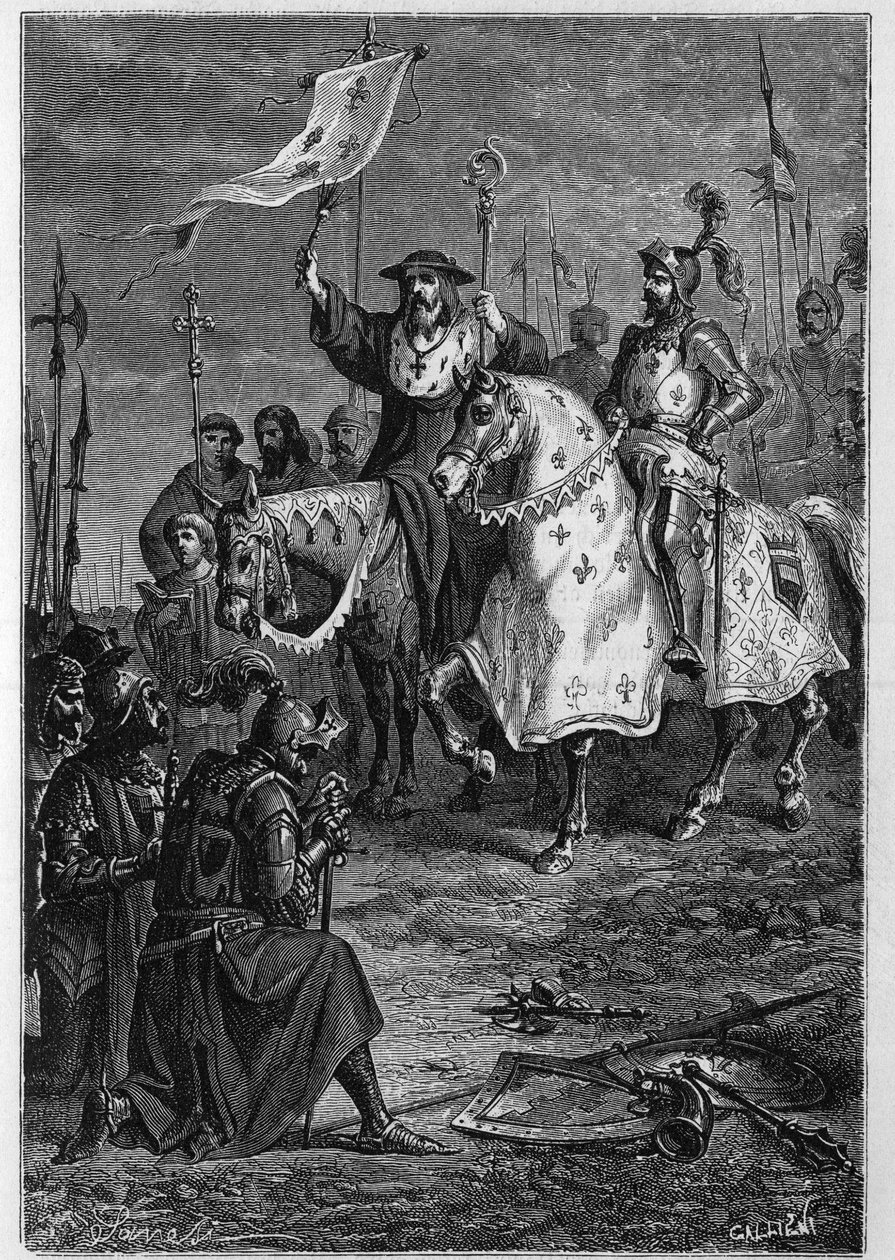
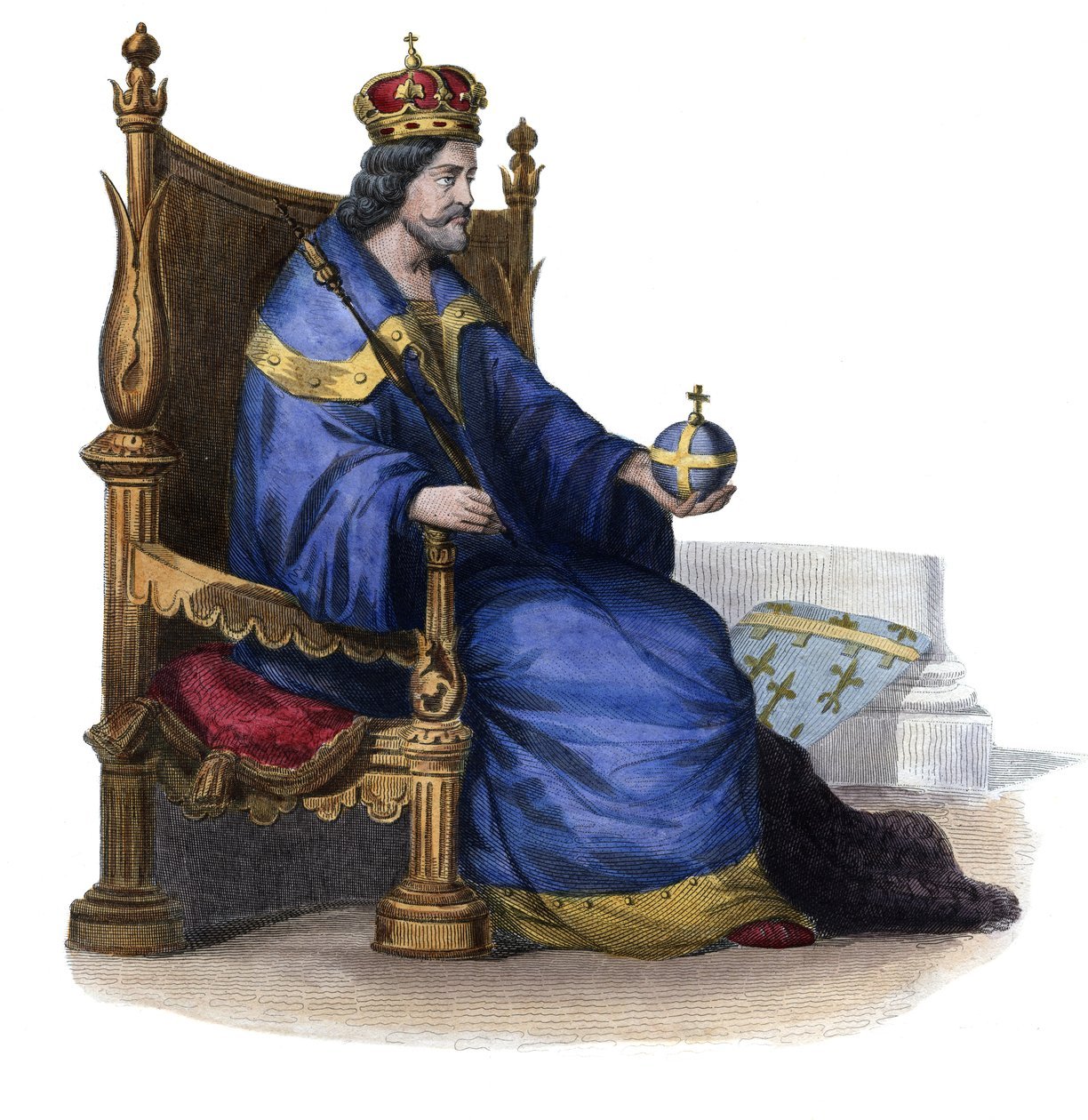
When the last Norman king died in 1189 without a direct heir, the Kingdom of Sicily passed by marriage to the Germanic Hohenstaufen dynasty of the Holy Roman Empire. During the entire first half of the 13th century Sicily was ruled by the most remarkable rulers  of the entire Middle Ages.  Born in 1194, Frederick II was the product of two of the greatest family dynasties of medieval Europe. From his Hauteville Norman mother he inherited the Kingdom of Sicily, which he ruled from 1198 until his death in 1250. From his Hohenstaufen father, he claimed the vaulted imperial throne of the Holy Roman Empire. Emperor Frederick II would come to be known throughout medieval Europe as Stupor Mundi: the Wonder of the World. He was a unique individual of many diverse talents:   a scientist, a poet, scholar, a lawmaker, a crusader (albeit a reluctant one), and a patron of the arts and sciences on a scale few medieval monarchs matched. Frederick’s court at Palermo continued the multicultural tradition of the Norman kings of Sicily. He wrote one of the most influential medieval treatises on falconry. He founded the University of Naples. He promulgated the Constitutions of Melfi, one of the most sophisticated legal codes of the age. He was a master builder, who commissioned the extraordinary fortresses of Castel del Monte in Puglia and the Castello Maniace in Siracusa. And he maintained a working relationship with the Islamic world so cordial that the xenophobic Pope Gregory IX excommunicated him — twice. Frederick II’s Sicily was the continuation of the Norman golden age under a different dynasty. After Frederick’s death in 1250, the Hohenstaufen dynasty collapsed quickly. A series of 13th century popes,  determined to prevent any strong imperial power in southern Italy and also to plunder its fabulous riches, invited Charles of Anjou, brother of the King of France, to seize the Kingdom of Sicily. Charles arrived with a French army, defeated and executed the last Hohenstaufen heir, and established French rule over the island in 1266. The Angevin years were short but vicious, a period marked by a great plundering of Sicilian wealth and the wholesale abuse of its citizens. After nearly  two decades of constant abuse, the French repression had transformed Sicily into a volatile tinderbox, requiring a single spark to set the entire island ablaze. In 1282, in Palermo, on Easter Monday, a French soldier molested a Sicilian woman, and was promptly  murdered by her vengeful husband. This tiny spark of personal vengeance quickly ignited the fury of the Sicilian people and the island exploded in violent revolution.

On May 11, 1860, a 53-year-old revolutionary named Giuseppe Garibaldi

At the conclusion of the War of Spanish Succession in

After the Revolt of the Sicilian Vespers drove the French

When the last Norman king died in 1189 without a

The Norman conquest of Sicily was one of the most

KEY CHAPTERS IN THE BOOK

Sicily Under Hohenstaufen Rule

Sicily Under Hohenstaufen Rule

The chapter traces the regency period following the death of Emperor Henry VI in 1197, when the infant Frederick II was left as King of Sicily under the protection of Pope Innocent III. It covers the political instability of early 13th century Sicily, the growing rivalries between German, Italian, and native Sicilian factions at court, […]

Read More
The Angevins & the Aragonese

The Angevins & the Aragonese

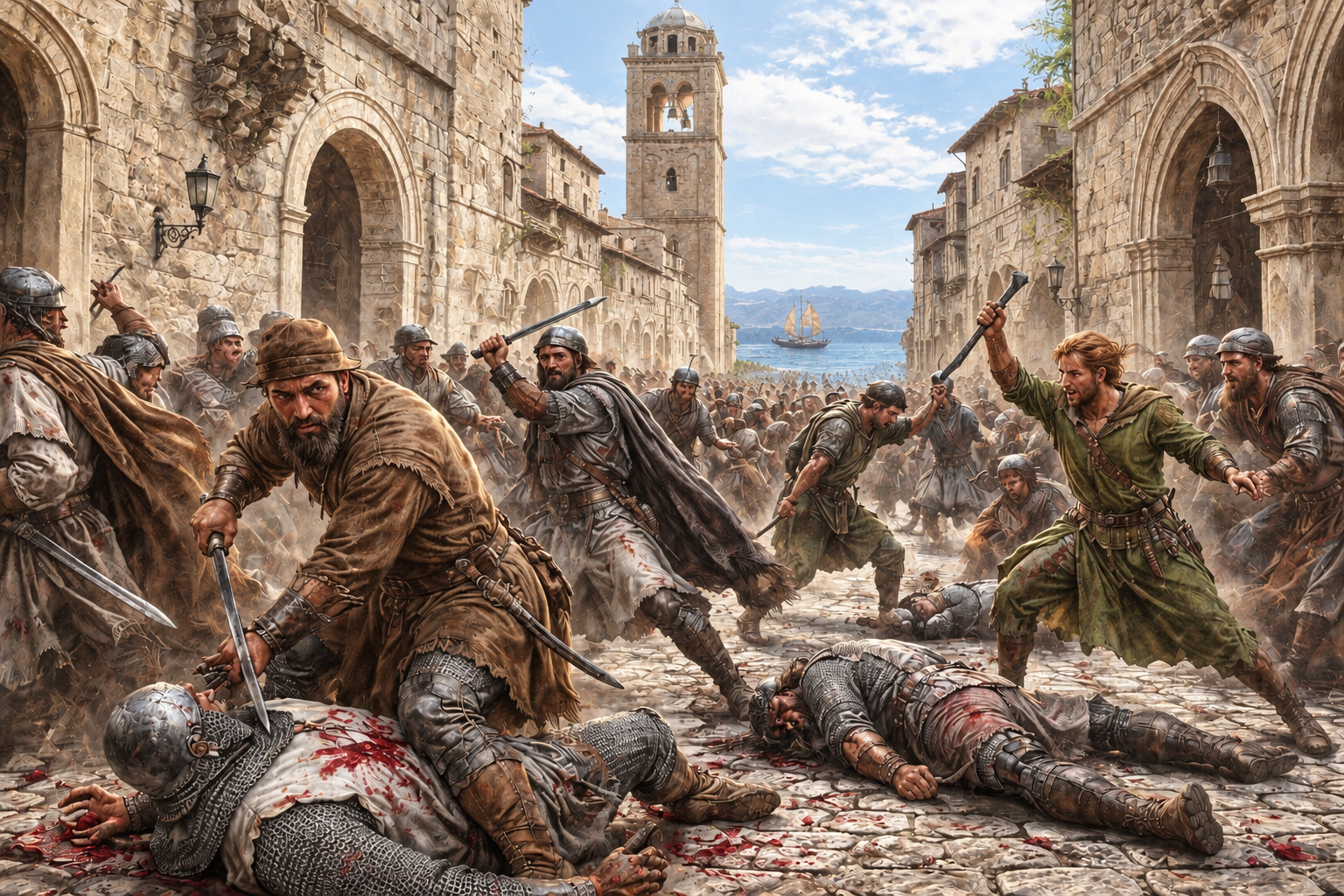
The chapter begins with the  establishment of a brutal and rapacious French occupation of Sicily. Sicilians despised Angevin rule from the start. French soldiers and officials were arrogant, exploitive , and often violent toward the local population. King Charles levied oppressive new taxes on the kingdom to repay his massive debts incurred during his recent […]

Read More
1194 AD
1212 AD
1240 AD
1260 AD
1282 AD

THE SICILIAN VESPERS

What began as a single act of resistance in a Palermo churchyard became a full scale revolution. Sicilians across the island rose up and massacred thousands of French officials, soldiers, and settlers over the course of several weeks. The uprising is known to history as the Sicilian Vespers, after the evening prayer service at which it is said to have begun. Within months, the Angevins had been driven from the island. Sicily offered its crown to King Peter III of Aragon, and an entirely new chapter began. The Sicilian Vespers became, and remain, one of the most significant popular uprisings in European history — a defining moment when the Sicilian people violently struck back at her oppressors and determined their own fate. .