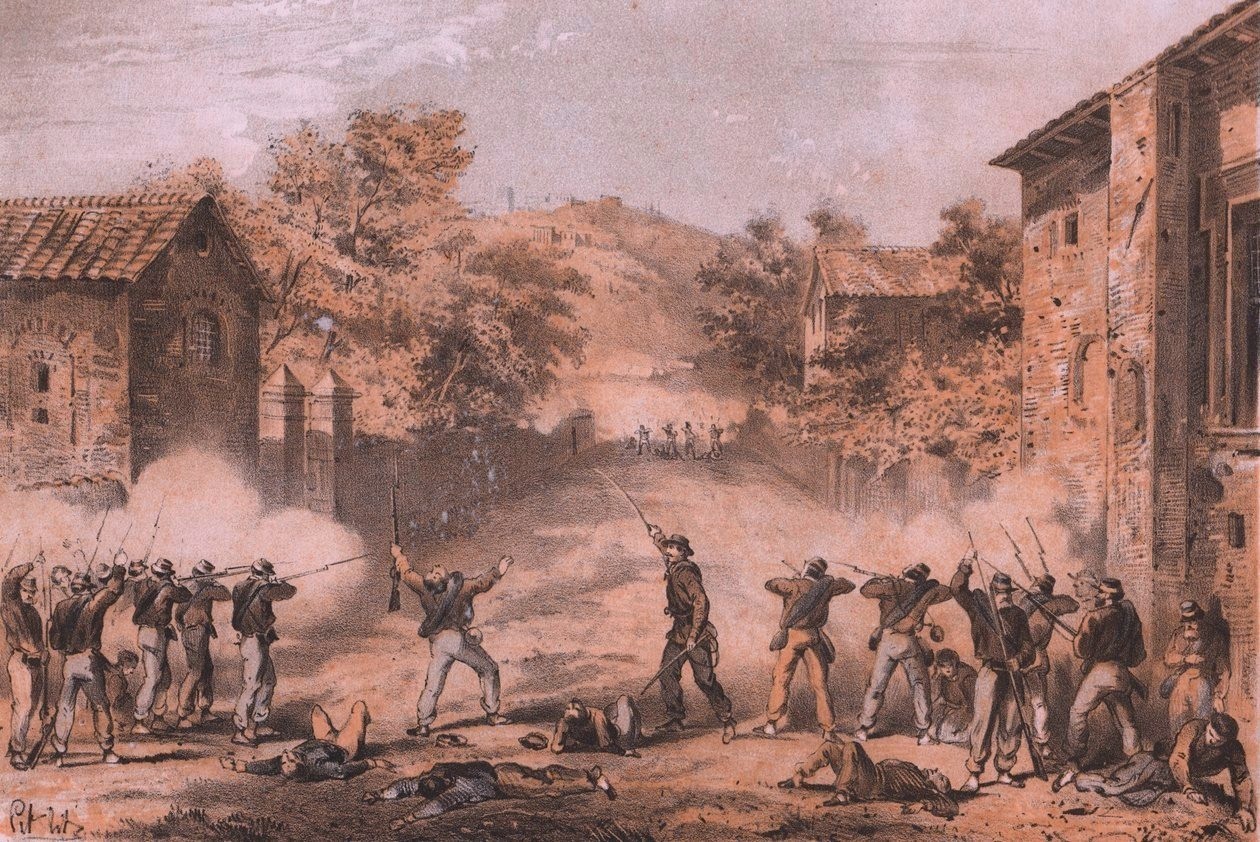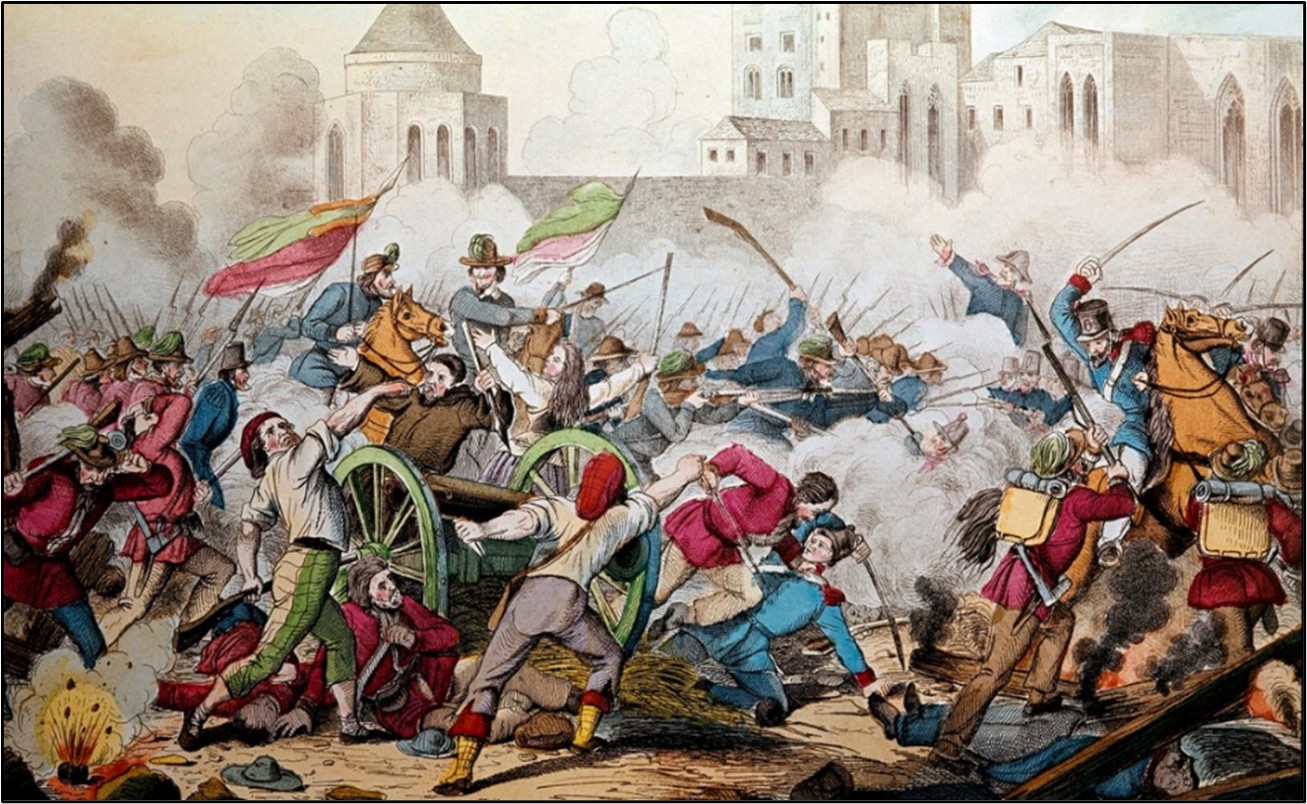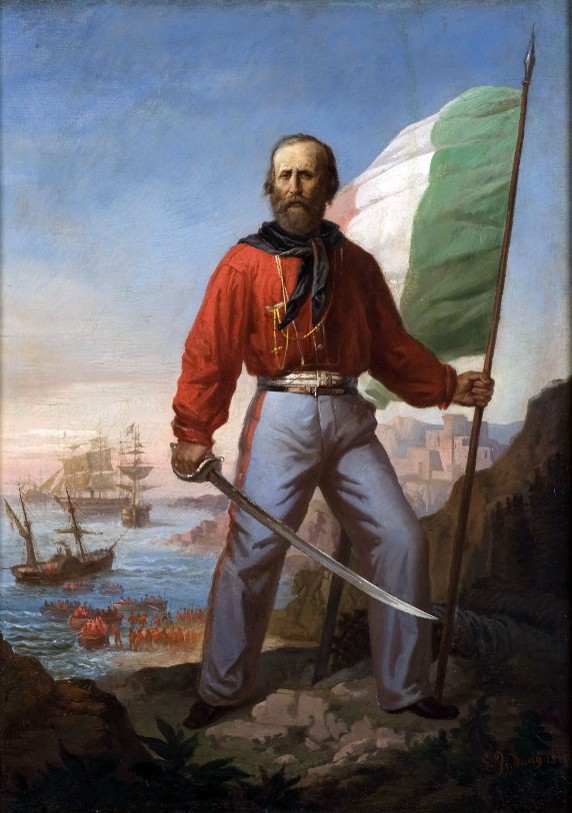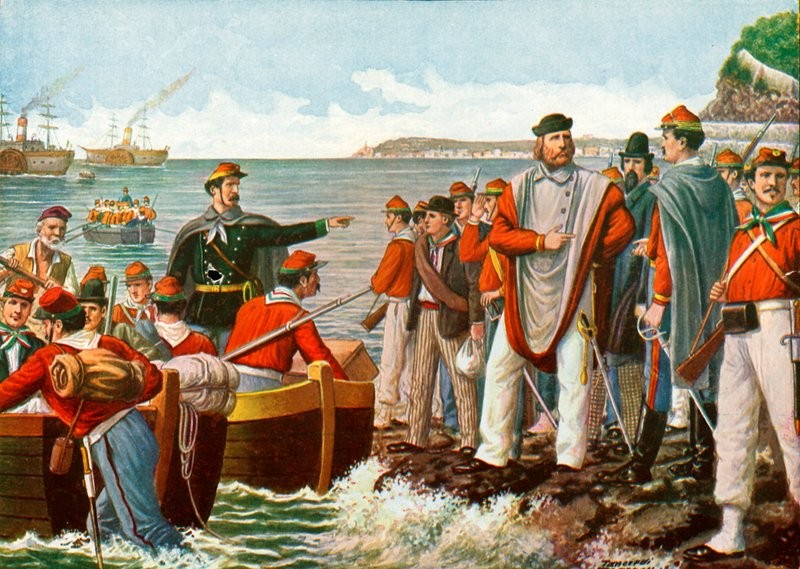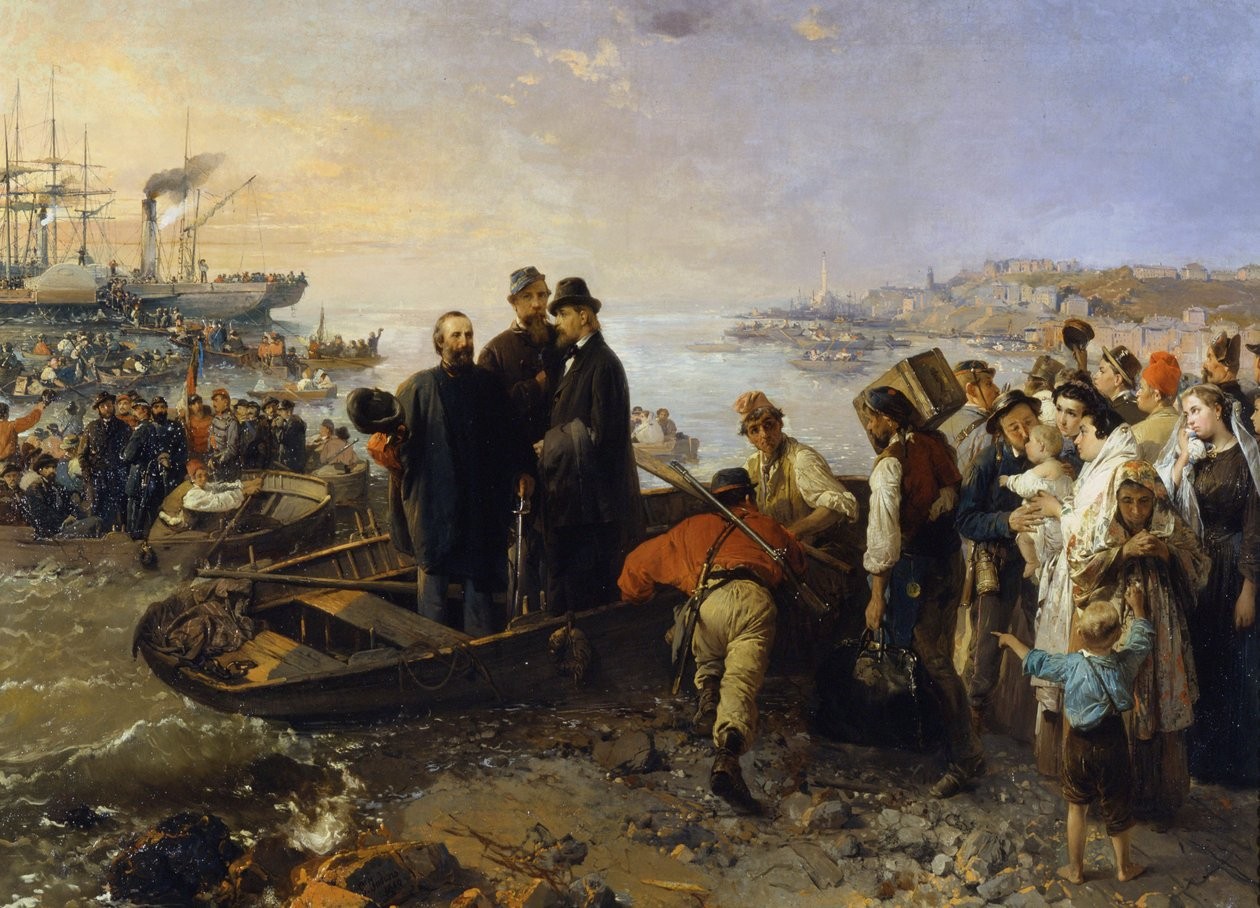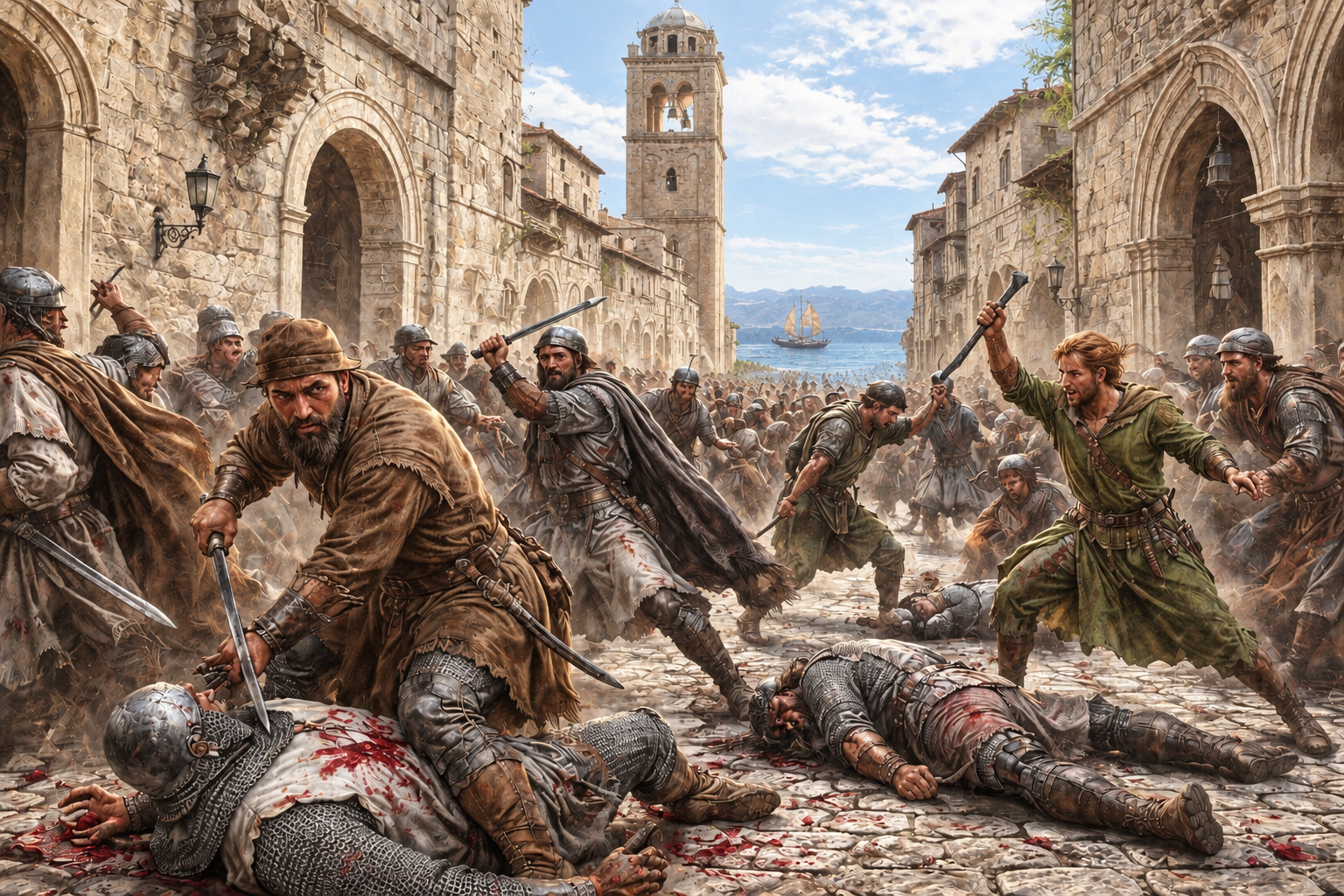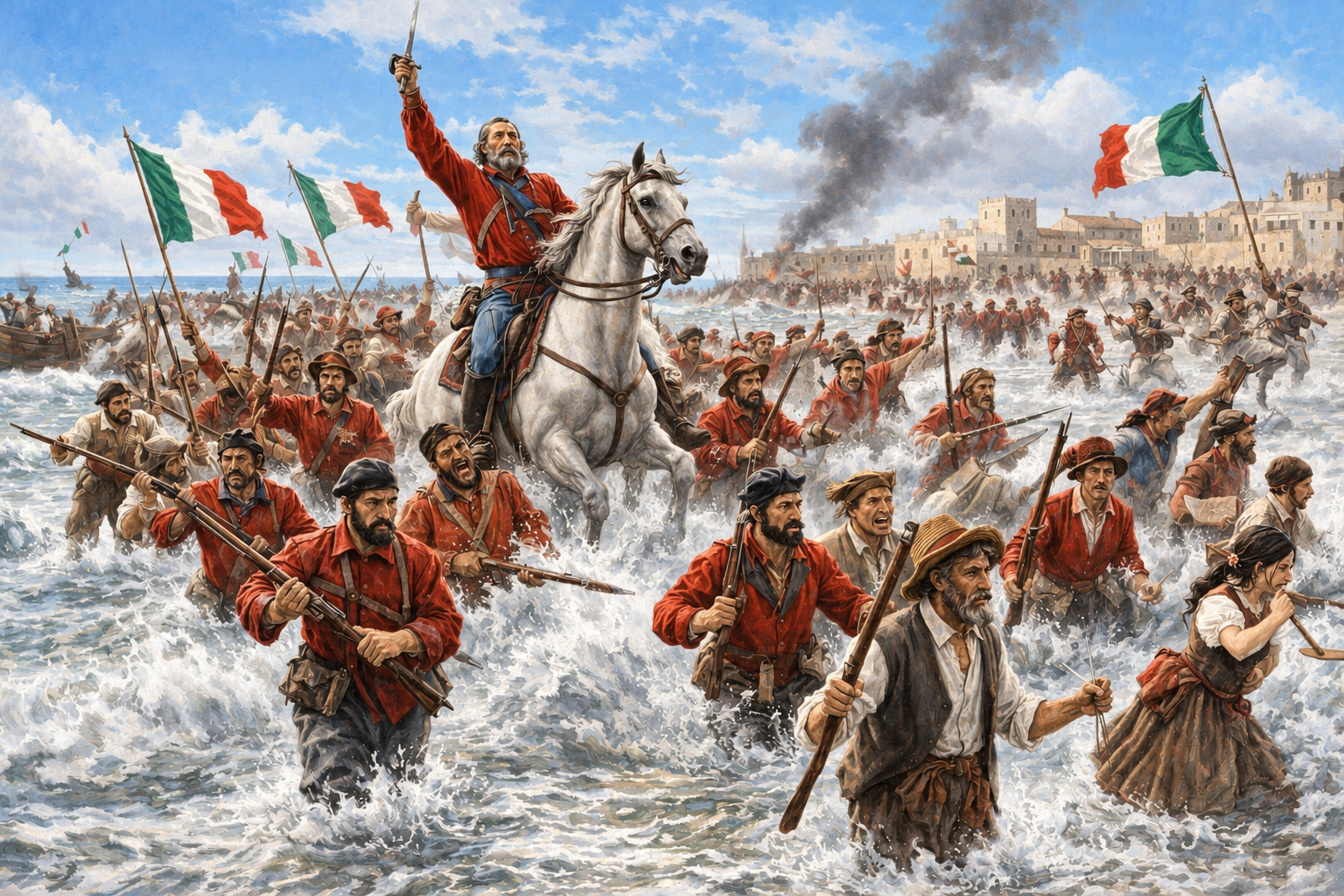


On May 11, 1860, Giuseppe Garibaldi landed at the port of Marsala in western Sicily with approximately one thousand volunteer soldiers — the famous Expedition of the Thousand (I Mille). Their impossible mission was nothing less than the liberation of Sicily from Bourbon rule and the beginning of a new revolution for Italian unification. This chapter describes s one of the most dramatic military campaigns of European history, a story so improbable that it reads like fiction.
Garibaldi, an aging 53 years old failed revolutionary, led a small untrained, poorly armed, unsupported band of volunteers against the professional, well-equipped Bourbon army of roughly 25,000 soldiers in Sicily alone. His volunteers were armed with rusting obsolete muskets and virtually no artillery, yet within six weeks, Garibaldi captured Palermo. Within six months, he forced the collapse of the Bourbon Kingdom of the Two Sicilies. Within a year, the unified Kingdom of Italy was formed. The Expedition of the Thousand represents one of the most remarkable military and political achievements of modern European history, an event which began in Sicily and is now an inexorable part of her proud history.
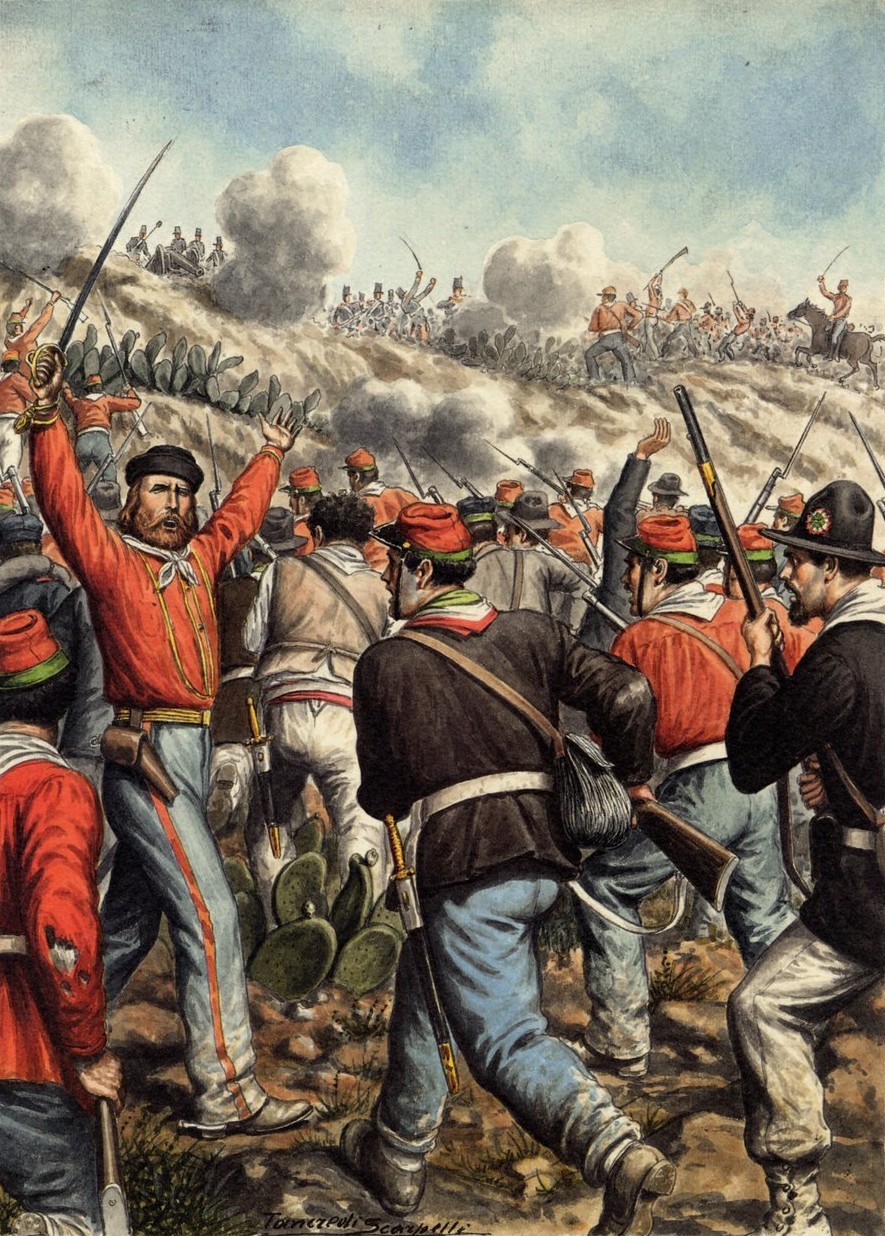
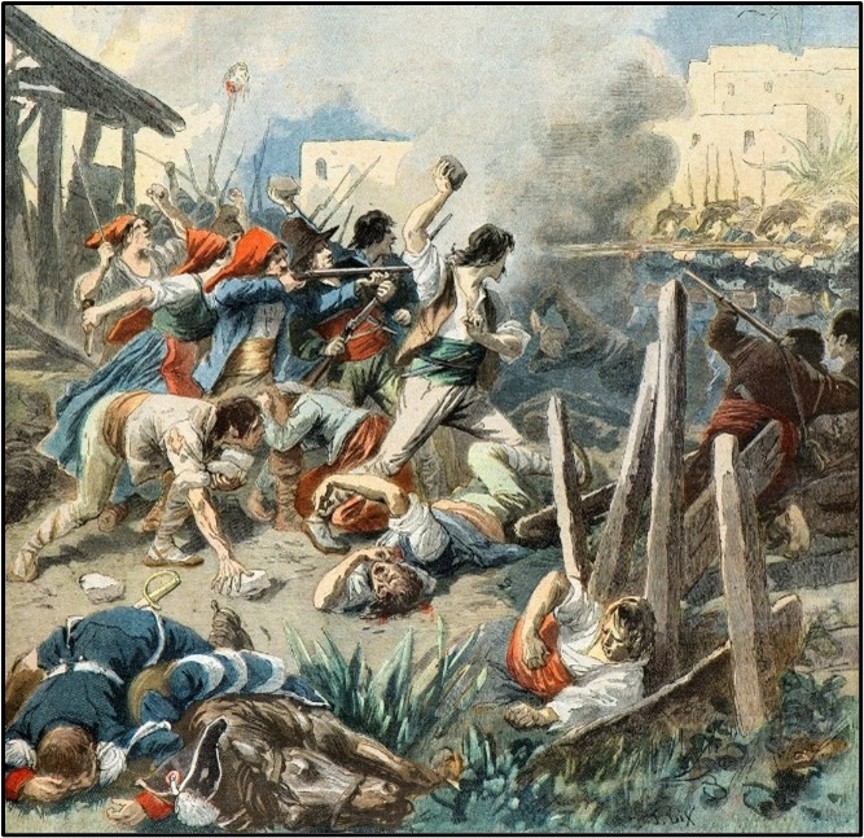
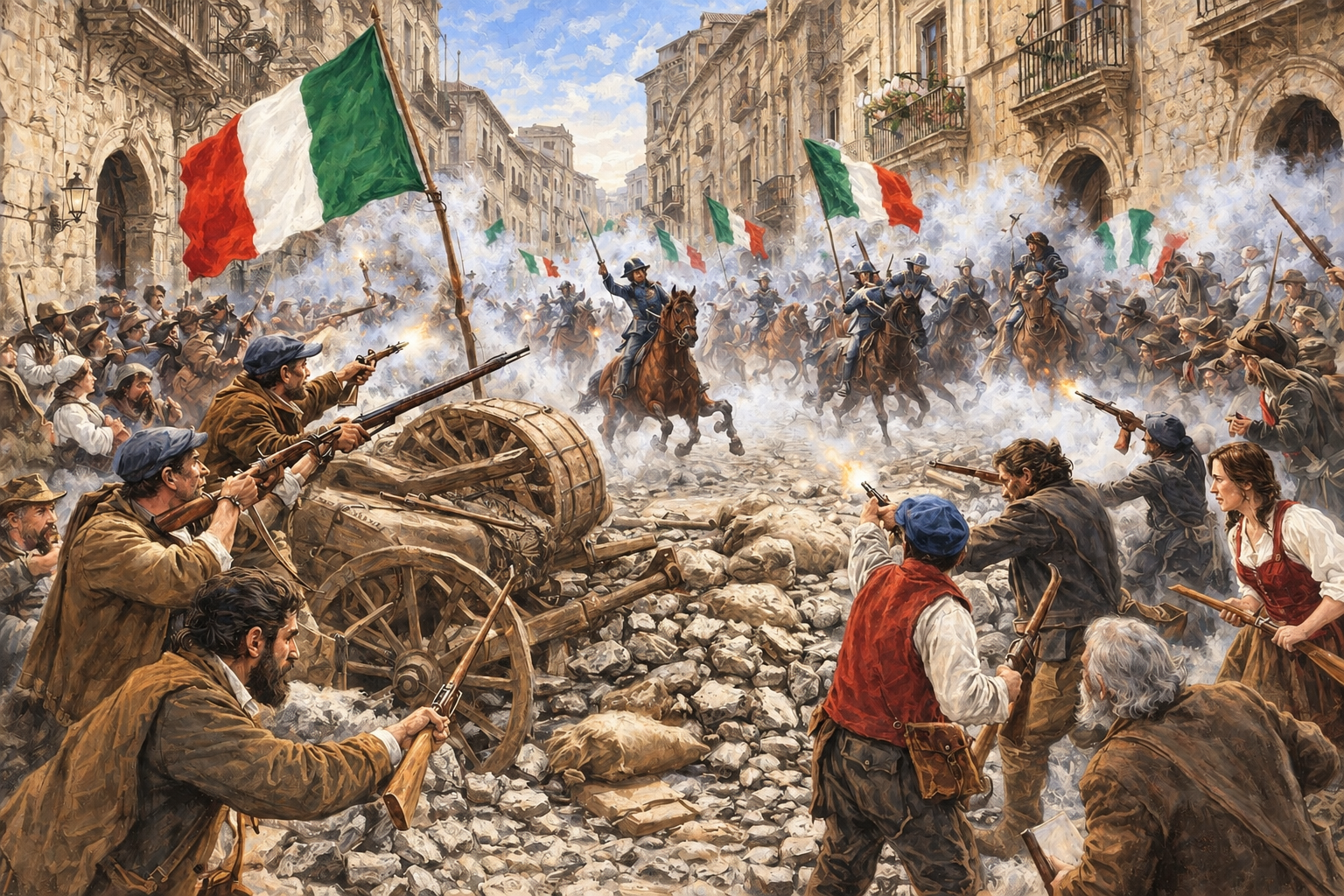
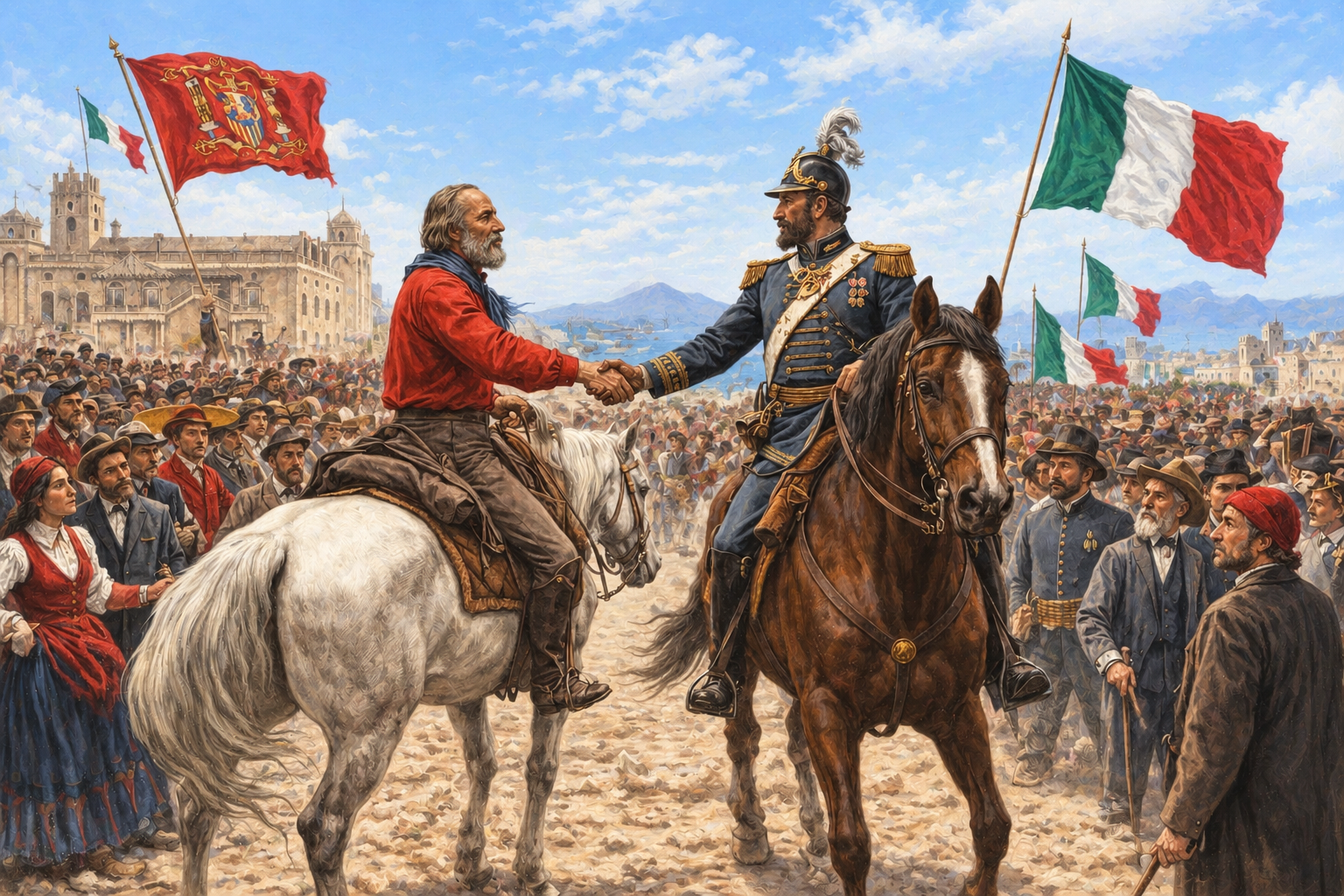
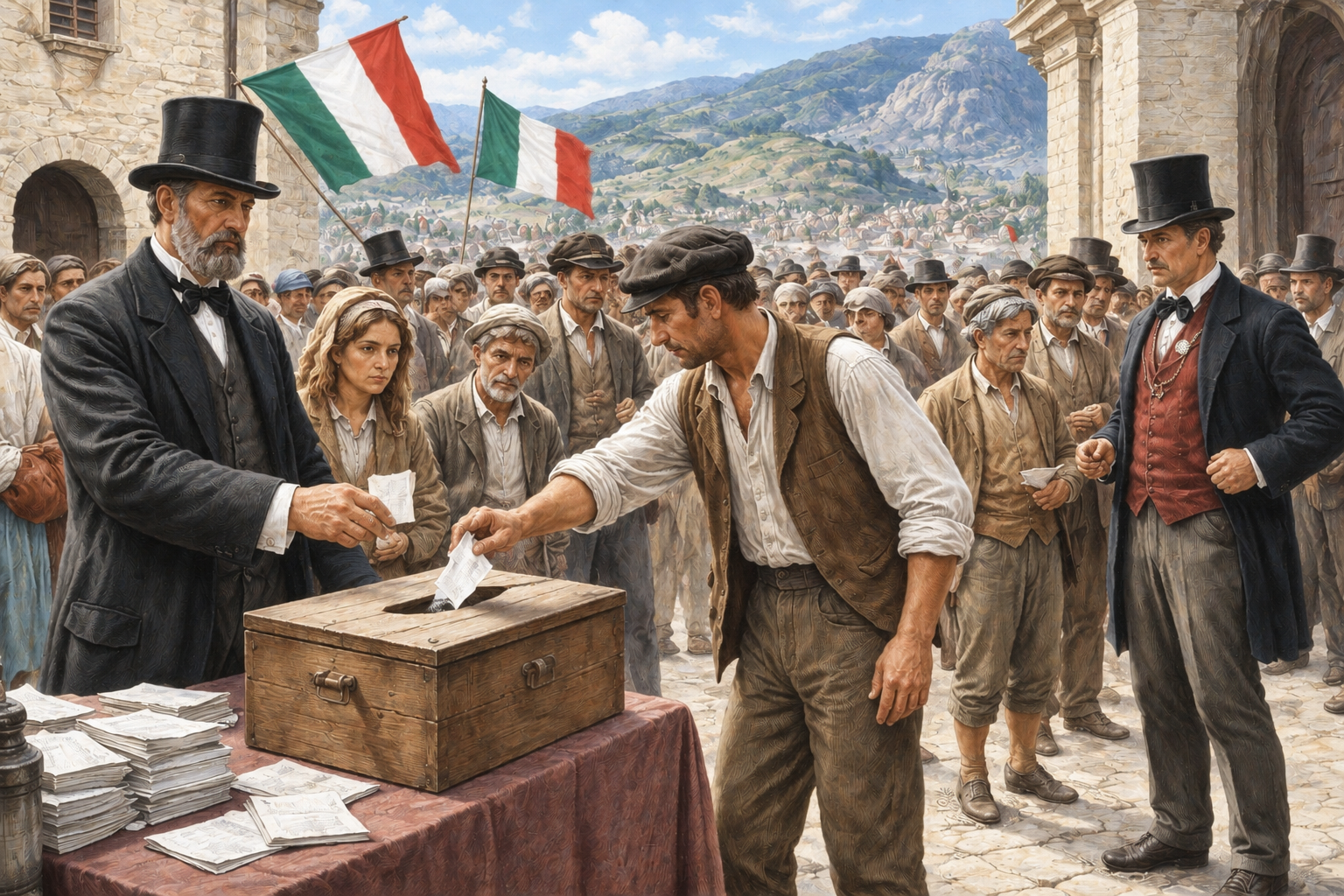
The chapter covers Garibaldi’s campaign in detail: the initial landing at Marsala; the Battle of Calatafimi on May 15, where Garibaldi’s outnumbered volunteers defeated a larger better equipped Neapolitan army; the triumphant entry into Palermo on May 27; the subsequent conquest of the rest of the island; and the crossing of the Strait of Messina in August, which took Garibaldi’s campaign to the Italian mainland. It also examines the invaluable Sicilian contributions to the success of Garibaldi’s military campaign, and their strong initial support for the creation of a new unified Italian Kingdom.